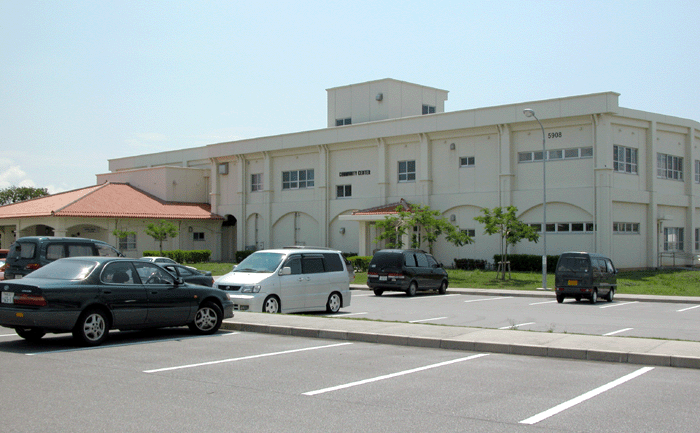
Camp Foster: The Headquarters of the Marine Corps on Okinawa, and the Center of Gravity for Pacific Courts Martial
Okinawa holds the largest concentration of Marines anywhere outside the United States, and Camp Foster sits at the center of it. In Ginowan, in the crowded middle of the island, Foster is the headquarters of Marine Corps Base Camp Smedley D. Butler and Marine Corps Installations Pacific, the home of the U.S. Naval Hospital Okinawa, and the administrative and legal hub through which the island's Marine courts martial are run. If you wear the uniform on Okinawa, the machinery that decides your case very likely runs through this base.
For this firm, that makes Foster one of the most important addresses in the world. The Pacific is where Bilecki Law Group does much of its work, and Okinawa is the busiest part of it. A Marine facing an investigation or court martial here is fighting for a career, a retirement, and sometimes freedom, with a second danger most never think about until it lands on them: under the Status of Forces Agreement, the Japanese authorities can pursue the same off base incident at the same time the Marine Corps does, and the Japanese criminal system works nothing like ours. The only way to win that fight is to deny the prosecution the easy conviction it expects and make it prove every element of what it has charged. The SOFA allocates primary jurisdiction and limits a second trial for the same offense; overlapping investigations do not mean that both countries may freely try the same charge.
The Marine Who Caught the Grenade
Camp Foster carries the name of a Marine who gave his life on this island. Private First Class William A. Foster was a rifleman with the 3rd Battalion, 1st Marines, 1st Marine Division during the battle for Okinawa. On May 2, 1945, dug in on the point of his platoon's perimeter with one other Marine, Foster fought a hand grenade duel with Japanese infantry trying to infiltrate the line in the dark. When an enemy grenade landed in the foxhole beyond reach, Foster threw himself on it and took the blast with his own body, shielding the Marine beside him. Mortally wounded, he handed over his own two remaining grenades and told his fellow Marine to make them count. He was posthumously awarded the Medal of Honor. He spent his last act protecting the Marine next to him, and that refusal to leave a brother to face it alone is the standard we bring to a fight at Camp Foster.
Why Marines at Camp Foster Fly Us In
The Pacific is where this firm does most of its work. Tim Bilecki finished his time in uniform as the Army's Senior Defense Counsel for the Trial Defense Service across the Pacific Rim, with defense responsibility that reached across Korea, Okinawa, and mainland Japan, and when he went civilian he built a practice rooted in this theater. The firm is in Okinawa constantly, and the record here is real, in repeated full acquittals in contested Okinawa courts martial ranging from sexual assault and domestic violence to the NCIS online sting cases. When prosecutors on Okinawa see counsel with that kind of Pacific record fly in, the easy conviction they were counting on is gone.
The reason it matters is that the military justice system was not built to find the truth. It exists to preserve good order and discipline, and on Okinawa it does that under enormous host nation pressure, because every incident involving a Marine becomes news on an island where the American presence is politically raw, and a command that fears that fallout charges hard to show it took the matter seriously. A serious case at Camp Foster is investigated by NCIS, and for sexual assault, domestic violence, and other covered offenses the decision to refer charges to a court martial no longer belongs to your command; it goes to an independent Special Trial Counsel in the Marine Corps Office of Special Trial Counsel. Your detailed defense counsel from the Defense Service Organization can be capable and committed, but carries a heavy caseload inside the same system, which is why Marines who are serious about the fight bring in their own counsel.
UCMJ Charges We Defend at Camp Foster
We handle every type of court martial at Camp Foster. The charges below are the ones we see most, not the only ones we take.
Sexual Assault and Sex Offenses (UCMJ Article 120 / Article 134). The Marine Corps runs its SAPR program on Okinawa under the same pressure that drives these prosecutions everywhere, and the island's fishbowl makes them more volatile, not less. An allegation is treated as established before the investigation is finished, and even where the evidence will not support a charge the command reaches for administrative separation. Marines have also learned that a complaint can redirect an investigation or buy a transfer off the island, and a command focused on showing it takes every report seriously is in no position to weigh motive. These cases route to an independent Special Trial Counsel now, and they demand counsel who will investigate independently and contest the case early, before charges are preferred.
A large and distinctive part of our Okinawa work is defending service members caught in NCIS online sting operations, the so called "To Catch a Predator" stings that have arrested dozens of Marines and Sailors on this island since 2015 and drawn coverage in The Japan Times and other national press. The method is consistent: an agent posts on an adults only site like Craigslist or an app like Whisper using photographs of an adult woman, chats as a bored young woman, and only well into a sexual conversation claims to be fourteen or fifteen, then steers the service member to a meeting, often a house leased inside Kadena or a spot in the American Village, where he is arrested on arrival. There is no real child, so the charge is almost always an attempt under Article 80, and it requires specific intent and an act that goes beyond mere preparation. These stings have been a major part of our Okinawa practice for years. We won the first one ever taken to trial on this island, an outright acquittal, and have defended many since with the kind of results that built our name here. The defenses are a mistake of fact as to age, where the person reasonably believed they were dealing with an adult; entrapment, where the government planted the idea in someone who was not predisposed to it. We also examine compliance with Internet Crimes Against Children protocols for weaknesses in the investigation and the agents’ credibility. A protocol violation alone is not a legal defense; its significance depends on the charged offense, the evidence, and the applicable defense.
Fraud and Larceny (UCMJ Article 121 / Article 107). Housing allowance fraud is common overseas, and on Okinawa it usually starts with a Marine drawing OHA against a place on the local economy, or BAH set by a dependent's stateside address, where an auditor later decides the rent, the residence, or the dependent's location does not match the paperwork. Because the housing form is what authorizes the rate, the government charges it as larceny under Article 121 and as a false official statement under Article 107, the same paperwork serving as both the theft and the lie. The government still has to prove intent, and a finance office error, bad guidance, or a family that genuinely moved is not a scheme. We defend BAH and OHA fraud, larceny, wrongful appropriation, and conspiracy to defraud, and we win them on the paper trail and the intent the government would rather assume.
Domestic Violence and Assault (UCMJ Articles 128b and 128). Domestic violence under Article 128b has become one of the largest parts of our caseload, and with so many families stationed on Okinawa the command sees a great deal of it. Since the Office of Special Trial Counsel took these cases over it is charged as aggressively as any offense in the UCMJ. It covers a spouse, an intimate partner, or a family member, and makes strangulation or suffocation a separate, serious charge even when there is little or no visible injury. A qualifying conviction also triggers the federal Lautenberg firearms bar, which can end a Marine's career because the job requires carrying a weapon. We also defend assault under Article 128, including the off base confrontations that become a host nation matter when a local is involved. Self defense is a recognized defense, and what actually happened often looks different from the first report once the evidence comes in.
Drug Offenses (UCMJ Article 112a). The drug cases that worry the command on Okinawa are less about a single positive test for marijuana and more about synthetic drugs and other substances bought on the local economy or shipped onto the island, which the command treats as a serious crime and an embarrassment in front of the host nation. A positive urinalysis or a possession allegation is serious but not the end of the fight. The chain of custody can be challenged, innocent ingestion is a recognized defense, and the government still has to prove that any use or possession was knowing and wrongful. Japanese drug enforcement is severe and can run alongside the Marine Corps case, which is one more reason to get counsel involved before you say a word.
Military Specific Offenses (UCMJ Articles 87a, 92, 134, and more). A lot of these charges begin on liberty, in the bar districts off the central Okinawa bases, the American Village in Chatan, Gate 2 Street up in Koza, and the strips outside the gates. The Marine Corps runs the Shore Patrol in those districts, and unlike a unit courtesy patrol the Shore Patrol is designated to perform police duties and can apprehend a Marine, so resisting or fleeing it can be charged as resisting apprehension under Article 87a, and disobeying its lawful order as a violation of Article 92. Add a curfew or off limits violation under a USFJ general order, a drunk and disorderly under Article 134, and conduct unbecoming on top, and a single night becomes a charge sheet built to inflate the punishment and the pressure to plead. Every specification still has to be proven beyond a reasonable doubt on its own, and the weak ones on an inflated charge sheet are the first to fall.
Even on Okinawa, a Mistake Shouldn't End a Career
Not every Marine who calls us from Okinawa is innocent, and we do not pretend otherwise. Some made a bad decision and know it. That does not mean they have to accept the worst the system can hand out, prosecuted by an institution eager to turn one case into a warning for everyone else on the island. Rank does not decide whether you need a firm like ours; the seriousness of the case does. If a matter is genuinely minor, your Defense Service Organization counsel can handle it, and we will tell you so honestly, because we do not take every case and we will not take a Marine's money for one that does not need us.
But when the case is serious, everything is on the line at once: your career, your retirement, your good name, and your freedom. A court martial conviction is a federal criminal conviction. Under the sentencing rules now in force, it can mean confinement a judge has little discretion to avoid, a punitive discharge that follows you for life, and on a sex offense a place on a registry, no matter your rank. That is why you fight, and the system is counting on you not to.
If you are facing an investigation or court martial at Camp Foster, reach out for a free defense strategy session. We will fly to Okinawa, tell you exactly what you are facing, and lay out how we would defend it. The government is already building its case. The only question is whether anyone is building yours.
Cases Connected to Camp Foster
These cases include trials, hearings, investigations, and administrative matters. A connection to this location does not necessarily mean that the trial occurred here.
- Case connected to this location: Bilecki Wins Sexual Assault Case for Marines Exposing NCIS Flawed Investigation
- Case connected to this location: Marines Charged with Sexually Assaulting His Friend’s Wife Gets No Prison Time
- Case connected to this location: Bilecki Exposes Flaws in NCIS Sex Teen Sting, Proves No Criminal Intent for W-2
- Sentencing hearing: Marine Faces 5 Years Prison Time for Ecstasy Distribution, Gets 6 Month Sentence
- Case connected to this location: Government Drops Criminal Charges for Marine’s Caught with Spice
- Case connected to this location: Bilecki Negotiates Time Served for Marine Caught in Controlled Drug Sale
- Case connected to this location: Marines Caught with Knife and Bag of Spice Gets No Criminal Charges
- Case connected to this location: Marine Gets with a Celibate Woman and Faces Rape Charges, Bilecki Exposes Lie
- Case connected to this location: SGT Charged With Trafficking 1 Kilo of Spice and $10K BAH Fraud Serves 10 Months
- Case connected to this location: Heavily Intoxicated O-3 Assaults His Family, Bilecki Negotiates No Charges
- Case connected to this location: Marines Cpl Pleads to Lesser Charges, Escapes Conviction for Child Sexual Assault
- Case connected to this location: Female Marine Goes Out with MSgt for Drinks in Uniform, Charges Resolved at NJP
- Case connected to this location: E-4 Saves 42 Months of Confinement by Retaining Bilecki in Minor Sex Assault Case
- Case connected to this location: Marine Charged for Spouse’s BAH in NY, Bilecki Gathers Evidence, Wins Acquittal
- Case connected to this location: Bilecki Clears Marine Captain of DUI Charge, Case Resolved Administratively
- Case connected to this location: Bilecki Succeeds in Upgrading OTH to General Discharge for Marine Captain
- Case connected to this location: Messages Saved on Intimate Partner’s Phone Save Marine from Sex Assault Charge
- Case connected to this location: Case Result: Marines and Sexual Assault
- Case connected to this location: Three Marine Officers, No Basis: Bilecki Wins Article 120 BOI in Okinawa
- Case connected to this location: Bilecki Defeats Government Recharge of Article 120 Allegation Already Found No Basis at BOI; Marine GCM at Camp Lejeune Walked to Special Court Martial Plea on Non-SORNA Article 92 and Article 128 Specifications, Both Article 120 Specifications Dismissed, No Federal Sex Offender Registration
- Trial venue: Bilecki Tries Sixteen-Specification GCM Members Trial in Okinawa to NOT GUILTY on Article 120 Rape, NOT GUILTY on Article 125 Kidnapping, and NOT GUILTY on Eleven of Thirteen Article 128b Domestic Violence Specifications
- Case connected to this location: Bilecki Holds Custody-Driven Article 120 and Decade-Long Article 128 Domestic Violence Allegations to No Court Martial Referral at Travis AFB; 8 of 8 Central Registry Board Findings "Did Not Meet Criteria," Article 15 Limited to Article 112a THC Vape and Article 131b Obstruction Only
- Case connected to this location: Bilecki Holds Forty-Year Article 80 NCIS Whisper Sting GCM to No Punitive Discharge for USMC Master Sergeant in Okinawa; Retired at Last Honorable Rank
- Case connected to this location: CSAM Charge Dismissed in III MEF Band Hidden Camera Case; Plea to Three Article 120c Indecent Recording Specifications, 30 Months Confinement Concurrent
- Case connected to this location: All Charges Dismissed in Child Pornography Case with Mistake of Fact Defense
- Case connected to this location: Marine Dates a Minor Lying About Her Age, No Basis for Misconduct Found
FAQ
NCIS wants to interview me at Camp Foster. Do I have to talk to them?
No, and not without counsel. The interview is not your chance to clear things up; it is evidence collection, and under Article 31b of the UCMJ you have the right to remain silent and to ask for a lawyer. For covered offenses like sexual assault, the decision to refer charges to a court martial no longer belongs to your command but to an independent Special Trial Counsel in the Marine Corps Office of Special Trial Counsel. An off base incident involving a Japanese national can also draw the Japanese authorities under the Status of Forces Agreement, and a statement to one system can surface in the other. Decline the interview, ask for counsel, and call a lawyer before you say anything.
I was detained by the Japanese police off base on Okinawa. What happens now?
It is both, and the Japanese side is the one most Marines are not prepared for. Under the Status of Forces Agreement the Japanese authorities hold the primary right to prosecute most off base offenses against Japanese nationals, and their system is very different from ours: police and prosecutors can hold and interrogate a suspect for up to roughly twenty three days before any charge is filed, often without a lawyer in the room, with intense pressure to produce a confession. If the service member is already in U.S. custody, the SOFA generally permits the United States to retain custody until Japanese indictment, subject to arrangements for earlier transfer, but that is exactly the window where damage is done. You can be facing the Japanese criminal process and a court martial over the same night, and a statement to either one can sink both, which is why you want experienced counsel and consular and command help involved immediately, before you talk to anyone.
A night out in American Village or on Gate 2 Street ended with the Shore Patrol or a fight. How serious is that here?
More serious than the same night would be stateside. On Okinawa the off base world runs through districts like the American Village in Chatan and Gate 2 Street in Koza, and the Marine Corps works them with the Shore Patrol, which can apprehend a Marine, so a scuffle, a refusal to comply, or a curfew violation can become charges under Articles 87a, 92, and 134 before you ever leave the district. When a Japanese national is involved the command treats it as a potential international incident and tends to assume the worst about the Marine, even when a local started it. What actually happened usually looks different once the night is reconstructed from witnesses and any video instead of from whoever reached the authorities first, which is exactly the work a prepared defense does early.
I was arrested in an NCIS online sting on Okinawa. Is there a defense when I showed up to the meeting?
Yes. These cases turn on intent, and intent is fought over in the messages, not in the fact that someone showed up. There is no real child in these stings. An NCIS agent posts on an adults only platform using photos of an adult woman, chats as an adult, and only later claims to be fourteen or fifteen before pushing toward a meeting, so the charge is almost always an attempt under Article 80 and the government has to prove what you actually intended. The defenses we use are a mistake of fact as to age, where you reasonably believed you were dealing with an adult; entrapment, where the government planted the idea in someone who was not predisposed to it. After the arrest, agents push service members to write an apology letter to the nonexistent girl's mother, because that is the fastest way to lock in their case. Do not write one, and if you already have, a statement taken under that kind of pressure can still be challenged. We won the first NCIS sting case ever tried on Okinawa, an outright acquittal, and have defended many more here since. We also examine compliance with Internet Crimes Against Children protocols for weaknesses in the investigation and the agents’ credibility. A protocol violation alone is not a legal defense; its significance depends on the charged offense, the evidence, and the applicable defense.