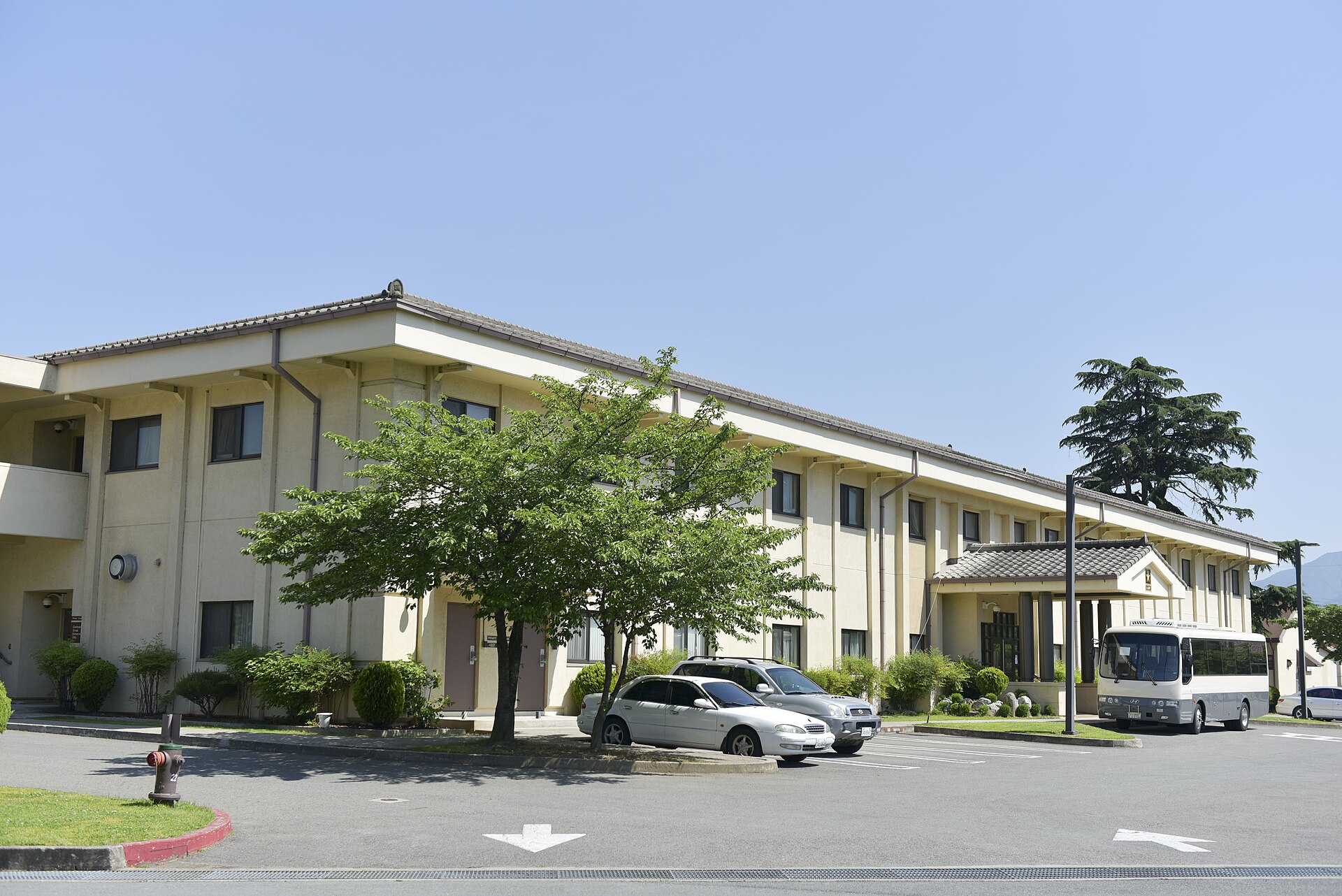
USAG Daegu: The Army's Sustainment Hub in the South, on the Ground That Anchored the Pusan Perimeter
U.S. Army Garrison Daegu is the Army's logistics and sustainment center for the southern half of the peninsula, a cluster of installations, Camps Henry, Walker, George, and Carroll, that keeps Eighth Army supplied and moving. It is built around the 19th Expeditionary Sustainment Command, it sits well to the rear of the DMZ, and because of that it draws more accompanied tours and families than the camps up north. None of that makes it a soft assignment when the military justice system decides to make an example of someone.
A rear area posting does not buy a Soldier any mercy. Daegu commands answer to the same pressure every overseas command does, the fear of an incident that embarrasses the Army in front of the host nation, and they respond to that fear by charging hard. A case connected to USAG Daegu is a fight for a career, a retirement, and sometimes freedom, and in Korea there is a second layer most Soldiers never think about until it lands on them: the Korean legal system, which can reach an off post incident at the same time the Army does. The only way to win that fight is to deny the prosecution the easy conviction it expects and force it to prove every element of what it has charged.
The Stand North of Taegu That Held the Line
The ground USAG Daegu sits on was very nearly lost in the first summer of the Korean War. In August 1950, with the Pusan Perimeter contracting and the city of Taegu in range of the enemy's guns, the U.S. Army's 27th Infantry Regiment, the Wolfhounds, under Colonel John H. Michaelis, was thrown into a narrow valley just north of the city alongside the ROK 1st Division. For ten days they held that valley against two North Korean divisions trying to break through to Taegu. The fighting ran night after night, tank and artillery rounds streaking up and down the corridor in the dark until the Soldiers nicknamed it the Bowling Alley, and when it was over the Wolfhounds had stopped the breakthrough cold and kept the perimeter intact. They held a line everyone expected to break, and that is the standard we bring to a fight at USAG Daegu: when the system assumes it has already won, make it fight for every inch.
Why Soldiers at USAG Daegu Fly Us In
Korea is not occasional work for this firm; it is a core part of the practice. Tim Bilecki's last assignment in uniform was as the Army's Senior Defense Counsel for the Trial Defense Service across the Pacific Rim, and he has gone back more than sixty times as a civilian to try contested courts martial in front of these very commands, compiling a record of repeated full acquittals in contested Korea cases that range from sexual assault and domestic violence to BAH fraud. When prosecutors see counsel with that kind of Korea experience enter a case, the easy win they were counting on is gone.
A serious case at USAG Daegu is investigated by the Army's Criminal Investigation Division, and for sexual assault, domestic violence, and other covered offenses the decision to refer charges to a court martial no longer belongs to your command; it goes to an independent Special Trial Counsel in the Army's Office of Special Trial Counsel, whose Korea field office sits at Camp Humphreys, where Eighth Army's military justice runs. Courts martial for the 19th Expeditionary Sustainment Command and the Daegu enclave are heard in the courtroom at Camp Henry. The system that processes your case is the same one that runs the entire peninsula, and knowing how it actually moves a case here is the difference between a defense that reacts and one that gets in front of the charge.
UCMJ Charges We Defend at USAG Daegu
The charges below are the most common at USAG Daegu. They are examples of what we defend, not the boundaries of it.
Sexual Assault and Sex Offenses (UCMJ Article 120 / Article 134). The Army runs its SHARP program at Daegu under intense institutional pressure. An allegation is often treated as established before the investigation is finished, and where the evidence will not support a charge, the command falls back on administrative separation. Soldiers have learned that a complaint can be used to retaliate against a former partner or to derail an investigation into the accuser's own conduct, and a command under pressure to show it takes every report seriously is not positioned to weigh those motives. These cases now run through an independent Special Trial Counsel, and they demand counsel who will investigate independently and fight for every element early, before charges are preferred.
Fraud and Larceny (UCMJ Article 121 / Article 107). Korea has long had some of the highest rates of housing allowance fraud in the military, and Daegu sees both versions of it. A Soldier on an unaccompanied tour draws BAH set by a dependent's stateside address, and the government alleges the claimed location, often one of the three highest rate areas in the country, New York, San Francisco, or Honolulu, is not where the family lives; a Soldier on an accompanied tour draws OHA against a lease on the local economy that an auditor later second-guesses. Either way, when the government alleges that knowingly false housing information was used to obtain unauthorized allowances, it may charge the conduct as larceny under Article 121 and as a false official statement under Article 107, the paperwork serving as both the theft and the lie. The government still has to prove intent, and a finance office error, bad guidance, or a family that genuinely moved is not a scheme. We defend BAH and OHA fraud, larceny, wrongful appropriation, and conspiracy to defraud, and we make the prosecution prove the intent it would rather assume. The actual entitlement depends on the orders, dependent status, authorized location, and applicable housing rule; an address discrepancy alone does not establish an overpayment or criminal intent.
Domestic Violence and Assault (UCMJ Articles 128b and 128). Domestic violence under Article 128b has become one of the largest parts of our caseload, and with more families stationed at Daegu the command sees more of it. Since the Office of Special Trial Counsel took these cases over it is charged as aggressively as any offense in the UCMJ. It covers a spouse, an intimate partner, or a family member, and makes strangulation or suffocation a separate, serious charge even when there is little or no visible injury. A qualifying conviction also triggers the federal Lautenberg firearms bar, which can end a Soldier's career because the job requires carrying a weapon. We also defend assault under Article 128, including off post confrontations that become a host nation matter when a local is involved. Self defense is a recognized defense, and what actually happened often looks different from the first report once the evidence comes in.
Drug Offenses (UCMJ Article 112a). In Korea the drug cases that worry the command are less about a one-off positive test for marijuana and more about synthetic drugs and other substances bought on the local economy or shipped into the country. A positive urinalysis or a possession allegation is serious but not the end of the fight, because the chain of custody can be challenged, innocent ingestion is a recognized defense, and the government still has to prove any use or possession was knowing and wrongful. Korean drug enforcement is severe and can run alongside the Army case, which is one more reason to get counsel involved before you say anything.
Military Specific Offenses (UCMJ Articles 92, 134, and more). A night out in downtown Daegu is where a lot of these charges begin. The Army runs a courtesy patrol in the bar districts near the gates, and that detail has general military authority over Soldiers on the economy but no law-enforcement or apprehension power, so an instruction from it that you ignore can become a failure to obey charge under Article 92, while an actual apprehension comes from the military police or the Korean National Police. Add a drunk and disorderly under Article 134 on top of dereliction, false official statement, and conduct unbecoming, and a single night becomes a charge sheet built to inflate the punishment and the pressure to plead. Every specification still has to be proven beyond a reasonable doubt on its own, and the weak ones on an inflated charge sheet are the first to fall.
A Rear-Area Posting Is Still No Place to Face the UCMJ Alone
Not every Soldier who calls us from Korea is innocent, and we do not pretend otherwise. Some made a bad decision and know it. That does not mean they have to accept the worst the system can hand out. Rank does not decide whether you need a firm like ours; the seriousness of the case does. If a matter is genuinely minor, your free counsel at the Trial Defense Service can handle it, and we will tell you so honestly, because we do not take every case.
But when the case is serious, all of it is on the line at once: your career, your retirement, your good name, and your freedom. A conviction is a federal criminal conviction. Under the sentencing rules now in force, it can mean confinement a judge has little discretion to avoid, a punitive discharge that follows you for life, and on a sex offense a place on a registry, no matter how junior you are. That is why you fight, and the system is counting on you not to.
If you are facing an investigation or court martial connected to USAG Daegu, reach out for a free defense strategy session. We will fly to Korea, tell you exactly what you are facing, and lay out how we would defend it. The government is already building its case. The only question is whether anyone is building yours.
Cases Connected to USAG Daegu
These cases include trials, hearings, investigations, and administrative matters. A connection to this location does not necessarily mean that the trial occurred here.
- Case connected to this location: Ex-Wife Makes Sexual Assault Allegations, Army Sergeant Cleared in Korea
- Case connected to this location: Convoluted BAH Rules Lead to Charges for Army SSG in Korea, Bilecki Intervenes
- Case connected to this location: Bilecki Wins Chapter 10 Approval Day Before Article 120 GCM Trial at Camp Humphreys; All Article 120 Charges Dismissed, No Federal Sex Offender Registration, No Federal Felony Record
FAQ
My unit is in the Daegu enclave. Where is my court martial actually held?
In the courtroom on Camp Henry, where Eighth Army hears courts martial for the 19th Expeditionary Sustainment Command and the Daegu installations. For covered offenses like sexual assault and domestic violence, the decision to refer charges to a court martial no longer belongs to your command; it goes to an independent Special Trial Counsel in the Army's Office of Special Trial Counsel, whose Korea field office sits at Camp Humphreys. The location does not change the stakes or the rules, but it does mean the people deciding and trying your case work inside a system we are in constantly, and getting counsel engaged early, before charges are preferred, is when the most valuable work gets done.
Army CID wants to interview me about an allegation at Daegu. Do I have to talk to them?
No, and get counsel before you do. Under Article 31b of the UCMJ you have the right to stay silent and to a lawyer, and you should invoke both, because a CID interview is evidence collection, not your chance to explain. CID will also title you, listing you as the subject of the investigation in its files at a low threshold, and that title can surface in background and clearance checks even if the case is later dropped. For covered offenses the charging decision belongs to an independent Special Trial Counsel, not your command. The most valuable work happens before charges are preferred, when a prepared defense can argue the prosecutor out of charging at all, so decline, ask for counsel, and call a lawyer before the first word.
My BAH or OHA in Korea is being questioned. When does a housing allowance problem become a larceny charge?
When the government decides you knew the claim was false. Korea allowance rules are their own minefield: a Soldier on an unaccompanied tour has to report a dependent's actual residence rather than the address that pays the most, and an accompanied Soldier's OHA is tied to a lease an auditor can question. When a payment turns out wrong, a finance review or a CID financial investigation can recast it as larceny under Article 121 plus a false official statement under Article 107, because the housing form is treated as both the theft and the lie. But intent is an element the government has to prove, that you knowingly set out to cheat the Army, not merely that a complicated form came out wrong, and a finance error or a family that really moved will not establish it. The actual entitlement depends on the orders, dependent status, authorized location, and applicable housing rule; an address discrepancy alone does not establish an overpayment or criminal intent.
OSTC deferred my case. Why is my command still giving me a GOMOR and starting a separation board?
Because a deferral is not a dismissal, and the administrative track runs at a much lower standard. When the Special Trial Counsel defers the case, the disposition returns to your command, subject to the limits on any further action, using the applicable administrative standard, more likely than not, rather than beyond a reasonable doubt. The General Officer Memorandum of Reprimand is the instrument, and the rebuttal is how it is fought, because the imposing general weighs your response before deciding whether the reprimand is filed locally, where it eventually ages off, or permanently in your AMHRR, where it does not. Permanent filing can lead to further review of an officer or NCO for retention, but filing, board referral, and separation remain separate decisions. You usually have only a few duty days to answer, so get counsel on the rebuttal the moment you are served. An acquittal does not automatically authorize a second attempt through separation: enlisted rules restrict separation based on acquitted conduct, while officer rules differ. The exact status, disposition, and governing regulation matter.