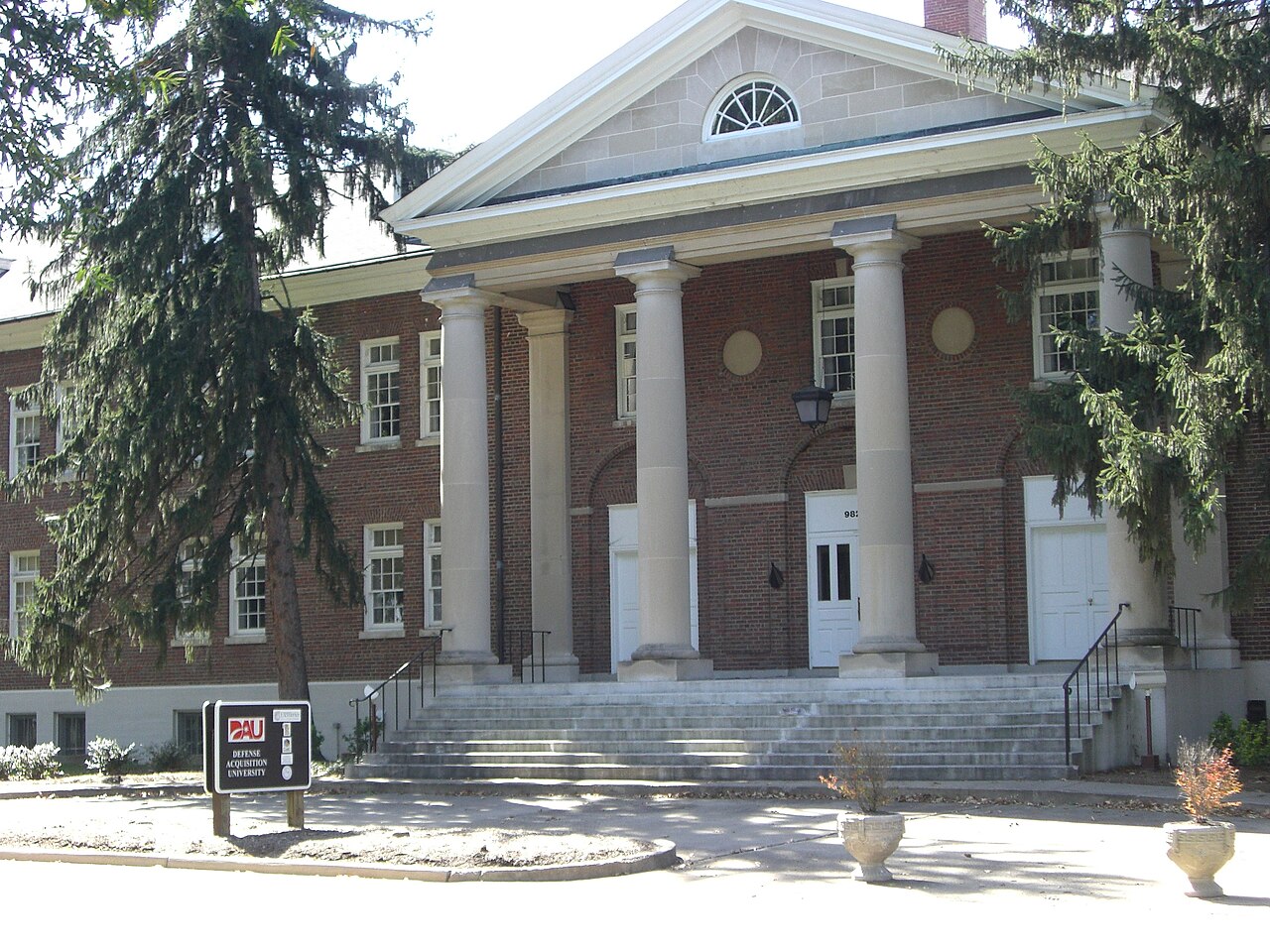
Fort Belvoir: A Post of Cleared Professionals on the Potomac
On the Potomac in Fairfax County, just south of Alexandria, Fort Belvoir is one of the busiest installations in the Army without being a combat post, the home of INSCOM, DTRA, the NGA campus, and a daily workforce of around fifty thousand, plus the Alexander T. Augusta Military Medical Center and its large medical staff. Families settle in Springfield by the I-95 Mixing Bowl, Lorton, Woodbridge, Burke, Kingstowne, and Alexandria, and the daily ritual is the commute, including the Northern Virginia institution of slugging into instant carpools to beat the lanes. George Washington's Mount Vernon is the literal neighbor. This is a post of intelligence professionals and credentialed providers, where a career rides on standing that an allegation can freeze overnight.
Military defense is all Bilecki Law Group does, and service members fly us in from around the world because a contested court martial is won on trial experience, not on how close the lawyer sits to the gate. When a career is at risk alongside the charge, people here bring in their own counsel.
The Engineer Who Pinned the Mine
The standard for an engineer was set by Private First Class Herman C. Wallace, clearing mines from a road near Prümzurley, Germany, in February 1945. When he stepped on a concealed mine and heard it arm, he deliberately planted his other foot on it to pin the charge to the ground rather than dive clear, confining the blast to his own body and shielding the squad behind him. He traded his life for theirs in a fraction of a second. That is the standard we bring to a case at Belvoir.
Why People at Belvoir Bring Us In
We win court martial cases. Military defense is all we do, and service members fly us in from all over the country because of our trial record. The military justice system is not built to find the truth; it exists to preserve good order and discipline, and a post full of cleared professionals and military providers will move hard against one of them to protect its standards. A serious case is investigated by Army CID, and for sexual assault and other covered offenses the decision to refer charges to a court martial no longer belongs to your command but goes to an independent Special Trial Counsel. Your Trial Defense Service counsel may be capable but carries a heavy caseload inside the same system, which is why those serious about winning bring in their own counsel.
UCMJ Charges We Defend at Fort Belvoir
These are the most common cases at Fort Belvoir. They are examples, not limits, and we defend service members against the full range of UCMJ offenses.
Sexual Assault and Sex Offenses (UCMJ Article 120 / Article 134). These allegations route to an independent Special Trial Counsel now, and the command treats a report as established before the investigation is finished, including the abusive sexual contact allegations that can arise in a clinical setting at the medical center. A provider's privileges can be suspended on the same report long before any verdict, so the case has to be fought early, while the investigation is still open. A conviction can mean confinement and a federal record, with registration required for a covered sex offense under the applicable federal and state law.
Domestic Violence and Assault (UCMJ Articles 128b and 128). Domestic violence under Article 128b is charged as aggressively as any offense in the UCMJ since the Office of Special Trial Counsel took these cases over. It covers a spouse, an intimate partner, or a family member, and it treats strangulation or suffocation as its own charge that the government can bring even with no visible injury. A qualifying conviction also triggers the federal Lautenberg firearms bar, which can end a career because a service member has to be able to carry a weapon. We also defend assault under Article 128, where self defense is a recognized defense.
False Official Statements and Fraud (UCMJ Articles 107 and 124). In a credentialed workforce a security or administrative inquiry can turn adversarial fast, and a statement that does not match the record becomes a false official statement under Article 107, sometimes stacked with fraud against the United States under Article 124. The government still has to prove a knowing falsity and an intent to deceive, not just an inconsistency or an honest mistake, and that gap is where these cases are won.
Drugs and Diversion of Controlled Substances (UCMJ Article 112a). A positive urinalysis is one of the fastest ways a career comes apart, and at a medical center the government also brings diversion of controlled substances under Article 112a. But a positive test or a paperwork discrepancy is only a starting point, not proof: the collection, the chain of custody, the lab work, and whether any use or handling was knowing and wrongful all remain the government's to prove.
A Career and a Reputation Worth Defending
We do not pretend that every service member who calls us from Belvoir is innocent. What matters is how serious the case is, not your rank. If a matter is genuinely minor, your Trial Defense Service counsel can handle it, and we will tell you so honestly. But when the case is serious, everything is on the line at once: your career, your credentials, your good name, and your freedom. A court martial conviction is a federal criminal conviction, and the applicable sentencing parameters tie a confinement range to the offense, two and a half to ten years for sexual assault and ten to twenty for rape, that a judge can depart from only by stating specific facts in writing, on top of any required or adjudged punitive discharge and, for a covered sex offense, sex offender registration. That is why you fight. The court’s jurisdiction and the convicted offense determine which sentencing rules apply; some offenses use separate sentencing criteria rather than these ranges.
If you are facing an investigation or court martial at Fort Belvoir, reach out for a free, confidential strategy session. We will tell you exactly what you are facing and how we would defend it. The government is already building its case. The only question is whether anyone is building yours.
FAQ
An investigator or Army CID wants a statement. Should I give one?
No. Under Article 31b of the UCMJ you can stay silent and ask for a lawyer, and you should do both before the interview starts. Investigators are building a case, not offering you a chance to explain, and at Belvoir a single statement can feed the criminal case and a credentialing or security action at the same time. Decline and call a defense lawyer first.
My security clearance was suspended, or my medical privileges were pulled, over an investigation. Can you reverse that?
We defend the criminal allegation that is driving the suspension or the privileging action, because beating or shrinking the underlying case is the strongest leverage on what the security office or the credentials committee does next. We do not litigate the clearance or credentialing process itself. The goal is to win the charge before it becomes the record those boards rely on.
I'm under an Article 120 investigation. Will I have to register as a sex offender if I'm convicted?
A court martial conviction for a covered Article 120 offense triggers registration duties under the applicable federal and state law, with requirements and duration determined by the covered conviction and jurisdiction. The entire defense is aimed at defeating the charge or reducing it to an offense that carries no registration, and the investigation and the charging decision are where these cases are most often turned. Get your own counsel involved before you ever sit down with CID.