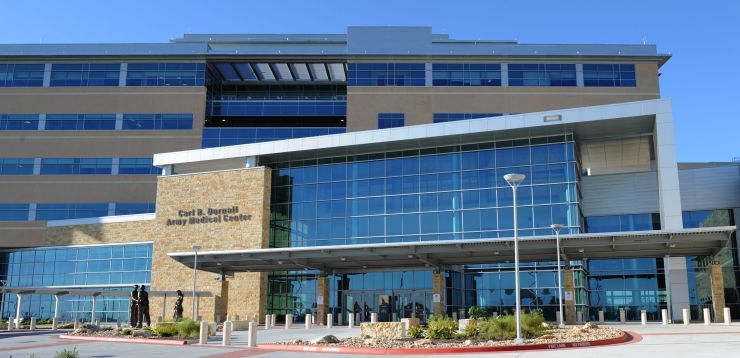
Fort Hood: The Great Place, and a Command Under a Microscope
Every Soldier who has done time at Hood knows the irony folded into the nickname. They call it The Great Place, and then you spend a Texas summer in the motor pool turning wrenches on a tank that throws heat like a skillet, drive the Killeen strip past the pawn shops and buy here pay here car lots off Rancier, and mark the days until an NTC rotation at Fort Irwin where it somehow gets hotter. This is one of the largest installations in the world, the only post built to station and train two armored divisions, headquarters of III Armored Corps and home of the 1st Cavalry Division, where troopers still earn their spurs, wear the Stetson, and sport the biggest patch in the Army.
It is also a post that has spent recent years in the national spotlight for all the wrong reasons, its command climate, its handling of misconduct, and its own sexual assault response apparatus under intense scrutiny. That scrutiny does not make the command more careful. It makes it more aggressive, because leadership here knows every disposition decision is being watched, and the safest move for a commander under that pressure is to charge hard and let someone else sort it out. For a Soldier caught in that environment, a court martial at Fort Hood is a fight for a career, a retirement, and sometimes freedom, and the only way to win it is to deny the prosecution the easy conviction it expects and force it to prove every element of what it has charged.
The Phantom Warrior This Post Is Named For
Fort Hood is back to its old name, attached now to a very different Hood, an artillery officer the Army calls one of its original Phantom Warriors. Colonel Robert B. Hood, a Kansan commissioned in 1917, served with the 12th Field Artillery of the 2nd Infantry Division in France. Near Thiaucourt, with enemy machine guns raking his position, then-Captain Hood stayed in the open and directed his artillery fire through the worst of it, holding his guns on target when every instinct said to take cover. He earned the Distinguished Service Cross for it and went on to serve forty-four years in uniform. Fort Hood is the home of America's armored power, and the man it now honors won his valor doing the unglamorous, essential work of staying in the fight under fire and putting steel exactly where it needed to go. That is how we approach a court martial: hold position, stay precise, and do not flinch.
Why Soldiers at Fort Hood Fly Us In
The military justice system is not built to find the truth. It is built to maintain order and discipline by making examples, and at a post under as much oversight as Fort Hood, the institutional need to be seen taking misconduct seriously runs especially strong. That pressure produces convictions, not careful fact-finding, and a Soldier who walks in expecting that honesty and cooperation will protect him is exactly the Soldier the system is built to convict.
A serious case at Fort Hood is investigated by Army CID, and for sexual assault, domestic violence, and other covered offenses, the decision to refer charges to a court martial no longer belongs to your command. It goes to an independent Special Trial Counsel in the Army's Office of Special Trial Counsel. Tim Bilecki started his own career inside this system as an Army JAG defense counsel, and his very first duty assignment was Fort Hood, before he became a Senior Defense Counsel and then went civilian. He has spent the years since trying the cases other lawyers tell their clients to plead away. When prosecutors at Fort Hood see retained civilian counsel of that kind enter a case, the easy conviction they were counting on stops being easy.
UCMJ Charges We Defend at Fort Hood
These are among the most common allegations at Fort Hood. The list is not exhaustive, and we defend the full range of UCMJ charges.
Sexual Assault and Sex Offenses (UCMJ Article 120 / Article 134). Nowhere is the pressure on commands more visible than here, where the post's recent history has made any sexual misconduct allegation a matter the chain of command treats as career-defining for everyone involved. The Army's SHARP environment already treats allegations as established before the investigation is done, and at Fort Hood that tendency is amplified by the institutional need to demonstrate it has changed. Soldiers have also learned that an allegation can redirect attention, retaliate against a former partner, or serve as leverage, and a command determined to show accountability is not positioned to examine those motivations. Even without enough evidence to prefer charges, the command will pursue administrative separation. You need counsel willing to investigate independently and fight for every element.
Fraud and Larceny (UCMJ Article 121). BAH fraud is among the most common financial charges we handle here, and most begin with an administrative error rather than criminal intent: a miscalculated entitlement, an unreported status change, a documentation mistake an investigator decides to call a scheme. Intent to defraud is a required element, and the government has to prove you knowingly set out to cheat it, not merely that an overpayment occurred. Many of these cases do not survive once the defense forces that burden. We handle BAH and OHA fraud, larceny, wrongful appropriation, extortion, and conspiracy to defraud the military.
Domestic Violence and Assault (UCMJ Articles 128b and 128). Few charges have grown faster in our caseload than domestic violence, which since the Office of Special Trial Counsel took it over is prosecuted as aggressively as anything in the code. Article 128b covers a spouse, an intimate partner, or a family member, and treats strangulation or suffocation as a standalone serious offense even when no injury shows. Behind a qualifying conviction sits the federal Lautenberg firearms ban, potentially career ending for a Soldier who has to be able to carry a weapon. The Article 128 assault charges are real too. Put this many young Soldiers in one place and off duty fights are a fact of life, and most should never reach a courtroom. The ones that produce Article 128 charges tend to involve a serious injury, an improvised weapon, or a civilian on the receiving end, and when that line is crossed the command responds hard, often regardless of who actually started it. The sequence of who escalated looks very different once it is reconstructed rather than told by whoever ended up injured. Self defense is a recognized defense, and we take assault, aggravated assault, manslaughter, and murder cases.
Drug Offenses (UCMJ Article 112a). Texas has approved only a narrow medical cannabis program and has not legalized recreational marijuana, but Soldiers arrive at Fort Hood from states where it is legal, carrying a cultural assumption that the military has loosened up too. It has not, and Article 112a treats marijuana as a controlled substance regardless of where you came from. A positive urinalysis is serious but not the end of the fight, because the chain of custody invites challenge, innocent exposure is a recognized defense, and the knowing, wrongful use the law requires is still the government's to prove, and there is almost always more to the story than an investigator's first theory. These cases require counsel who understands both the science and the elements the prosecution must prove.
Military Specific Offenses (UCMJ Articles 77 to 134). Fraternization, unauthorized absence, disobeying a lawful order, conduct unbecoming, and the rest of the punitive articles give prosecutors enormous latitude to stack charges, because almost any conduct can be tied to one article or another and every added charge raises the maximum punishment and the pressure to plead. Circumstances matter, and these charges are frequently the most contestable on the sheet. Each one requires proof, and forced to carry the burden on every one, the prosecution frequently cannot sustain them all.
A Mistake in the Heart of Texas Still Deserves a Defense
A lot of Soldiers reading this know they ran afoul of the UCMJ, and we will be straight with you: if the case is genuinely minor, the kind that does not need a civilian trial lawyer, your free Trial Defense Service counsel can resolve it, and we will say so, because we do not take every case and we will not take your money for one that does not need us. That is a question of how serious the charge is, not your rank. But the clients who fly us in are usually facing the most serious charges, where everything is on the line at once: a career, a retirement, a good name, and a person's freedom. A court martial conviction is a federal criminal conviction, and under the sentencing rules now in force, with judges bound by confinement parameters and mandatory minimum punishments for the worst offenses, it can carry real confinement that is often not discretionary at all, a punitive discharge for life, and on a sex offense a place on a registry. For them the first plea offer is not mercy, it is the prosecution buying a conviction without the cost of a fight. You do not have to accept the maximum stacked against you, and you do not have to let them add charges you did not commit.
If you are facing an investigation or court martial at Fort Hood, reach out for a free defense strategy session. We will give you an honest read on the charges and exactly how we would defend them. Tampa may look a long way from Killeen, but Fort Hood is squarely in our area of operations, and it is where this firm's founder first learned how the system works from the inside.
Cases Connected to Fort Hood
These cases include trials, hearings, investigations, and administrative matters. A connection to this location does not necessarily mean that the trial occurred here.
- Case connected to this location: Unlawful Video Recording | Case Result
- Case connected to this location: Racial Harassment GOMOR Rescinded in Full After Maintenance Shop Noose Allegation During 1st Cavalry Division Poland Rotation
- Case connected to this location: Bilecki Closes Larceny / BAH-OHA Fraud Court Martial Track on Army SGT at Camp Humphreys with GOMOR Only; No Preferral, No Court Martial
FAQ
Fort Hood has been under a national microscope over command climate and sexual assault. Does that scrutiny help me or hurt me?
It mostly works against you, and it is important to understand why. After everything that has been written about this post, commanders here are acutely aware that any decision to go easy on an allegation can become a headline, so the institutional incentive runs toward charging aggressively and pursuing administrative action even where the evidence is thin. That is not careful justice, it is risk management, and it means a case that another installation might have handled informally can become a formal matter at Fort Hood. The good news is that a command reacting to optics rather than evidence tends to overreach, and overreach is exactly what a prepared defense exposes by holding the government to its proof.
Army CID wants to interview me at Fort Hood. Do I have to talk to them?
No. Whatever a CID agent implies, the interview is not your chance to clear it up; it is evidence collection, and Article 31b of the UCMJ lets you refuse and ask for a lawyer. For covered offenses like sexual assault, the decision to refer charges to a court martial has moved out of your chain of command to an independent Special Trial Counsel, so the prosecutor weighing your case does this for a living and answers to no one in your unit. CID will also title you as the subject at a low threshold that can surface in later background and clearance checks. The strongest defense work happens before charges are preferred. Decline the interview, ask for counsel, and call a lawyer before you say anything.
I'm with the 1st Cavalry Division and we're about to deploy or rotate to the National Training Center. What does a pending charge do to that?
It can pull you out of it. An investigation or a preferred charge can get you flagged, which freezes promotions, schools, and favorable actions, and the command can hold you back from a deployment or an NTC rotation while the matter is open, none of which waits for a finding of guilt. For a Soldier whose career is built on being deployable with the division, being left behind under a cloud is its own kind of damage, separate from the criminal case. The early phase is where that gets contained or not, which is why engaging counsel before the command locks in its narrative matters so much here.