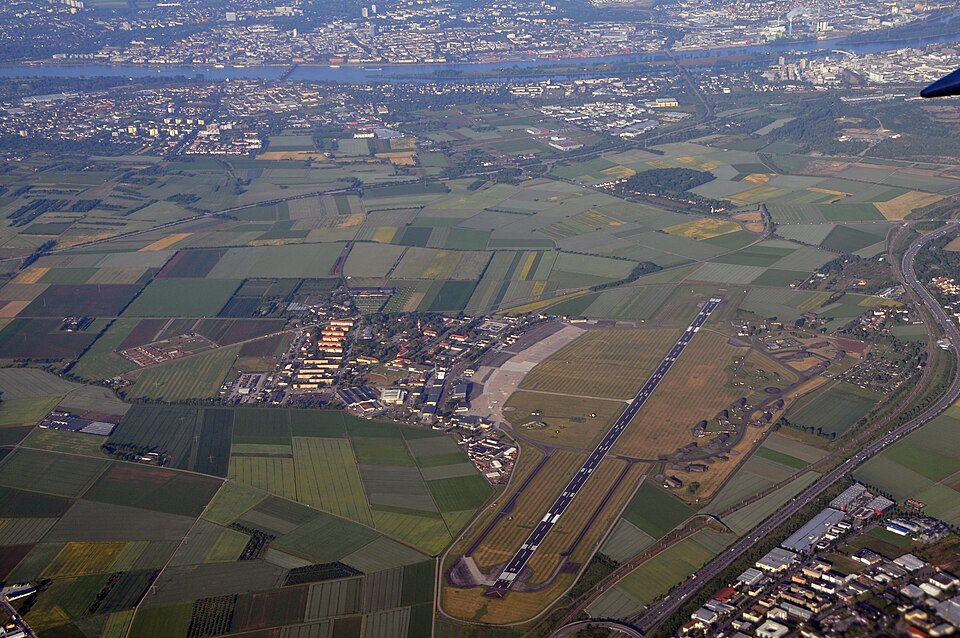
Clay Kaserne, Wiesbaden: The Army's Command and Intelligence Hub in Europe
Clay Kaserne sits on the edge of Wiesbaden, an old Rhine valley spa town with Frankfurt forty minutes down the autobahn. It is the headquarters of U.S. Army Europe and Africa, the senior Army command on the continent, and home to the 66th Military Intelligence Brigade and the signal and intelligence units that run the Army's information picture for the whole theater. The Soldiers here skew senior and cleared, staff officers, intelligence professionals, and the noncommissioned officers who hold the headquarters together, many of them working in sensitive compartmented spaces where access is the job. A command that sits at the top of the Army in Europe holds its own people to a visible standard, and an allegation at a headquarters like this draws senior attention fast.
A serious case at a headquarters like this is no place to settle for whoever happens to be available. Military defense is the whole of the firm's practice, and Europe has grown into a real part of it since the move to Tampa. We come to you and try the case, because what matters in a contested court martial is the lawyer in the courtroom, not his address.
The General Who Would Not Give Up Berlin
Clay Kaserne is named for General Lucius D. Clay, and the name fits the place. As military governor of the American zone after the war, Clay was the man on the ground when the Soviets blockaded West Berlin in 1948 and cut two million people off from food and fuel. The pressure to abandon the city was real, and the easy course was to let it go. Clay refused. He ordered an airlift that most thought impossible, and American and Allied aircraft flew around the clock. The blockade ended after almost eleven months, and the airlift continued for about fifteen months in all. He held the line under enormous pressure when backing down would have been simpler. That refusal to yield ground because the odds look bad is the standard we bring to a case at Wiesbaden.
Why Soldiers at Wiesbaden Bring Us In
We win court martial cases. Military defense is all we do, and Soldiers fly us in from all over the world because of our trial record. The military justice system is not built to find the truth; it exists to preserve good order and discipline, and a headquarters command at the top of the Army in Europe will make an example of a Soldier to show the force it holds the standard. A serious case is investigated by Army CID, and for sexual assault and other covered offenses the decision to refer charges to a court martial no longer belongs to your command but goes to an independent Special Trial Counsel. Your Trial Defense Service counsel may be capable but carries a heavy caseload inside the same system, which is why Soldiers serious about winning bring in their own counsel.
UCMJ Charges We Defend at Wiesbaden
Do not read the list below as a menu. These are the most common charges at Wiesbaden, and we defend any UCMJ offense a service member can face.
Security Clearance and Classified Information (UCMJ Article 92 and Article 134). At an intelligence and headquarters post, your clearance is your career, and an investigation can suspend your access long before any charge is proven. A mishandling allegation, a spillage, a security violation, or any serious charge can pull your access and put you in front of a security clearance review, which runs on a standard far below what a court martial requires. That review is administrative and separate from the court martial, and it is not something we handle, but it runs on what the criminal investigation finds, so the way to protect your clearance is to fight the underlying allegation hard, which is our job.
Sexual Assault and Sex Offenses (UCMJ Article 120 / Article 134). These allegations route to an independent Special Trial Counsel now, and the command treats a report as established before the investigation is finished, all the more so at a headquarters where senior leaders watch how every case is handled. These cases demand counsel who will run an independent investigation and contest the case rather than let the allegation stand in for proof, because a conviction means a federal record and can mean confinement, with registration required for a covered sex offense under the applicable federal and state law.
Domestic Violence and Assault (UCMJ Articles 128b and 128). Domestic violence under Article 128b is charged as aggressively as any offense in the UCMJ since the Office of Special Trial Counsel took these cases over. It covers a spouse, an intimate partner, or a family member, and it treats strangulation or suffocation as its own charge that the government can bring even with no visible injury. A qualifying conviction also triggers the federal Lautenberg firearms bar, which can end an Army career because a Soldier has to be able to carry a weapon. We also defend assault under Article 128, where self defense is a recognized defense.
Larceny, Drugs, and Off Duty Conduct (UCMJ Articles 121, 112a, and 134). Property cases turn on the intent the government has to prove rather than assume, and drug cases turn on the chain of custody and the government's burden to prove any use was knowing and wrongful. A Soldier is subject to the UCMJ off duty, so a night out in Wiesbaden or over in Frankfurt, or a DUI on the A66 between them, comes back to the command, and a serious off post incident in Germany can put you in front of the German Polizei and a German court as well. A bad night can put you in front of your command and a foreign legal system at once, so get counsel involved before you talk to anyone.
A Career and a Reputation Worth Defending
Not everyone who calls us about a Wiesbaden case is innocent, and we will not tell you that you are. What matters is how serious the case is, not your rank. If a matter is genuinely minor, your Trial Defense Service counsel can handle it, and we will tell you so honestly. But when the case is serious, everything is on the line at once: your career, your clearance, your retirement, your good name, and your freedom. A court martial conviction is a federal criminal conviction, and where the sentencing parameters apply the confinement range is set by the offense, two and a half to ten years for sexual assault and ten to twenty for rape, with a departure requiring specific facts in writing, on top of a possible punitive discharge and, for a covered sex offense, sex offender registration. That is why you fight. The court’s jurisdiction and the convicted offense determine which sentencing rules apply; some offenses use separate sentencing criteria rather than these ranges.
If you are facing an investigation or court martial at Wiesbaden, reach out for a free defense strategy session. We will tell you exactly what you are facing and how we would defend it. The government is already building its case. The only question is whether anyone is building yours.
Cases Connected to Wiesbaden: Clay Kaserne
These cases include trials, hearings, investigations, and administrative matters. A connection to this location does not necessarily mean that the trial occurred here.
- Case connected to this location: Soldier Violates Lawful Order Protecting Her Children Without Punitive Discharge
- Case connected to this location: Bilecki Walks Five Article 120b Sexual Assault of a Child Specifications Off the Charge Sheet for Special Forces CW2 in Germany; Article 119b SPCM Plea, No Punitive Discharge, No SORNA, 20-Year Retirement
- Case connected to this location: Army Pilot Cleared at Wiesbaden BOI and FEB, Flight Status Restored
FAQ
I work in a cleared job at Wiesbaden and I'm under investigation. Can I lose my clearance even if the charge does not hold up?
Yes, because the clearance review and the court martial are separate tracks with separate standards. Your access can be suspended on the allegation alone, on a far lower standard than a conviction requires, so you can beat the criminal case and still lose the clearance the job depends on if the allegation behind it goes unanswered. The clearance process is administrative and its own separate specialty that we do not handle, but it runs on what the investigation finds, so the most important thing you can do for your clearance is to fight the underlying charge hard from the start, which is what we do.
CID wants to interview me at Wiesbaden. Do I have to talk to them?
No. You are not required to sit for a CID interview or answer their questions. Under Article 31b of the UCMJ you have the right to remain silent and to a lawyer, and you can invoke both at any point, including before the interview begins. CID is collecting evidence, not giving you a chance to explain. Decline, ask for counsel, and call a defense lawyer before you give any statement.
Something happened off post in Wiesbaden. Could the German authorities get involved too?
They can, and they do. A serious off post matter, an autobahn crash or a DUI on the German limit, can be taken up by the German Polizei and prosecuted in a German court on a separate track from the UCMJ case your command is pursuing. Investigations in the two systems may overlap, and what you say to one can affect the other, so do not give a statement to anyone until you have talked to a defense lawyer. The SOFA allocates primary jurisdiction and limits a second trial for the same offense; overlapping investigations do not mean that both countries may freely try the same charge.
Why hire Bilecki Law Group when there are civilian defense lawyers based right here in Europe?
Because the question in a contested case is who tries it best, not who is nearest. Court martial defense is the whole of our practice, our European caseload has grown since the Tampa move, and we fly in for the fight. For a case that can cost you your clearance, your career, and your freedom, the trial record is what counts.