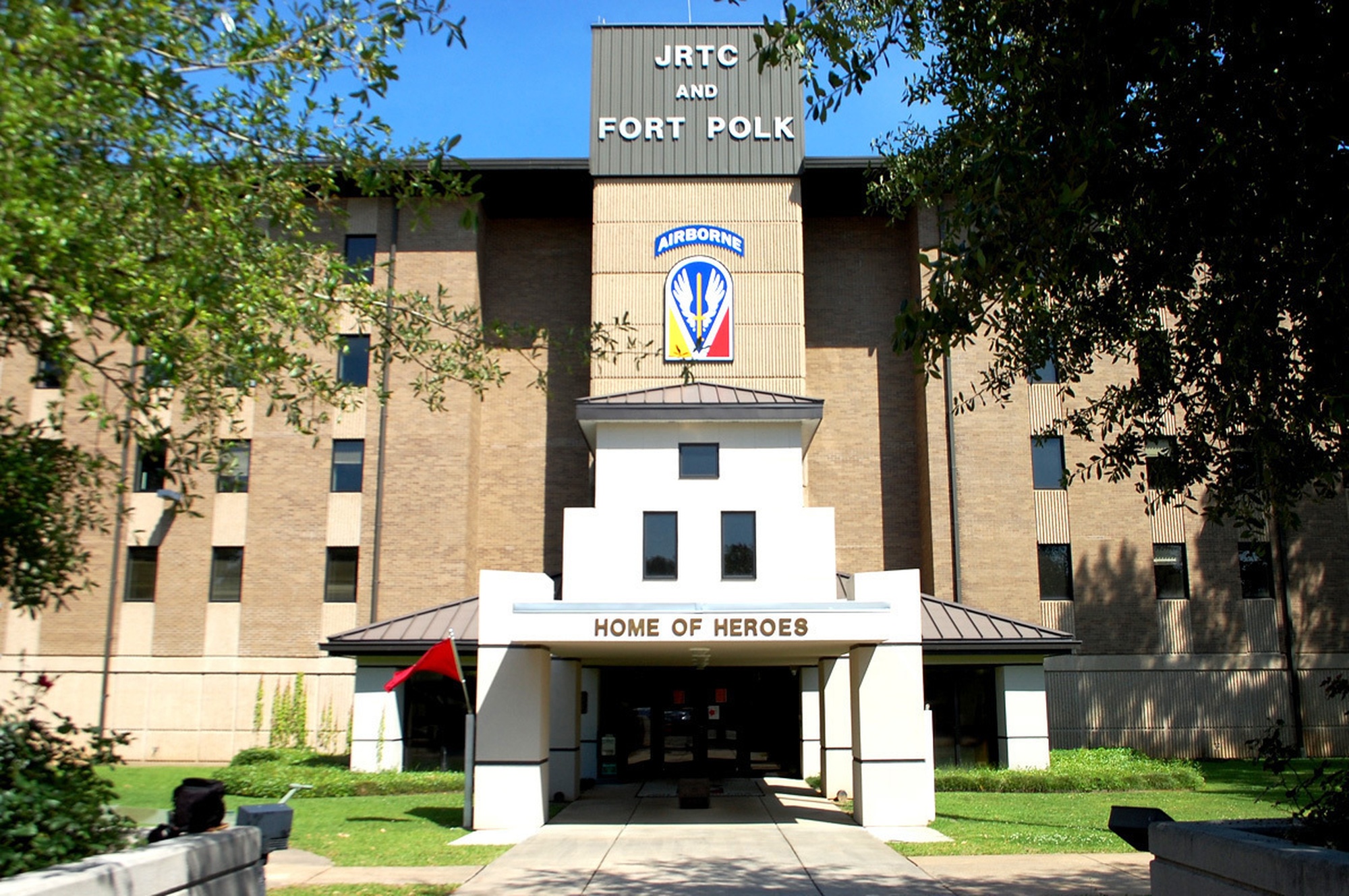
Fort Polk: The Grind at JRTC, and a System That Does Not Care How Hard You Work
If you are a Soldier at Fort Polk, you know the grind. JRTC rotations in the Box, where the red clay clings to your boots and the humidity wraps around you like a wet blanket. Mosquitoes, ticks, chiggers, and snakes through the piney woods, and Leesville is a quiet town with a long drive to anything resembling a city. Your old battle buddy is posting beach photos from Schofield while you are sweating through another field problem. But paradise or Polk, the military justice system does not care how hard the duty is. If it decides to make an example of you, it will roll over a hard working Soldier as fast as anyone else.
A Soldier facing an investigation or court martial at Fort Polk is in a fight for a career, a retirement, and sometimes freedom, and the home of the Joint Readiness Training Center is no place to assume the system will be fair. The only way to win is to deny the prosecution the easy conviction it expects and make it prove every element of what it has charged. Military defense is all Bilecki Law Group does, and Soldiers fly us in from around the world for these cases, to Okinawa, Germany, and Korea, because only the best will do, and while we are not across the street from Polk, we are close, a short flight from our Tampa office.
The General the Fort Now Honors Hit First and Hit Hard
Fort Polk today honors General James H. Polk, a cavalry officer who fought the way you have to fight the UCMJ. In September 1944 Polk took command of the 3rd Mechanized Cavalry Group in combat near Metz, France, and led it to the end of the war. The unit became known as Task Force Polk, and it spearheaded the advances of General Walton Walker's XX Corps as part of Patton's Third Army, driving into Germany at the tip of the spear. Polk was decorated for gallantry three times, once by Patton himself, and earned the Silver Star for his actions in the European campaign. He went on to command at the highest levels, finishing his career as Commander in Chief of U.S. Army Europe, staring down the Soviets across the Iron Curtain. Task Force Polk spearheaded Patton's advance by hitting first and hitting hard, and that is exactly how we fight a court martial at Fort Polk: press the attack and give the prosecution nothing.
Understanding the Military Justice System and How to Beat It
To beat a system where military prosecutors run a high conviction rate, you have to understand what it is. The military justice system does not exist to pursue truth and justice. It exists to maintain order and discipline among the ranks, and for that to work it has to make an example of someone and destroy a career in a very public way. If you are not ready to fight back, it will make that example out of you. That is why we build an aggressive defense from the very start of the investigation, challenge everything where we see an advantage, and concede nothing, because the moment the prosecution thinks it has an easy win, it will take everything you have.
A serious case at Fort Polk is investigated by Army CID, and for sexual assault, domestic violence, and other covered offenses, the decision to refer charges to a court martial no longer belongs to your command. It goes to an independent Special Trial Counsel in the Army's Office of Special Trial Counsel. Tim Bilecki spent years inside that system as a JAG defense counsel and then a Senior Defense Counsel before founding this firm, and he has tried the contested cases that decide careers at installations across the Army. He does not negotiate from fear, and neither should you. When prosecutors at Fort Polk see retained civilian counsel enter the case, the easy path to conviction they expected disappears.
UCMJ Charges We Defend at Fort Polk
The cases below are the most common at Fort Polk. If yours is not here, call anyway, because we defend the full spectrum of military charges.
Sexual Assault and Sex Offenses (UCMJ Article 120 / Article 134). Court martial defense attorneys all over are doing what they can to avoid Article 120 and 134 cases, because the Army's SHARP campaign, just and needed in its aim, has produced a climate where men and women are treated as guilty at the first sign of an allegation. There is no justice for a real victim when an innocent Soldier is prosecuted, and Soldiers have learned to weaponize SHARP against former partners and superiors they dislike, where a false allegation is treated as good as a real one. If you are innocent or the whole story is not being told, you have to stand up and fight, and even where the command cannot prefer charges it will often try to end your career administratively. We start the fight from right here.
Fraud and Larceny (UCMJ Article 121). We defend conspiracy to defraud, BAH and OHA fraud, larceny, wrongful appropriation, and extortion, and BAH fraud is the most common of them. Sometimes the charge comes from an overzealous investigator who fancies himself a detective and is sure he has you, and sometimes it is just a good Soldier trying to provide for his family who got the paperwork wrong. Intent to defraud is a required element, and an administrative error is not a crime no matter how an investigator frames it. These cases collapse when the defense forces the government to actually prove intent.
Domestic Violence and Assault (UCMJ Articles 128b and 128). Domestic violence has grown into one of the heaviest parts of our caseload, prosecuted since the OSTC standup with the force of a sexual assault. Article 128b covers a spouse, an intimate partner, or a family member, and makes strangulation or suffocation a serious charge on its own even with no injury to show. The Lautenberg Amendment adds a serious career risk: a qualifying conviction bars a Soldier from any firearm or ammunition. Plain Article 128 assault is real work here too. We defend assault, aggravated assault, manslaughter, murder, and self defense cases. A fight on or off Fort Polk can often be walked away from without the UCMJ ever getting involved, but the moment something gets swung in anger, a bar stool, a beer mug, a broken bottle, the charges turn serious fast, especially when the other party is a civilian and someone is badly hurt. What is frustrating is how often the civilian started it and walks away with a slap on the wrist while the Soldier is left to stand before the UCMJ. We fight to make sure the whole story gets considered.
Drug Offenses (UCMJ Article 112a). We defend possession, distribution, importation, manufacturing, trafficking, and positive urinalysis cases. Louisiana has not legalized recreational marijuana, but the national drift toward legalization, and easy access in states not far away, leads Soldiers into trouble while the civilian beside them faces nothing. State law does not control the UCMJ. A positive test is not the end of the fight, because the chain of custody has documented weak points, innocent ingestion is a recognized defense, and whether any use was knowing and wrongful remains the government's burden to prove, and these cases require counsel who understands both the science and the elements the prosecution must prove.
Military Specific Offenses (UCMJ Articles 77 to 134). The punitive articles are essential to discipline, but commands do not always wield them consistently, and otherwise good Soldiers end up facing serious and sometimes downright petty charges. Sometimes you fight those on principle, so that command cannot keep enforcing the UCMJ in an arbitrary and capricious way. Charge stacking inflates the maximum punishment and the pressure to plead, and each charge requires proof, so when the defense addresses every one the prosecution frequently cannot sustain them all.
Fight the Military Justice System Even if You Messed Up
We will be straight with you about the reality that you may have made a mistake and run afoul of the UCMJ. Military life is complicated, full of young men and women who wanted to serve and slipped up, and you still do not deserve the worst the system can throw at you, because the more it destroys you, the better the example it makes. What matters here is how serious the case is, not your rank. If it is genuinely minor, a late formation after a good night out in Leesville, the kind of thing that does not call for a civilian trial lawyer, your free Trial Defense Service counsel can resolve it, and we will tell you so honestly. We do not take every case, and we are not going to take your money for one a free counsel can handle. But when the case is serious, and the longer you have served the more you stand to lose, it is all on the line at once: your career, your retirement, your good name, and your freedom. A court martial conviction is a federal criminal conviction. Under the sentencing rules now in force, a judge sentences within set confinement parameters, with mandatory minimum punishments for the most serious offenses, so it can mean real time in confinement, a punitive discharge that follows you for the rest of your life, and on a sex offense a place on a sex offender registry, and that weighs on a brand new private every bit as much as on a twenty year sergeant. That is worth fighting for.
If you are facing an investigation or court martial out of Fort Polk, reach out for a free defense strategy session. We will shoot you straight about what you are facing, and if there is an easy off ramp we will tell you. More likely you are going to have to gear up for a fight, and you will want a brawler beside you. You may love the Army, but you cannot coexist with a military justice system that is out to destroy you. Get ready to fight, and most importantly, get us into the fight on your behalf.
Cases Connected to Fort Polk
These cases include trials, hearings, investigations, and administrative matters. A connection to this location does not necessarily mean that the trial occurred here.
- Case connected to this location: Bilecki Exonerates Army CW2 in Sodomy Case Declared “Hopeless” by Free Attorney
- Case connected to this location: Army SGT Faces Assault Claim After Wall-to-Wall Counseling, Gets Acquittal
- Case connected to this location: Bilecki Closes CID Article 120 Sexual Assault and Article 128b Strangulation Titlings on Army PFC at Fort Johnson Without Preferral; Resolved at Single Article 134 Extramarital Conduct NJP, No Court Martial, No Federal Sex Offender Registration, Soldier Retained
FAQ
I'm here with a rotational unit at JRTC, not stationed at Fort Polk. If something happens during my rotation, whose command handles it?
It depends on your orders and where the alleged misconduct occurred, and during a rotation those lines can get complicated. Generally your parent command retains UCMJ authority over you while you are training at the Joint Readiness Training Center, but the local command and the chain running the rotation can be involved too, and coordination between them affects where your case is heard and who makes the decisions. Being temporarily at Polk does not put you outside the UCMJ, and those jurisdictional details shape your options in ways that are easy to get wrong, which is exactly why you want experienced counsel sorting them out before the case picks up momentum.
A training accident or negligent discharge happened during a JRTC rotation. Am I looking at a court martial or administrative action?
It depends on the harm and on whether anyone was criminally negligent, which is why an early, honest read matters. The Joint Readiness Training Center runs hard force-on-force and live fire training, and a negligent discharge, a vehicle or range mishap, or a training accident can be handled at nonjudicial punishment, administratively, or as a court martial, with a serious one, especially with injuries or a death, drawing CID. If someone died, the government may reach for involuntary manslaughter or negligent homicide, which turn on culpable or simple negligence, not on the bare fact that something went wrong. An accident is not automatically a crime: these cases turn on what the procedures and the standard of care required and whether any breach crossed into criminal negligence. We reconstruct what happened with the right expertise rather than letting a bad outcome stand in for proof.
Army CID wants to interview me at Fort Polk. Do I have to talk to them?
No. Treat a CID request as evidence collection, not a conversation, because that is what it is. Under Article 31b of the UCMJ you can stay silent and ask for a lawyer, and you should before answering a single question. CID will title you as the subject on credible information, a lower bar than probable cause, and that titling can dog your background and clearance checks for years even if the case dies. For covered offenses like sexual assault, the charging decision rests with an independent Special Trial Counsel, not your command, and the strongest defense work happens before charges are ever preferred. Decline, ask for counsel, and get a lawyer engaged before you say anything.