Camp Humphreys: The Largest Overseas Base in the Military, and the Center of Gravity for Korea Court-Martial Cases
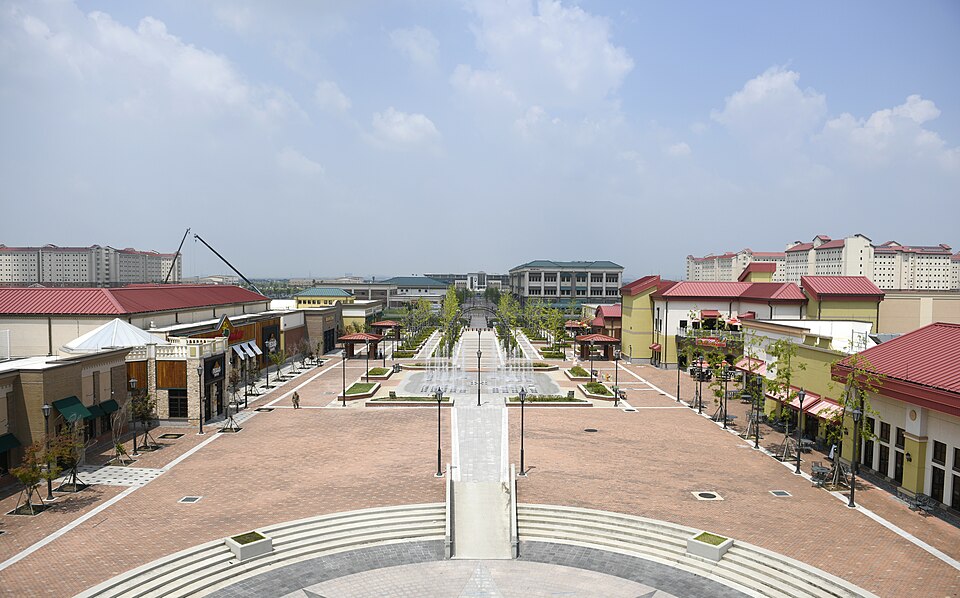
United States Army Garrison Humphreys, in Pyeongtaek south of Seoul, is the largest overseas installation the United States operates anywhere in the world, a base so big that people who live there call it Texas. It is the headquarters now for U.S. Forces Korea, Eighth Army, and the 2nd Infantry Division, the nerve center that the rest of the peninsula has consolidated into. Outside the gate, Anjeong-ri, the strip everyone calls the Ville, fills with Soldiers blowing off steam, and a night there can turn into a UCMJ case in a hurry. Inside the gate, this is where the Army's legal machinery for all of Korea is centered, which means Camp Humphreys is not just a place you can be stationed when a case starts; for most Soldiers in Korea, it is where the case is decided.
That is exactly why the quality of your defense here matters so much. A case out of Camp Humphreys is a fight for a career, a retirement, a clearance, and sometimes your freedom, run by a command that answers to the most-watched headquarters in the Pacific. The only way to win it is to deny the prosecution the easy conviction it is counting on and force it to prove every element of what it has charged.
The Aviator Whose Name Is on the Gate
Camp Humphreys carries the name of a Soldier who died doing the mission in Korea. Chief Warrant Officer Benjamin K. Humphreys was an Army aviator with the 6th Transportation Company when, on November 13, 1961, the CH-21 helicopter he was flying lost control and went down in a rice paddy near the airfield. The post that had been known as K-6 was renamed in his honor the following year, so that the Soldiers who pass through the gate carry the name of a man who gave his life flying these skies. He showed up and flew the mission in a hard place, far from home, and that is the standard we bring to a fight with the military justice system.
Why Soldiers at Camp Humphreys Fly Us In
For this firm, Korea is not a pin on a map, and Camp Humphreys least of all. Tim Bilecki first tried cases in Korea as the Army's Senior Defense Counsel for the Trial Defense Service across the Pacific Rim, stationed at Camp Casey and Yongsan, and when he went civilian he never left the work behind. He has been back to Korea more than sixty times, and for the better part of two decades, year after year without fail, he has returned to Camp Humphreys to try multiple contested cases to verdict and win the vast majority of them. There is no other civilian defense lawyer in the world who can say that: an unbroken record of trying cases at this one base, every single year, for nearly two decades. That is not marketing. It is the deepest first-hand knowledge of how cases are investigated, charged, and tried at Camp Humphreys that any civilian counsel possesses, built in the courtroom and not in a brochure. The proof is on the record, in repeated full acquittals in contested courts martial at Camp Humphreys, in cases ranging from sexual assault and domestic violence to BAH fraud and attempted murder.
The reason that matters is that the military justice system was not built to find the truth. It exists to preserve good order and discipline, and overseas it does that by making a public example, because a destroyed career in Korea keeps the rest of the force in line and reassures the headquarters back in Washington. A serious case at Humphreys is investigated by the Army's Criminal Investigation Division, and for sexual assault, domestic violence, and other covered offenses the decision to refer charges to a court martial no longer belongs to your command; it goes to an independent Special Trial Counsel in the Army's Office of Special Trial Counsel, whose Korea field office sits right here. When prosecutors see counsel with this kind of Korea record fly in, the easy conviction they were counting on is gone.
UCMJ Charges We Defend at Camp Humphreys
The charges below are where most Camp Humphreys cases start, not where our defense ends. Whatever you are facing under the UCMJ, we take it.
Sexual Assault and Sex Offenses (UCMJ Article 120 / Article 134). The Army's SHARP campaign began with a legitimate goal, but its execution has turned the accusation itself into the case, treated as established before the investigation is finished, and when the evidence will not support a charge the command falls back on administrative separation. A consensual encounter in the barracks or off post in the Ville can be reported as assault weeks later, and a command focused on demonstrating it takes every report seriously is in no position to weigh motive or credibility. These cases route to an independent Special Trial Counsel now, and they demand counsel who will investigate independently and contest the case early, before charges are preferred.
Fraud and Larceny (UCMJ Article 121 / Article 107). BAH and OHA fraud is one of the most aggressively investigated offenses in Korea, and the pattern is usually the same. A Soldier on an unaccompanied tour draws a housing allowance set by where the family lives back in the States, and the government alleges the claimed address, often one of the three highest rate areas in the country, New York, San Francisco, or Honolulu, is not where the dependents really live, treating the inflated difference as the theft. These are built by finance auditors and CID comparing forms, leases, and addresses over months or years, and they are charged as larceny of government funds under Article 121, with the housing form itself charged as a false official statement under Article 107. What decides them is intent: the government has to prove you knowingly claimed an address you knew was false to inflate the allowance, not that a confusing entitlement was wrong or that you did what finance told you to do. We have defended a great many of these, and they are won on the paper trail and the intent the government would rather assume. The actual entitlement depends on the orders, dependent status, authorized location, and applicable housing rule; an address discrepancy alone does not establish an overpayment or criminal intent.
Domestic Violence and Assault (UCMJ Articles 128b and 128). Domestic violence is one of the largest parts of our caseload. Since the Office of Special Trial Counsel took these cases over, it is charged as aggressively as any offense in the UCMJ. Article 128b covers violence against a spouse, an intimate partner, or a family member. It makes assault by strangulation or suffocation a separate, serious charge, even when there is little or no visible injury. These cases often turn on a heated argument, a later recantation the command presses forward anyway, and the question of who the real aggressor was, and they carry a consequence many Soldiers never see coming: under the federal Lautenberg Amendment, a qualifying domestic-violence conviction bars you from possessing a firearm or ammunition, which can end a Soldier’s career because the job requires carrying a weapon. We also defend assault under Article 128, including the off post confrontations in the Ville that become a host nation matter when a local is involved. Self defense is a recognized defense, and what actually happened often looks different from the first report once the evidence comes in.
Drug Offenses (UCMJ Article 112a). The drug problem the command worries about most in Korea is not a positive test for marijuana; it is synthetic drugs and other substances that service members buy off the local economy or have shipped into the country, which the command treats as a serious criminal matter and an embarrassment in front of the host nation. A positive urinalysis or a possession allegation is serious, but it is not the end of the fight. The chain of custody can be challenged, innocent ingestion is a recognized defense, and the government still has to prove that any use or possession was knowing and wrongful.
Military Specific Offenses (UCMJ Articles 92, 134, and more). The Ville outside the Humphreys gate is where a lot of these charges begin. Camp Humphreys does not run a Security Forces town patrol with arrest powers there the way the Air Force bases do; it runs a courtesy patrol. That detail has general military authority over Soldiers out on the economy but no law-enforcement or apprehension power, so an instruction from it that you ignore can become a failure to obey charge under Article 92, while an actual apprehension comes from the military police or the Korean National Police. Stack a drunk and disorderly under Article 134 on top of dereliction, false official statement, and conduct unbecoming, and a single night becomes a charge sheet built to inflate the punishment and the pressure to plead. Every specification still has to be proven beyond a reasonable doubt on its own, and the weak ones on an inflated charge sheet are the first to fall.
Even If You Made a Mistake, Fight Anyway
Not every Soldier who calls us is innocent, and we do not pretend otherwise. Some made a bad decision and know it. That does not mean swallowing the worst the system can impose, prosecuted by an institution eager to turn a Korea case into a warning for the whole force. Rank does not decide whether you need a firm like ours; the seriousness of the case does. If it is genuinely minor and does not call for a civilian trial lawyer, your free Trial Defense Service counsel can handle it, and we will tell you so honestly, because we do not take every case and we will not take a Soldier's money for one that does not need us.
But when the case is serious, all of it is on the line at once: your career, your retirement, your good name, and your freedom. A court martial conviction is a federal criminal conviction. Under the sentencing rules now in force, a military judge sentences within set confinement parameters, with mandatory minimum punishments for the most serious offenses, so it can mean confinement a judge has little room to avoid, a punitive discharge that follows you for life, and on a sex offense a place on a registry, no matter how junior you are. That is when you stand and fight, because the system assumes you will not.
If you are facing an investigation or court martial at Camp Humphreys, reach out for a free defense strategy session. We will come to Korea, give you a straight read on what you are facing, and lay out how we would defend it. The investigation is already moving. The only question is whether you will have someone fighting just as hard for you.
Cases Connected to Camp Humphreys
These cases include trials, hearings, investigations, and administrative matters. A connection to this location does not necessarily mean that the trial occurred here.
- Case connected to this location: CID’s Pretext Call to Push E-3 Into Confession of Sexual Assault Misses the Mark
- Case connected to this location: Army SGT Cleared of $30K BAH Fraud Charge by Excluding Key Evidence
- Motions hearing: Drug Charges for Army E-3 Dismissed After Bilecki’s Motion to Suppress Evidence
- Case connected to this location: No Court Martial for Army SGT Facing Charges of Rape of Intoxicated Victim
- Case connected to this location: O-2 Gets with a Soldier Claiming Rape After Husband Finds Out, Bilecki Steps In
- Trial venue: Army CW2 Facing Triple Sexual Assault Charges Receives Full Acquittal in Korea
- Case connected to this location: Army 1SG Accused of Assaulting Fraternizing Female 1LT and PFC Gets Acquittal
- Case connected to this location: Bilecki Defends Army E-4 Facing CBD Oil and CLEN Possession and Import Charges
- Case connected to this location: Army SGT’s Drinking, Drug Use and Sex with Junior Soldier End Up with SILT
- Case connected to this location: Bilecki Compiles Evidence, Exonerates Army SGT from BAH Fraud Allegations
- Case connected to this location: Wife Suspecting Infidelity Raises Domestic Violence Claim, Bilecki Clears Charges
- Case connected to this location: Night Out in Korea Leads to Sex Assault Allegations, Army SGT Acquitted
- Case connected to this location: Sleepwalking Defense Clears Army O-3 of Misconduct Charges in Drunken Incident
- Case connected to this location: Full Acquittal in False Statements Case After Uncovering Coercive CID Tactics
- Case connected to this location: False Allegations of Sexual Assault Cleared for Army Specialist in Korea
- Case connected to this location: Bilecki Averts Charges for Army SGT in BAH Case in Korea
- Case connected to this location: Soldier Tests Positive for THC, Defense Argues Other Medications Could Interfere
- Case connected to this location: Soldier Attacked by Army Paralegal with Made-Up Claims, Bilecki Wins Legal War
- Case connected to this location: Bilecki Wins Full Withdrawal of Eighth Army CG GOMOR on UCMJ Article 120 Abusive Sexual Contact Allegation Against 28-Year Sergeant Major at Camp Humphreys; No AMHRR Filing, No L3 Flag, No QMP, No Retention Board, Retirement Preserved
- Case connected to this location: Bilecki Walks Eighth Army CG Off Article 120 Court Martial Referral and Holds AdSep to General (UHC) on Junior Soldier at Camp Humphreys; No Court Martial, No SORNA, No OTH Discharge
- Case connected to this location: Bilecki Walks Five-Charge GCM at Camp Humphreys to 150 Days, No Punitive Discharge After Government Stacks Resurrected Fort Campbell GOMOR Onto Yongsan Bar-Fight Charge Sheet
- Case connected to this location: Bilecki Wins R.C.M. 604 Pretrial Withdrawal of Hennessy Bottle Assault and Orbital Fracture Specifications at Camp Humphreys Super Gym Brawl GCM; Chapter 10 Discharge in Lieu of Trial Approved, No Federal Conviction
- Case connected to this location: Bilecki Walks $200K Six-Charge OHA Fraud GCM Track at Camp Humphreys to a No-Confinement Special Court Martial; Article 105 Forgery Dismissed, 4 of 5 Article 107 False-Swearing Specs Dismissed, Stipulated Loss Cut from $200K to $101K, No Punitive Discharge
- Case connected to this location: Bilecki Wins Local Filing Only on 2ID CG GOMOR Alleging Article 128b Domestic Violence and Article 134 Extramarital Sexual Conduct Against Army Chief Warrant Officer at Camp Humphreys; No Permanent AMHRR Filing, No Court Martial, No Officer Elimination
- Case connected to this location: Bilecki Wins Chapter 10 Approval Day Before Article 120 GCM Trial at Camp Humphreys; All Article 120 Charges Dismissed, No Federal Sex Offender Registration, No Federal Felony Record
- Case connected to this location: Bilecki Closes Article 120 OSTC Investigation on Army Major at Camp Humphreys with OSTC Deferral; No Charges, No Adverse Action
- Case connected to this location: Bilecki Holds Eighth Army CG GOMOR on $15,000 BAH Overpayment to Local Filing Only for Special Operations Warrant Officer in Korea; Career Preserved
- Case connected to this location: Bilecki Wins Full Acquittal on Army SPC at Camp Humphreys in Multi-Alleged-Victim Article 80 / 120 / 128 / 128b GCM After M.R.E. 412 Motion Denied
- Case connected to this location: Bilecki Closes AR 15-6 ACFT Falsification GOMOR Track on Army SFC in Korea with GOMOR Withdrawn in Its Entirety
- Case connected to this location: Bilecki Closes Larceny / BAH-OHA Fraud Court Martial Track on Army SGT at Camp Humphreys with GOMOR Only; No Preferral, No Court Martial
- Case connected to this location: Bilecki Closes International OHA Fraud GCM on Army 1LT at Camp Humphreys with Resignation in Lieu of Court Martial
- Case connected to this location: Bilecki Wins Full Acquittal on Army CPT at Camp Humphreys in Article 128b Domestic Violence and Strangulation Court Martial
- Case connected to this location: Bilecki Wins Full Acquittal on Army SFC at Camp Humphreys in Article 120 Abusive Sexual Contact Court Martial
- Case connected to this location: Bilecki Closes Article 120 OSTC Investigation on Army 1LT at Camp Humphreys with OSTC Deferral; No Action Taken by Command
- Case connected to this location: Bilecki Defeats Both Sexual Touch Allegations and Chaplain Confidentiality Claim at Camp Humphreys BOI; Captain Retained
FAQ
Army CID wants to interview me at Camp Humphreys. Do I have to talk to them?
No. A CID interview is evidence collection, not the chance to clear things up that agents make it sound like, and under Article 31b of the UCMJ you can stay silent and ask for a lawyer before answering anything. CID will also title you as the subject on credible information, a lower bar than probable cause, and that titling can trail you through background and clearance checks for years even if the case is dropped. For covered offenses like sexual assault, an independent Special Trial Counsel, not your command, decides whether to refer charges to a court martial, and the highest value defense work happens before that decision is made. Say nothing, ask for counsel, and get a lawyer engaged before you say a word.
A night out in the Ville outside Humphreys turned into an allegation. How serious is it?
Serious, because the Ville, the bar strip just outside the Humphreys gate, is where a lot of these cases begin, and a command at the Army's Korea headquarters will not be seen letting misconduct there slide in front of the host nation. One night can turn into an Article 128 assault after a fight, a SHARP complaint after a consensual encounter, a drunk and disorderly, or an off post incident with a Korean national the command treats as a diplomatic matter. None of that is decided yet. A fight is often self-defense once the full sequence comes out; a sexual-assault report turns on credibility and what the texts, the timeline, and the witnesses actually show; and a stacked charge sheet tends to thin out once the government has to prove each count. Say nothing to CID and get counsel before you give a statement.
My BAH or OHA in Korea is being investigated as fraud. How do these cases work?
Yes, and more often than the government wants you to believe, because they turn on intent, not on a wrong number. The Korea version almost always has a Soldier on an unaccompanied tour whose allowance is set by where the family lives back home, and CID or a finance audit alleging the claimed address, usually a high cost area like Honolulu, San Francisco, or New York, is not where the dependents actually reside. The gap is charged as larceny under Article 121, and the housing form itself as a false official statement under Article 107. What the government must prove is that you knew the claim was false and meant to inflate the allowance, and that is a high bar in a system where the rules are genuinely confusing, finance routinely gives bad guidance, and families really do move. The case comes apart when someone reconstructs the addresses, the leases, the dates, and what you were actually told. Owing the money back is one thing; proving you set out to steal it is another, and that is where these are won.
My case was deferred by the Office of Special Trial Counsel, but now I'm facing a GOMOR. Can I still fight it?
Yes, and you should, because the GOMOR is where a case the prosecutor would not take to trial can still end your career. When OSTC defers the case, the command often pivots to administrative action on the same allegation under a far lower standard of proof, a preponderance rather than beyond a reasonable doubt, and a General Officer Memorandum of Reprimand is the usual vehicle. You get a window to respond before the general decides whether to file it locally or permanently in your official file, and that rebuttal is the real fight, because a permanent filing can block promotion and lead to further review: for an officer, a Board of Inquiry or show cause elimination, and for an enlisted Soldier, administrative separation or QMP, depending on the applicable rules and separate referral decisions. We handle a great many of these, and the time to fight is at the GOMOR, before it becomes the basis for a board, not after.