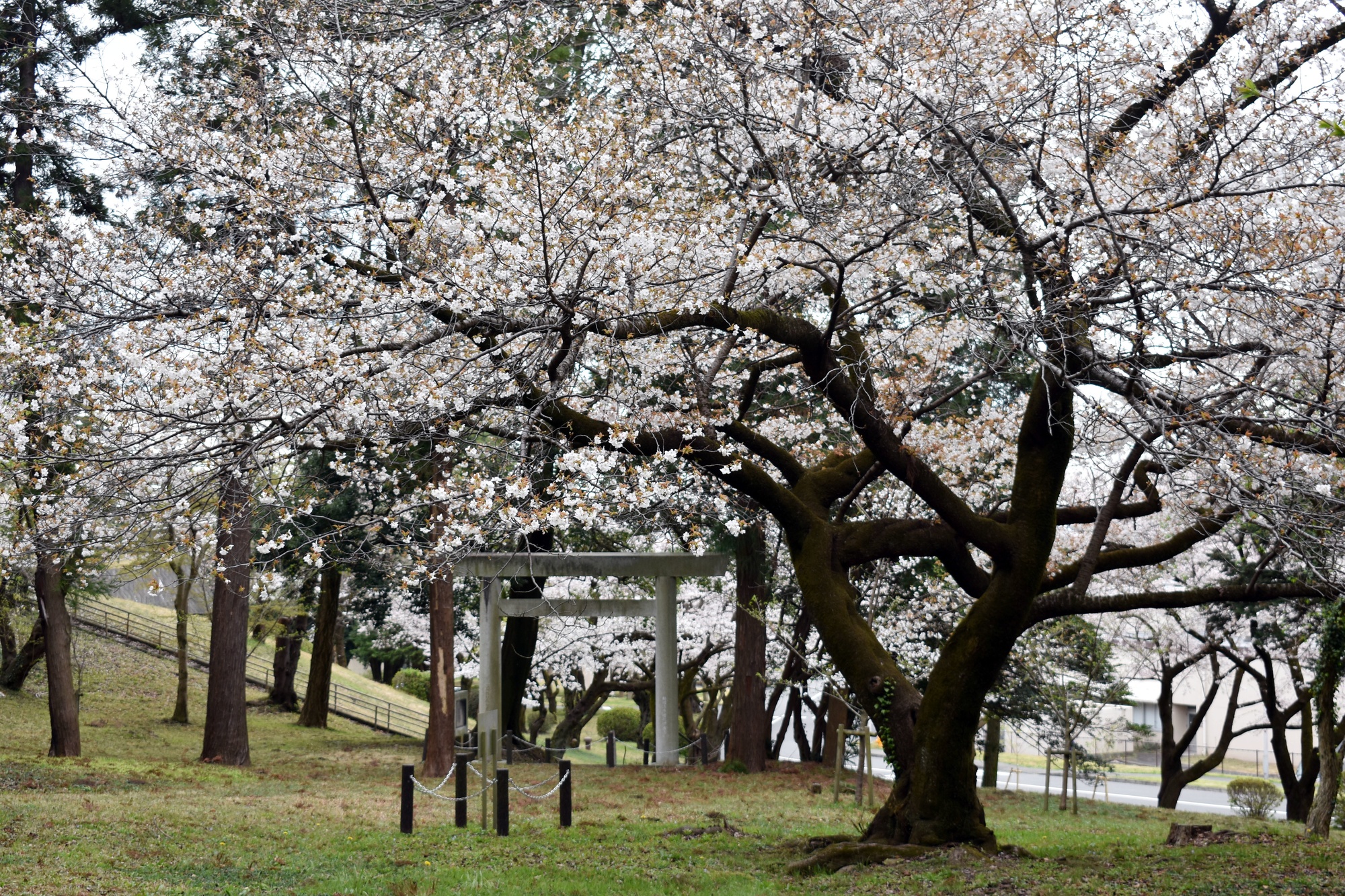
Camp Zama: The Home of U.S. Army Japan, on the Ground of the Old Imperial Military Academy
About twenty five miles southwest of Tokyo, in Kanagawa Prefecture, Camp Zama is the headquarters of U.S. Army Japan and the forward headquarters of I Corps, the nerve center for every Soldier the Army stations in the country. It carries the staff, the senior commanders, and the legal offices that run Army justice across Japan, and the courtroom that hears those cases sits here. For a Soldier in trouble, that means the machinery deciding your future is concentrated on this one post.
That concentration cuts against you. A headquarters full of senior officers and a command acutely aware of how it looks to the host nation has every reason to charge hard and resolve a case cleanly, and in Japan there is a second danger most Soldiers never think about until it lands on them: under the Status of Forces Agreement, the Japanese authorities can pursue the same off base incident at the same time the Army does, and the Japanese criminal system works nothing like ours. A case connected to Camp Zama is a fight for a career, a retirement, and sometimes freedom, and the only way to win it is to deny the prosecution the easy conviction it expects and make it prove every element of what it has charged. The SOFA allocates primary jurisdiction and limits a second trial for the same offense; overlapping investigations do not mean that both countries may freely try the same charge.
The Ground Where the Tables Turned
Camp Zama sits on the grounds of the former Imperial Japanese Army Academy, the place Emperor Hirohito named Sōbudai, where Japan trained tens of thousands of the officers who would fight the United States. After the war the U.S. Army took that same ground as its headquarters in Japan, and among the first Americans to serve here were the Nisei, the Japanese American Soldiers of the Military Intelligence Service. Many of them had families held behind barbed wire in American internment camps even as they put on the uniform, learned the language of their grandparents, and shipped to the Pacific to interrogate prisoners, translate captured plans, and then help run the occupation from posts like Zama. They served a country that doubted them and answered the doubt with sheer performance, work later credited with shortening the war in the Pacific. They refused to accept the presumption against them, and that is the standard we bring to a fight at Camp Zama: when the system has already decided who you are, make it prove it.
Why Soldiers at Camp Zama Fly Us In
Few civilian firms have the Pacific in their bones the way this one does. Tim Bilecki finished his active duty career as the Army's Senior Defense Counsel for the Trial Defense Service across the Pacific Rim, responsible for the defense of Soldiers throughout Korea, Okinawa, and mainland Japan, and the practice he built afterward never left the region, returning to Japan again and again for the cases local counsel would rather not take. A prosecutor who sees that kind of Pacific experience walk into a Camp Zama case knows the easy win just left the room.
That experience matters because the system you are up against was never built to find the truth. It exists to preserve good order and discipline, and overseas it does that by making a public example, because a destroyed career reassures the host nation and the headquarters watching. A serious case at Camp Zama is investigated by Army CID, and for sexual assault, domestic violence, and other covered offenses the decision to refer charges to a court martial no longer belongs to your command; it goes to an independent Special Trial Counsel in the Army's Office of Special Trial Counsel. The case is then tried here, where U.S. Army Japan runs its military justice. Your free counsel at the Trial Defense Service may be capable and committed, but works a heavy caseload inside that same system, which is why Soldiers who are serious about the fight bring in their own counsel.
UCMJ Charges We Defend at Camp Zama
Think of the list below as the most common cases at Camp Zama, not the limit of what we handle under the UCMJ.
Sexual Assault and Sex Offenses (UCMJ Article 120 / Article 134). The Army's SHARP program operates at Camp Zama under intense institutional pressure. An allegation is often treated as established before the investigation is finished, and where the evidence will not support a charge, the command falls back on administrative separation. Soldiers have learned that a complaint can be used to retaliate against a former partner or to derail an investigation into the accuser's own conduct, and a command under pressure to show it takes every report seriously is not positioned to weigh those motives. These cases route to an independent Special Trial Counsel now, and they demand counsel who will investigate independently and contest the case early, before charges are preferred.
Fraud and Larceny (UCMJ Article 121 / Article 107). Housing allowance fraud is common at overseas posts, and at Zama it usually starts with an accompanied Soldier drawing OHA against a lease in the expensive Kanagawa economy, or BAH set by a dependent's stateside address, where an auditor later decides the rent, the residence, or the dependent's location does not match the paperwork. Because the housing form is what authorizes the rate, the government charges it as larceny under Article 121 and as a false official statement under Article 107, the same paperwork serving as both the theft and the lie. The government still has to prove intent, and a finance office error, bad guidance, or a family that genuinely moved is not a scheme. We defend BAH and OHA fraud, larceny, wrongful appropriation, and conspiracy to defraud.
Domestic Violence and Assault (UCMJ Articles 128b and 128). Domestic violence under Article 128b has become one of the largest parts of our caseload, and with so many families stationed at a headquarters post the command sees a great deal of it. Since the Office of Special Trial Counsel took these cases over it is charged as aggressively as any offense in the UCMJ. It covers a spouse, an intimate partner, or a family member, and makes strangulation or suffocation a separate, serious charge even when there is little or no visible injury. A qualifying conviction also triggers the federal Lautenberg firearms bar, which can end a Soldier's career because the job requires carrying a weapon. We also defend assault under Article 128. Self defense is a recognized defense, and what actually happened often looks different from the first report once the evidence comes in.
Drug Offenses (UCMJ Article 112a). Japan enforces some of the strictest drug laws in the developed world, and a substance bought off the local economy or shipped into the country can bring both a court martial and a Japanese prosecution that is far harsher than anything stateside. A positive urinalysis or a possession allegation is serious but not the end of the fight. The chain of custody can be challenged, innocent ingestion is a recognized defense, and the government still has to prove that any use or possession was knowing and wrongful. The overlap of military and Japanese jurisdiction is exactly why you want counsel involved before you say a word.
Military Specific Offenses (UCMJ Articles 92, 134, and more). With Tokyo a train ride away, a lot of these charges begin on liberty in Roppongi or the clubs of Shibuya and Shinjuku, or closer to home in Sagamihara and Machida. The Army runs a courtesy patrol in the areas Soldiers frequent, which has general authority over Soldiers on the economy but no power to apprehend, so ignoring its instruction can become a failure to obey charge under Article 92, while an actual apprehension comes from the military police or the Japanese police. Add a curfew or off limits violation under a USFJ general order, a drunk and disorderly under Article 134, and conduct unbecoming on top, and a single night becomes a charge sheet built to inflate the punishment and the pressure to plead. Every specification still has to be proven beyond a reasonable doubt on its own, and the weak ones on an inflated charge sheet are the first to fall.
A Headquarters Case Is Still a Winnable Case
Not every Soldier who calls us from Japan is innocent, and we do not pretend otherwise. Some made a bad decision and know it. That does not mean they have to accept the worst the system can hand out, prosecuted by an institution eager to turn one case into a warning for everyone watching at the headquarters. Rank does not decide whether you need a firm like ours; the seriousness of the case does. If a matter is genuinely minor, your Trial Defense Service counsel can handle it, and we will tell you so honestly, because we do not take every case.
But when the case is serious, everything is on the line at once: your career, your retirement, your good name, and your freedom. A court martial conviction is a federal criminal conviction. Under the sentencing rules now in force it can mean confinement a judge has little discretion to avoid, a punitive discharge that follows you for life, and on a sex offense a place on a registry, no matter your rank. That is why you fight, and the system is counting on you not to.
If you are facing an investigation or court martial connected to Camp Zama, reach out for a free defense strategy session. We will fly to Japan, tell you exactly what you are facing, and lay out how we would defend it. The government is already building its case. The only question is whether anyone is building yours.
Cases Connected to Camp Zama
These cases include trials, hearings, investigations, and administrative matters. A connection to this location does not necessarily mean that the trial occurred here.
- Board of inquiry: BAH Fraud Charges | Camp Zama | Case Results
- Case connected to this location: Government Dropped Court Martial Charges Facing Prospects of Intensive Defense
- Case connected to this location: Serious Charges Dropped After Calling for Multiple Local National Witnesses
- Case connected to this location: Army SSG in Japan Cleared of Codeine Misuse After Innocent Ingestion Defense
- Case connected to this location: Bilecki Challenges Ambiguous Evidence of Sex Assault, Case Resolved with GOMOR
- Case connected to this location: Bilecki Exposes Gaps in DNA Rape Evidence, Gets Not Guilty Verdict for Army SSG
- Trial venue: Bilecki Wins Full Acquittal on Army CPL at Camp Zama in 3-Spec Article 120 GCM; DNA Pattern Affirmatively Matched the Defense
- Case connected to this location: Bilecki Wins Full Acquittal on Army SFC at Camp Zama in Child Abuse Court Martial; Panel Deliberates Less Than Two Hours
- Case connected to this location: Bilecki Closes DUI NJP and AR 635-200 Chapter 14-12c AdSep on Army SSG at Camp Zama via Conditional Waiver Locking Floor at General (Under Honorable Conditions); No Court-Martial, No OTH
- Case connected to this location: Army SSG Receives Full Acquittal After Cross-Examining Government Evidence
FAQ
Army CID wants to interview me at Camp Zama. Do I have to talk to them?
No, and not without counsel. A CID interview is evidence collection, not your chance to explain, and under Article 31b of the UCMJ you have the right to remain silent and to ask for a lawyer. CID will also title you, listing you as the subject of the investigation in its files at a low threshold, which can follow you in background and clearance checks even if the case is later dropped. For covered offenses like sexual assault, the decision to refer charges to a court martial no longer belongs to your command but to an independent Special Trial Counsel. The most valuable work happens before charges are preferred, so decline the interview, ask for counsel, and call a lawyer before you say anything.
I was detained by the Japanese police off base. What happens now?
It is both, and the Japanese side is the one most Soldiers are not prepared for. Under the Status of Forces Agreement the Japanese authorities hold the primary right to prosecute most off base offenses against Japanese nationals, and their system is very different from ours: police and prosecutors can hold and interrogate a suspect for up to roughly twenty three days before any charge is filed, often without a lawyer in the room, with intense pressure to produce a confession. The United States generally keeps custody of a service member until the Japanese indict, but that is exactly the window where the damage is done. You can be facing the Japanese process and a court martial over the same night, and a statement to either one can sink both, so get experienced counsel and command and consular help involved immediately, before you talk to anyone.
A night out in Tokyo, in Roppongi or Shibuya, turned into a problem. Why is that worse here than it would be back home?
Because in Japan an off base incident, especially one involving a Japanese national, stops being a bad night and becomes a problem the command feels it has to answer for in front of the host nation. Leadership worries about the diplomatic fallout, so it tends to charge hard and assume the worst about the Soldier, and a curfew or an off limits district adds its own Article 92 charge on top. Tokyo also runs on a train system that stops around midnight, which strands Soldiers and turns a missed last train into a curfew violation. What actually happened usually looks different once the witnesses and any video come in, which is the work a prepared defense does early, before memories fade.