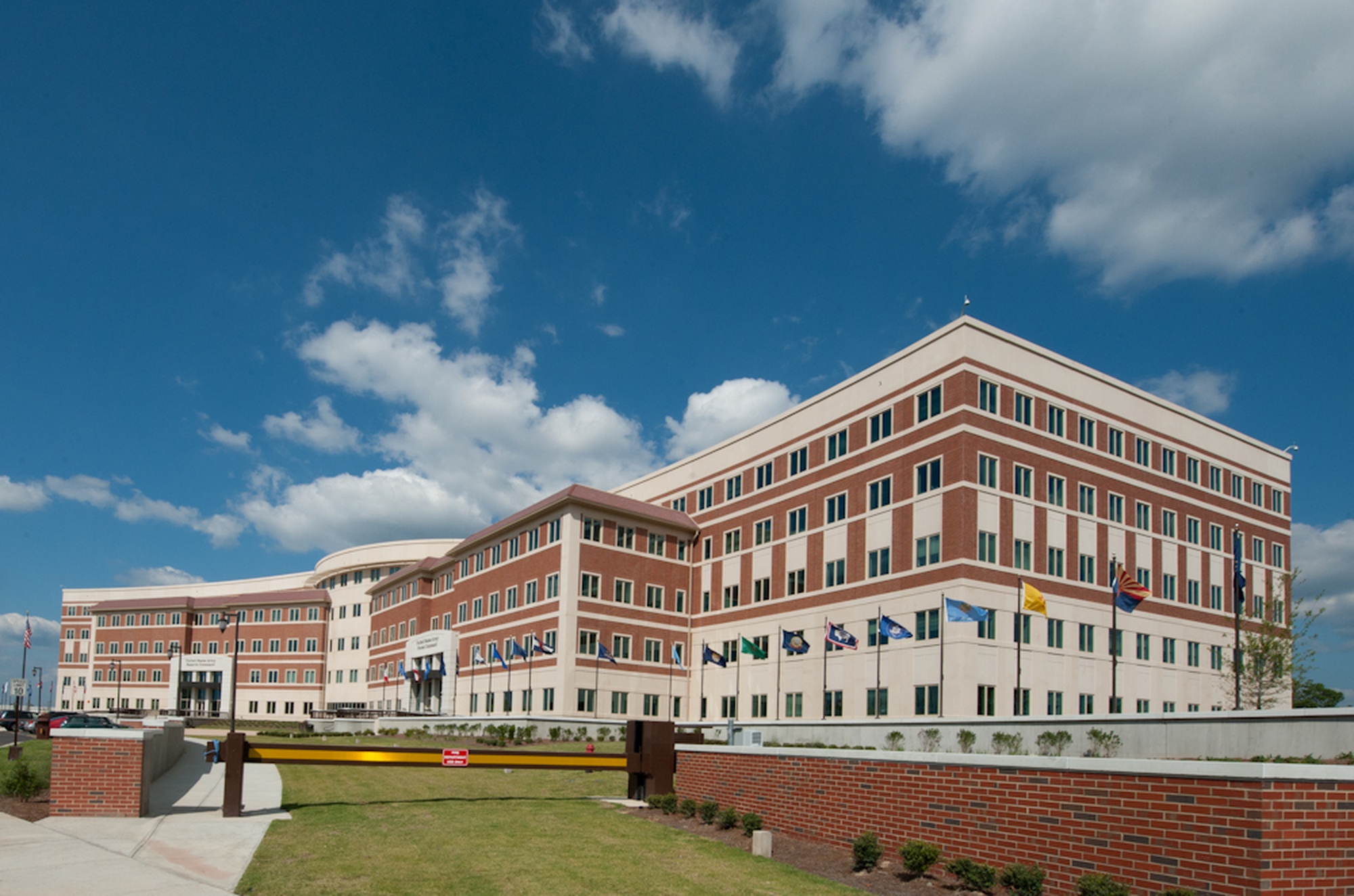
Fort Bragg: The Center of the Airborne Universe
If you are stationed at Bragg, you know the rhythm: pre-dawn formations, the All American Freeway run between Fayetteville and the gate, an immediate-response cycle that can put you on a bird with almost no notice, and a town Soldiers have called Fayettenam since the Hay Street days, even now that downtown has scrubbed itself up and gone respectable. This is the largest installation in the Army, the heart of the airborne and Army special operations, home to the 82nd Airborne Division, the XVIII Airborne Corps, and the quieter units nobody puts on a briefing slide. Half of Fayetteville is military, and the post runs at a tempo that can grind a career down as fast as it builds one up.
That tempo feeds a busy military justice system. Put this many high speed, aggressive Soldiers in one place, add the bars out on Bragg Boulevard and the strain of constant deployment, and UCMJ cases are a steady current rather than an occasional event. A court martial at Bragg is a fight for a career, a retirement, and sometimes freedom, and the size and speed of this place do not make the system any more forgiving. The only way to win is to deny the prosecution the easy conviction it expects and force it to prove every element of what it has charged. There is no shortage of lawyers around Fayetteville. There is a shortage of lawyers who will take the hard case to trial and win it. That is the firm service members fly in from around the world, to Okinawa, Germany, and Korea, and while we are not across the street from Bragg, we are close, a short flight from our Tampa office.
The Paratrooper This Post Is Named For
Fort Bragg carries its old name again, and this time it honors a paratrooper who trained on this very ground. Pfc. Roland L. Bragg was a quiet kid from Maine who came to Bragg in World War II, learned to jump with the 17th Airborne, and shipped to Europe. On a freezing January morning outside Bastogne, in the teeth of the Battle of the Bulge, he was wounded and taken prisoner along with four other paratroopers. At a German aid station, one of those prisoners got to talking with a guard and the two found they were both Freemasons, and the guard agreed to let them slip away, but only if Bragg first knocked him out cold so it would look like a struggle. Wounded as he was, Bragg obliged, pulled on the guard's uniform, commandeered a German ambulance, loaded his wounded brothers in the back, and drove for the American lines through heavy fire the whole way. He was certain none of them had survived, and he carried that for nearly fifty years, until one of the men he saved tracked him down. He earned the Silver Star for it. That refusal to quit is exactly what we bring to a fight at Fort Bragg.
Why Soldiers at Fort Bragg Fly Us In
The military justice system does not exist to find the truth. It exists to maintain order and discipline, and it does that by making public examples of the Soldiers it prosecutes, because a visible conviction keeps everyone else in line whether the person was guilty or not. Military prosecutors run a high conviction rate, and that is not luck. It reflects a system built to produce convictions, resourced to win, and counting on you to fold.
A serious case at Bragg is investigated by Army CID, and for sexual assault, domestic violence, and other covered offenses, the decision to refer charges to a court martial no longer belongs to your command. It goes to an independent Special Trial Counsel in the Army's Office of Special Trial Counsel. Tim Bilecki spent years inside that system as an Army JAG defense counsel and then a Senior Defense Counsel before going civilian, and he built Bilecki Law Group into a firm that flies in worldwide to try the cases other lawyers tell their clients to plead out. Fort Bragg sits squarely in our area of operations, and when prosecutors here see that kind of counsel enter a case, the easy path to conviction they expected disappears.
UCMJ Charges We Defend at Fort Bragg
Do not read the list below as a menu. These are the most common charges at Fort Bragg, and we defend any UCMJ offense a service member can face.
Sexual Assault and Sex Offenses (UCMJ Article 120 / Article 134). The Army's Sexual Harassment/Assault Response and Prevention program operates at Bragg under the same pressures that drive these prosecutions everywhere: commands under political pressure to show accountability, allegations treated as established before the investigation is finished, and administrative action pursued even when the evidence will not support a charge. Soldiers have also figured out that a SHARP complaint can stall an inquiry into the accuser's own conduct, settle a score with an ex, or gain an edge in a personal dispute, and a command bent on demonstrating compliance is in no position to weigh those motives. Even when the evidence will not support a charge, the command will fall back on administrative separation, where the career damage can match a conviction, so both fronts have to be fought. You need counsel willing to investigate independently and contest every element.
Fraud and Larceny (UCMJ Article 121). BAH fraud is one of the most common financial charges we see around Bragg, and most of these cases start as an administrative error rather than a scheme: a miscalculated entitlement, an unreported change in dependent status, a paperwork mistake an investigator decides to treat as intent to defraud. Intent is a required element and must be proven beyond a reasonable doubt, not inferred from the existence of an overpayment, and a great many of these cases collapse once the defense forces the government to actually establish it. Our property and financial practice runs from BAH and OHA fraud to larceny, wrongful appropriation, extortion under Article 127, and conspiracy under Article 81 to defraud the government.
Domestic Violence and Assault (UCMJ Articles 128b and 128). At a post the size of Bragg, domestic violence is one of the largest parts of our caseload, and the Office of Special Trial Counsel now prosecutes it as hard as any charge in the UCMJ. Article 128b reaches violence against a spouse, an intimate partner, or a family member, and makes strangulation or suffocation a serious charge on its own, even with no visible injury. A qualifying conviction triggers the federal Lautenberg firearms bar, which can end careers because a Soldier has to carry a weapon. We also defend assault under Article 128. Put this many young, aggressive Soldiers in one place and off duty fights are going to happen, and most are handled quietly. The ones that produce Article 128 charges involve a serious injury, a weapon, or a civilian on the receiving end and a command ready to make an example. Often the Soldier charged was defending himself or a friend, and who actually started it and who escalated tends to look very different once the whole episode is reconstructed, not built from whatever the first person told investigators. Self defense is a legitimate, recognized defense, and we try assault, aggravated assault, manslaughter, and murder cases.
Drug Offenses (UCMJ Article 112a). North Carolina has not legalized recreational marijuana, but the national drift toward legalization breeds a dangerous assumption that what is increasingly legal off base must carry lighter consequences in uniform. It does not. A positive urinalysis is serious, but it is the starting line of a fight, not the finish. The chain of custody has documented weak points, innocent exposure is a recognized defense for some substances, and whether possession was knowing or merely incidental is a question of fact the government has to prove. Defending one takes counsel who understands both the testing science and the elements the prosecution still has to prove.
Military Specific Offenses (UCMJ Articles 77 to 134). Fraternization, unauthorized absence, disobeying a lawful order, conduct unbecoming, and the rest of the punitive articles have no civilian analog, and they get enforced selectively. Charge stacking, loading on offenses to inflate the apparent severity, is a standard tool meant to make pleading to one count look reasonable. But every count carries its own burden of proof, and made to meet it on all of them, the prosecution often cannot.
Even a Paratrooper's Mistake Is Worth Fighting
A lot of Soldiers read a page like this knowing they crossed a line. Whether a case calls for a firm like ours depends on how serious it is, not on your rank. If it is genuinely minor, something dumb off duty that does not call for a civilian trial lawyer, your free Trial Defense Service counsel can handle it, and we will tell you so honestly, because we do not take every case, and we will not take your money for a case a free counsel can handle. But when the case is serious, and the longer you have served the more you stand to lose, all of it is on the line: your career, your retirement, your good name, and your freedom. A court martial conviction is a federal criminal conviction. Under today's military sentencing rules, a judge sentences within fixed confinement parameters, with mandatory minimum punishments for the most serious offenses, so it can land you in confinement and brand you with a punitive discharge for life, and on a sex offense put you on a sex offender registry, a weight a brand new private carries every bit as much as a senior NCO. That is worth fighting for, because military investigators cut corners and prosecutors overreach all the time, and somebody has to hold them to account. Even if you did slip up, you do not have to accept the worst the system can impose, and you do not have to let it pile on charges you never committed.
If you are facing an investigation or court martial at Fort Bragg, reach out for a free defense strategy session. We will tell you exactly what you are facing and how we would defend it. We are based in Tampa, but the whole world is our area of operations, and Bragg is right in the middle of it.
Cases Connected to Fort Bragg
These cases include trials, hearings, investigations, and administrative matters. A connection to this location does not necessarily mean that the trial occurred here.
- Case connected to this location: SSG Slaps Soldier on Ruck March into Action, Faces Sex Assault, Bilecki Defends
- Case connected to this location: No Adverse Action Taken for Army CPT in Sex Assault Case After Robust Defense
- Case connected to this location: 5th Special Forces Group Officer's GOMOR Rescinded in Full
- Case connected to this location: Bilecki Walks ~$190,000 FLIPL on Sitting Battalion Commander to Significantly Reduced Partial Liability via AR 710-2 Table 2-2 Receiving-Unit Accountability Argument; Battalion Command Preserved
- Case connected to this location: No Article 120 Charges Preferred After Fort Bragg CID Investigation; Text Messages Undermined Sexual Assault Allegation
- Case connected to this location: Bilecki Wins R.C.M. 604 Pretrial Withdrawal of Hennessy Bottle Assault and Orbital Fracture Specifications at Camp Humphreys Super Gym Brawl GCM; Chapter 10 Discharge in Lieu of Trial Approved, No Federal Conviction
FAQ
CID wants to interview me at Fort Bragg. Do I have to talk to them?
No. Under Article 31b of the UCMJ you have the right to stay silent and to a lawyer, and you should invoke both plainly, "I am invoking my rights and I want a lawyer," rather than try to explain your way out. A "voluntary" CID interview is not your chance to clear things up; it is evidence collection, and at a post the size of Bragg the system moves fast, so the early decision to talk or not often decides the whole case. The most important phase is before charges are ever preferred, because a defense that gets in early can take an investigation apart while it is still a CID file and lead the command, or the independent Special Trial Counsel, to decline to prefer at all. Say nothing, ask for counsel, and call a lawyer before the first word.
I've been flagged, titled, or pulled off jump status at Fort Bragg before any charge. What does that do to my career?
These administrative hits land fast and on their own track, well before any court martial. A flag, the suspension of favorable personnel actions, freezes your promotions, schools, awards, and reenlistment; a CID titling decision puts your name in a federal database that is hard to remove even if the case goes nowhere; and at Bragg, where so much runs on jump status, a special operations billet, and an SCI clearance, a command or security manager can pull all of it within days of an allegation, long before guilt is ever decided. That is why a real defense fights the flag, the titling, and the clearance suspension in parallel with the criminal case, because the administrative cascade can end an airborne or special operations career before the court martial is ever resolved.
Who decides whether I'm charged with sexual assault at Fort Bragg now, my commander or the OSTC?
The OSTC, not your commander. For covered offenses like Article 120 sexual assault, the decision to refer charges to a court martial now sits with an independent Office of Special Trial Counsel, a specialized prosecutor outside your chain of command. That changes who your defense is really aimed at. It also means the highest value moment in the whole process is before charges exist, when a strong defense submission can get the Special Trial Counsel to decline to prefer, and many allegations are resolved exactly that way, without a court martial ever happening.