Wheeler Army Airfield: Home of 25th Infantry Division Aviation and the Courthouse Where Hawaii Army Cases Are Tried
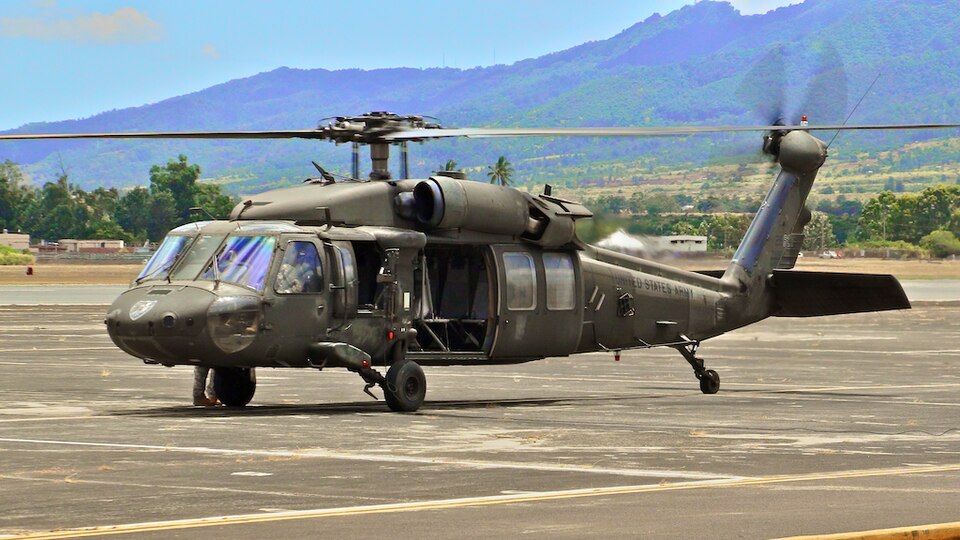
In the center of the Oahu plateau, right next to Schofield Barracks, Wheeler Army Airfield is the home of the 25th Combat Aviation Brigade, the Apache, Black Hawk, and Chinook crews that put the 25th Infantry Division in the air across the Pacific. The flight line here has history in it. On the morning of December 7, 1941, Wheeler Field was hit minutes before the battleships at Pearl Harbor, its fighters caught and burning on the ground, and a few pilots still managed to get airborne and into the fight. Today it remains one of the busiest Army aviation hubs in the theater, and it is also the place where Hawaii Army courts martial are heard. If you serve anywhere on Oahu and your case goes to trial, there is a good chance it ends up right here.
For an aviator, a case at Wheeler carries a threat most Soldiers never face: long before any court martial, an allegation can pull you off flight status and put your wings in front of a Flying Evaluation Board. The criminal case and the aviation case run on their own tracks, and you can be fighting both at once. That is why a serious matter here has to be handled from the start by counsel who understands the military justice system and what an investigation does to a flying career.
The Native Hawaiian Who Held the Hill Alone
If you want to understand what it means to hold your ground and fight, look to a Hawaii son buried just down the road at Punchbowl. Private First Class Herbert K. Pililaʻau of Oahu was drafted during the Korean War and thought hard about claiming conscientious objector status before deciding his service was an act of care for the men beside him. In September 1951, on the slopes of Heartbreak Ridge, his platoon was ordered to pull back under an overwhelming assault, and Pililaʻau volunteered to stay behind and cover the withdrawal. He poured fire from his automatic rifle into the attacking force, and when the ammunition ran out he threw grenades, and when the grenades were gone he fought with his trench knife and his fists until he was overrun. When his unit retook the position the next day they found forty enemy dead around him. He was the first Native Hawaiian to receive the Medal of Honor, and he gave everything so the men behind him could live. That refusal to leave the people counting on you is the standard we bring to a fight at Wheeler.
Why Soldiers and Aircrew at Wheeler Bring Us In
We win court martial cases. Service members fly us in from all over the world because military defense is all we do, and our trial record proves it. Bilecki Law Group was also founded in Honolulu and tried cases across Oahu for more than a decade, so a case at Wheeler comes with both a national trial record and real knowledge of the very courtroom where it will be heard.
It matters because the military justice system is not built to find the truth. It exists to preserve good order and discipline, and it does that by making an example of someone. A serious case at Wheeler is investigated by Army CID, and for sexual assault, domestic violence, and other covered offenses the decision to refer charges to a court martial no longer belongs to your command but goes to an independent Special Trial Counsel. For a rated aviator, the command can also move to ground you and convene a Flying Evaluation Board on the same allegation. Your detailed Trial Defense Service counsel may be capable but carries a heavy caseload inside the same system that is prosecuting you, which is why Soldiers and aircrew serious about winning bring in their own counsel.
UCMJ Charges We Defend at Wheeler Army Airfield
We defend the full range of UCMJ charges. The ones below are the most common at Wheeler Army Airfield, not the boundary of what we will fight.
Flight Status, Aviation Safety, and Dereliction (UCMJ Article 92). The danger unique to an aviation post is that an allegation reaches your wings before it reaches a courtroom. A flight discipline matter, a safety incident, a positive urinalysis, or any serious charge can get you pulled from flight status and sent to a Flying Evaluation Board, which decides your aviation future on a standard far below what a court martial requires. The command will also reach for dereliction of duty under Article 92 around a missed standard or a violated flight regulation. We defend the criminal charge and the Flying Evaluation Board together, because for an aviator the board can end the career just as surely as a conviction.
Sexual Assault and Sex Offenses (UCMJ Article 120 / Article 134). The Army runs its SHARP program at Wheeler under intense institutional pressure, and an allegation is often treated as established before the investigation is finished. These cases route to an independent Special Trial Counsel now, a dedicated prosecutor whose only job is to win them. Beating that takes a defense that runs its own investigation and is built to try the case, not one that waits for the government to get it right, because a conviction means confinement, a federal record, and a place on a sex offender registry.
Drug Offenses (UCMJ Article 112a). Hawaii has a longstanding methamphetamine problem, and for aircrew a drug allegation is doubly serious because a positive urinalysis grounds you on top of the criminal exposure. A positive test is serious but not the end of the fight, because the chain of custody can be challenged, innocent ingestion is a recognized defense, and the government still has to prove any use was knowing and wrongful. Get experienced counsel involved as early as you can, because the government works hardest to lock in its case at the very start.
Domestic Violence and Assault (UCMJ Articles 128b and 128). Domestic violence under Article 128b has become one of the most aggressively charged offenses in the UCMJ since the Office of Special Trial Counsel took these cases over. It covers a spouse, an intimate partner, or a family member, and it treats strangulation or suffocation as its own charge that the government can bring even with no visible injury. A qualifying conviction also triggers the federal Lautenberg firearms bar, which can end an Army career because a Soldier has to be able to carry a weapon, and for an aviator it can threaten flight status as well. We also defend assault under Article 128, including the off base fights the military can still prosecute under the UCMJ even when civilian police never filed a charge, where self defense is a recognized defense and what actually happened often looks different from the first report once the evidence comes in.
Larceny and Fraud (UCMJ Articles 121 and 107). Most money and property cases here are straightforward theft allegations under Article 121: aviation parts or tools that go missing from a workspace, a government travel card charge the command calls theft, or a dispute over who owned what. When a signed document like a travel voucher or a finance form is involved, the government adds a false official statement under Article 107 and treats an honest error or bad finance guidance as a deliberate lie. We defend larceny, wrongful appropriation, and false official statements, and we win them on the paper trail and on the intent the government would rather assume than prove.
Off Duty and Military Specific Offenses (UCMJ Articles 134, 113, and 92). A lot of these charges start off duty, and from Wheeler that means Wahiawa right outside the gate, the bars of Waikiki, and the nightlife of Chinatown in Honolulu. A Soldier is subject to the UCMJ off post just as much as on it. A DUI, a drunk and disorderly, or a downtown fight comes back to the command, and it rarely stops at one charge. The command stacks disorderly conduct under Article 134, a violated regulation under Article 92, and for an officer conduct unbecoming under Article 133, to drive up the maximum punishment and the pressure to plead. Every specification still has to be proven beyond a reasonable doubt on its own, and the weak ones on an inflated charge sheet are the first to fall.
Holding Your Ground at Wheeler
Very few Soldiers start a career expecting to face a court martial, and there is a stubborn myth in the ranks that only bad Soldiers ever do. It is a myth, and we see it disproven every time we fight and win a contested case for someone whose career was worth defending. Not everyone who calls us is innocent, and we do not pretend otherwise. Some made a mistake and know it. That does not mean accepting the worst the system can hand out, and if a matter is genuinely minor, your Trial Defense Service counsel can handle it, and we will tell you so honestly.
But when the case is serious, everything is on the line at once: your career, your wings, your retirement, your good name, and your freedom. A court martial conviction is a federal criminal conviction, and where the sentencing parameters apply the judge sentences within a confinement range set by the offense, two and a half to ten years for sexual assault and ten to twenty for rape, with specific facts in writing required to support a departure. It can also mean a punitive discharge, the end of flight status, and on a covered sex offense sex offender registration. That is why you fight, and the system is counting on you not to. The court’s jurisdiction and the convicted offense determine which sentencing rules apply; some offenses use separate sentencing criteria rather than these ranges.
If you are facing an investigation or court martial at Wheeler Army Airfield, reach out for a free defense strategy session. We know this island and the courtroom your case will be heard in, and we will tell you exactly what you are facing and how we would defend it. The government is already building its case. The only question is whether anyone is building yours.
Cases Connected to Wheeler Army Airfield
These cases include trials, hearings, investigations, and administrative matters. A connection to this location does not necessarily mean that the trial occurred here.
- Trial venue: Bilecki Tries Article 120b GCM at Wheeler on 60-Year Charge Sheet; 18-Month Adjudged Sentence
FAQ
I'm an Army aviator and I've been pulled off flight status over an investigation. Can I lose my wings even if I beat the charge?
Yes, because the Flying Evaluation Board and the court martial are separate tracks with separate standards. The board can act on the same allegation on a preponderance standard, far below what a conviction requires, so you can win the criminal case and still lose your aviation career if the board side is not fought. That is why the underlying allegation has to be defended on both fronts from the start. We handle the criminal charge and the Flying Evaluation Board together, because for an aviator they are two halves of the same fight.
Where will my court martial actually be held?
Right here, in the courthouse on Wheeler Army Airfield. Oahu Army courts martial are tried at Wheeler, next to Schofield, which is one reason knowing this courtroom and the people who work in it matters. Your free Trial Defense Service counsel works out of the same place and can be very capable, but carries a heavy caseload inside the same system that is prosecuting you, so for a serious case Soldiers often bring in their own counsel to work alongside or in place of the detailed defense.
CID wants to interview me at Wheeler. Do I have to talk to them?
No. You are not required to sit for a CID interview or answer their questions. Under Article 31b of the UCMJ you have the right to remain silent, and you can invoke it and ask for a lawyer at any point, including before the interview begins. The interview is not your chance to clear things up; it is how CID builds its case, and you do not talk your way out of an investigation, only deeper into one. Decline politely, ask for counsel, and call a defense lawyer before you give any statement.
Why hire Bilecki Law Group instead of a local attorney already on island?
We win court martial cases. Service members fly us in from all over the world because military defense is all we do and our trial record proves it. We are not new to this island either: Bilecki Law Group was founded in Honolulu and tried cases across Oahu for more than a decade, so a national trial record comes with real knowledge of the Wheeler courtroom where your case will be heard. A general island practice cannot offer both.