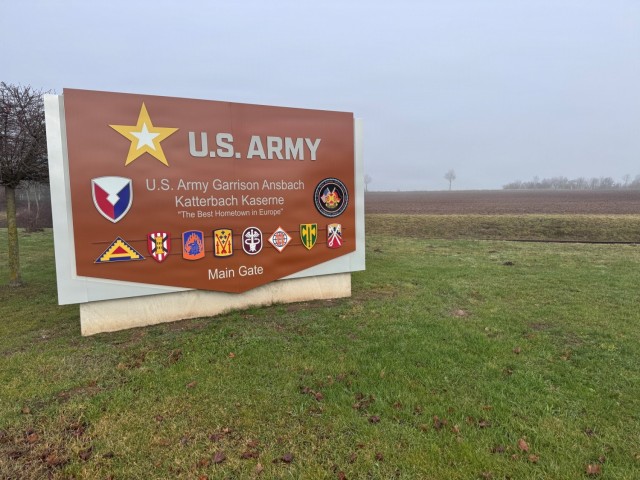
USAG Ansbach: Army Aviation in the Heart of Franconia
In Middle Franconia, in the north of Bavaria, U.S. Army Garrison Ansbach is the Army's combat aviation hub in Europe, spread across Katterbach Kaserne by the city of Ansbach and Storck Barracks at Illesheim. Its largest unit is the 12th Combat Aviation Brigade, the Apaches, Black Hawks, and Chinooks that fly the Army's attack, assault, and medevac missions across the theater, alongside the engineer and air defense units stationed here. The Soldiers are the aircrews, the maintainers who keep the aircraft flying, and the support that runs an aviation community, set among the small Franconian towns about forty minutes from Nuremberg.
For an aviator or a Soldier facing a serious charge in Europe, the right counsel is the one who lives in the courtroom, not the one who lives down the road. Military defense is all we do, and the firm has taken on more and more European work since the move to Tampa. We fly in to wherever the case is, because for something this serious what matters is the trial record.
The Dustoff Pilot Who Kept Going Back
Army aviation's medevac tradition was built by men like Chief Warrant Officer Michael J. Novosel, a Dustoff pilot in Vietnam. On October 2, 1969, Novosel flew his unarmed helicopter into a field swarming with the enemy to reach a group of South Vietnamese soldiers pinned down and unable to move. There was no covering fire and nowhere to hide, so he went in anyway, again and again, fifteen times over two and a half hours, dragging men aboard under fire that shattered his windshield and wounded him at the controls. He pulled twenty nine men out alive. Across his tours he flew more than twenty four hundred missions and carried thousands of wounded to safety. That refusal to leave anyone on the field is the standard we bring to a case at Ansbach.
Why Soldiers at Ansbach Bring Us In
We win court martial cases. Military defense is all we do, and Soldiers fly us in from all over the world because of our trial record. The military justice system is not built to find the truth; it exists to preserve good order and discipline, and an aviation command will make an example of a Soldier to keep standards sharp. A serious case is investigated by Army CID, and for sexual assault and other covered offenses the decision to refer charges to a court martial no longer belongs to your command but goes to an independent Special Trial Counsel. Your Trial Defense Service counsel may be capable but carries a heavy caseload inside the same system, which is why Soldiers serious about winning bring in their own counsel.
UCMJ Charges We Defend at USAG Ansbach
Think of the list below as the most common cases at USAG Ansbach, not the limit of what we handle under the UCMJ.
Flight Status, Aviation Safety, and Dereliction (UCMJ Article 92). For a rated Army aviator, an allegation can reach your wings before it reaches a courtroom. A flight discipline matter, a safety incident, a positive test, or any serious charge can pull you off flight status and send you to a Flying Evaluation Board, which decides your aviation future on a standard far below what a court martial requires. The command will also reach for dereliction under Article 92 around a missed standard or a violated flight regulation. We defend the criminal charge and the Flying Evaluation Board together, because for an aviator the board can end the career just as surely as a conviction.
Sexual Assault and Sex Offenses (UCMJ Article 120 / Article 134). These allegations route to an independent Special Trial Counsel now, and the command treats a report as established before the investigation is finished, all the more so in a tight aviation community where a case draws attention fast. These cases demand counsel who will run an independent investigation and contest the case rather than let the allegation stand in for proof, because a conviction means confinement, a federal record, and a place on a sex offender registry.
Domestic Violence and Assault (UCMJ Articles 128b and 128). Domestic violence under Article 128b is charged as aggressively as any offense in the UCMJ since the Office of Special Trial Counsel took these cases over. It covers a spouse, an intimate partner, or a family member, and it treats strangulation or suffocation as its own charge that the government can bring even with no visible injury. A qualifying conviction also triggers the federal Lautenberg firearms bar, which can end an Army career because a Soldier has to be able to carry a weapon, and for an aviator it can threaten flight status as well. We also defend assault under Article 128, where self defense is a recognized defense.
Larceny, Drugs, and Off Duty Conduct (UCMJ Articles 121, 112a, and 134). Property cases turn on the intent the government has to prove rather than assume, and drug cases turn on the chain of custody and the government's burden to prove any use was knowing and wrongful. A Soldier is subject to the UCMJ off duty, so a DUI on the autobahn or a night out in Ansbach or Nuremberg that ends badly comes back to the command. A serious off post incident in Germany can also put you in front of the German Polizei and a German court, not just your command. A bad night can mean a court martial and a foreign case at once, so get counsel involved before you talk to anyone.
A Career and a Reputation Worth Defending
We do not assume every Soldier who calls us is innocent, and we will tell you straight. What matters is how serious the case is, not your rank. If a matter is genuinely minor, your Trial Defense Service counsel can handle it, and we will tell you so honestly. But when the case is serious, everything is on the line at once: your career, your flight status, your retirement, your good name, and your freedom. A court martial conviction is a federal criminal conviction, and where the sentencing parameters apply, a judge sentences within a set confinement range, two and a half to ten years for sexual assault and ten to twenty for rape, and must state specific facts in writing to support a departure, along with any required or adjudged punitive discharge and, on a covered sex offense, sex offender registration. That is why you fight. The court’s jurisdiction and the convicted offense determine which sentencing rules apply; some offenses use separate sentencing criteria rather than these ranges.
If you are facing an investigation or court martial at Ansbach, reach out for a free defense strategy session. We will tell you exactly what you are facing and how we would defend it. The government is already building its case. The only question is whether anyone is building yours.
FAQ
I'm a rated aviator with the 12th CAB and I've been pulled off flight status over an investigation. Can I lose my wings even if I beat the charge?
Yes, because the Flying Evaluation Board and the court martial are separate tracks with separate standards. The board can act on the same allegation on a preponderance standard, far below what a conviction requires, so you can win the criminal case and still lose your aviation career if the board side is not fought. That is why the underlying allegation has to be defended on both fronts from the start, and we handle the criminal charge and the board together.
Army CID wants to interview me at Ansbach. Do I have to talk to them?
No. You are not required to sit for a CID interview or answer their questions. Under Article 31b of the UCMJ you have the right to remain silent and to a lawyer, and you can invoke both at any point, including before the interview begins. CID is collecting evidence, not giving you a chance to explain, and it takes very little to be titled as a subject, a label that follows you for years. Decline, ask for counsel, and call a defense lawyer before you give any statement.
Something happened off post in Germany. Could the German authorities get involved too?
They can, and they do. A serious off post matter in Germany, an autobahn crash or a DUI on the lower German limit, can be taken up by the German Polizei and prosecuted in a German court on a separate track from the UCMJ case your command is pursuing. Investigations in the two systems may overlap, and what you say to one can affect the other, so do not give a statement to anyone until you have talked to a defense lawyer. The SOFA allocates primary jurisdiction and limits a second trial for the same offense; overlapping investigations do not mean that both countries may freely try the same charge.