UCMJ Article 80:Attempts
At Bilecki Law Group, we defend service members from charges of attempted crimes under Article 80 of the UCMJ. If the prosecution has overreached to prove your “attempt,” we’ll fight to hold them accountable for doing so.
Facing an Article 80 charge? See how our court martial defense lawyers handle these cases. Related results: Bilecki Wins Full Acquittal in Malmstrom Internet Sting Trial and Attempted Murder Charge Dismissed; Army Captain Receives Reprimand and General Resignation. Past results do not guarantee a similar outcome.
What Is Article 80 of the UCMJ?
Article 80 of the UCMJ governs attempted crimes. The government must prove that you did an act with the specific intent to commit an offense, and that the act went beyond mere preparation. It must be a substantial step and a direct movement toward committing that offense.
The intended crime does not have to be completed. But the government still has to prove an attempt. Thinking about a crime, talking about an idea and taking a substantial step toward carrying it out are not automatically the same thing.
Thinking about a crime
Talking about an idea
Mere preparation
Substantial step
a direct movement toward the offense
Completed crime
does not have to happen
The government has to establish that you crossed that line.
Your thoughts may have been just thoughts, your comments on an online platform just rantings, and your speech the hypothetical rantings of someone with too much downtime on their hands. Or the prosecution may have messages and conduct it claims show you were carrying out a crime. We examine what you actually said, what you actually did and what the government can prove. If the prosecution has crossed the line from proving an attempt to punishing an assumption, we will challenge it.
Under Investigation? Protect Your Defense Now
Speak with defense counsel before answering questions about the allegation. You can tell investigators that you want a lawyer and do not want to answer questions. Do not delete messages, wipe a phone or ask someone else to change their account. Preserve complete conversations, receipts and other material that may explain what happened. If you already gave a statement, tell your lawyer exactly what you said and how the interview was conducted.
How to Fight Back Against Article 80 Charges
The UCMJ lays out specific elements that must be satisfied to convict, and this is good news for you, because each element offers an opportunity to fight back. We give the prosecution no easy wins and we are there to meet them at every turn. In an Article 80 case, that means testing the alleged intent, the act itself and the connection between the two.
Make the Government Prove What You Intended
The charge must identify the offense you supposedly intended to commit. An angry message does not automatically prove an intent to kill. Being present at a meeting does not, by itself, establish why you went there. A purchase that looks suspicious in an investigator’s summary may have a lawful explanation. We compare the allegation with the full conversation, the sequence of events and the witnesses who can explain what was happening.
The government can prove intent through circumstances; it does not need a confession. Our job is to test the inference it wants the judge or panel to draw. If a genuine mistake of fact or evidence about your ability to form the required intent matters to the charge, we examine that issue under the law governing the particular offense.
Separate Preparation from a Criminal Attempt
Preparation consists of devising or arranging the means or measures necessary for the commission of the attempted offense. A substantial step is conduct that strongly corroborates the accused’s criminal intent and shows a resolve to commit the offense. The government has to establish that you crossed that line.
Consider a service member who keeps a journal describing a plan to sell spice at Kadena Air Base but takes no action to carry it out. The journal may reveal an intention, but the plan alone is not an Article 80 attempt. Now change the facts: the service member obtains what he believes is the drug, arranges a sale and arrives to hand it to the buyer. Those additional acts change the analysis. The defense must address the actual steps alleged, not just the government’s description of someone as a drug dealer.
Journal describing a plan
Takes no action to carry it out
The plan alone is not an Article 80 attempt
Obtains, arranges, arrives
- Obtains what he believes is the drug
- Arranges a sale
- Arrives to hand it to the buyer
Those additional acts change the analysis
We build the timeline around the act the prosecution says crossed the line. Was it still arranging the means to commit an offense, or had the person begun carrying it out? What remained to be done? What did the person believe at that moment? The government does not have to wait for the last act before completion, so a defense cannot rest only on the fact that something remained unfinished.
Read the Whole Conversation and Check Who Took the Alleged Step
A screenshot can leave out the messages that explain it. We examine the full exchange, who introduced the subject, whether plans became specific, what changed and what happened afterward. If identity is disputed, we examine who controlled the account or device and whether the government can attribute the relevant messages and actions to you. Receipts, location information, surveillance and witness accounts may support or contradict the prosecution’s timeline.
An online conversation is not automatically protected just because nobody met in person. Depending on the offense and the content, words themselves may constitute criminal conduct or an important step toward it. Equally, an offensive conversation is not automatically proof of every element of the attempted offense charged. The exact words, their context and the applicable offense matter.
Examine the Sting Operation, Not Just the Arrest
Suppose you meet someone online who says she is 14. You discuss meeting at her house for sex. She asks you to bring gummy bears and condoms. You buy them, send a message saying you are on your way for that purpose, ask whether her mother is home, drive to the address and knock on the door. An undercover NCIS agent answers. The fact that the person was an adult agent does not, by itself, defeat an attempt charge.
That does not end the defense. We examine what you actually believed, what you intended and what the messages and conduct establish. If the criminal design originated with the government and you were not predisposed to commit the offense, entrapment may be a defense. Merely giving someone an opportunity to commit a crime is not entrapment. The agent’s role and the entire exchange must be examined, not assumed.
Determine Why You Stopped
Voluntary abandonment can be a defense, but its requirements are narrow. You must have voluntarily and completely abandoned the intended crime before completing it, solely because you decided it was wrong. Stopping because you feared detection, encountered resistance, could not finish or wanted a better opportunity is different. Messages sent before the arrest, actions taken to stop the plan and the timing of those decisions can matter. Abandoning an attempt also does not erase a separate offense you already completed.
CAN BE A DEFENSE
Voluntarily and completely abandoned before completing it, solely because you decided it was wrong
IS DIFFERENT
- Feared detection
- Encountered resistance
- Could not finish
- Wanted a better opportunity
Challenge Unlawful Searches and Statements Where the Facts Support It
We also review how investigators obtained the messages, seized or searched devices, and questioned you. If a search exceeded lawful authority or a statement was obtained in violation of your rights, we assess whether a motion to suppress is supported. A rights violation does not automatically dismiss the entire case. The remedy depends on the violation, the challenged evidence and what other admissible proof remains.
What Must Be Proved to Convict Under Article 80?
For an ordinary Article 80 attempt, the government must prove all four elements beyond a reasonable doubt:
- An overt act: You performed the act alleged.
- Specific intent: You acted with the specific intent to commit the alleged UCMJ offense.
- More than preparation: Your act amounted to a substantial step and a direct movement toward committing that offense.
- Conduct tending toward completion: The act apparently tended to bring about the intended offense.
The government must also establish the requirements of the particular offense it says you attempted. “Attempt” is not a substitute for identifying the crime and proving the necessary intent. Some attempt offenses are specifically covered by other UCMJ articles, so the charged article and the date of the alleged conduct must be checked.
Attempted Murder Requires an Intent to Kill
Attempted murder requires an overt act directed toward an unlawful killing.
The government must prove a specific intent to kill without legal justification or excuse. An intent to injure, standing alone, is not enough.
The act must go beyond preparation and amount to a substantial step toward that killing.
It must also apparently tend to bring about the unlawful killing. The fact that no one died does not, by itself, defeat the charge.
For attempted premeditated murder, the government must additionally prove a premeditated design to kill. The necessary instructions must also address any properly raised issue of self-defense, accident or other legal justification or excuse.
What If Completing the Crime Was Impossible?
Proof that the intended offense actually occurred or was completed is not required. But the government must prove the required intent and conduct beyond a reasonable doubt. Failure does not excuse an otherwise proven attempt, and intent alone does not establish one.
This is where factual impossibility matters. Someone who rigs an arms depot with what he believes are working explosives, intending to destroy it, cannot rely only on the fact that the explosives were duds. If the government proves a substantial step toward the intended crime, the hidden defect does not provide a defense. Factual impossibility is not a separate element of Article 80, and it does not relieve the government of proving the attempt.
Similarly, soliciting someone else to commit a crime does not, by itself, constitute an Article 80 attempt. It may constitute a separate solicitation offense. The defense has to identify what the government is actually charging and whether the evidence meets that offense’s requirements.
No Halfway Fight
If you’ve ever been downrange in a foreign land, you know there is no such thing as a halfway fight. You may have fought with your siblings growing up and had rules like “not in the face” or quitting when they “say uncle.” You need to get all such notions out of your head when you are gearing up for a fight with the military justice system. Rather, you need to think more like Medal of Honor recipient David Bellavia.
SSG Bellavia was serving with the Army’s 2nd Battalion, 2nd Infantry Regiment during the Second Battle of Fallujah in 2004. Yes, we know the Marines don’t like to admit it, but the Army was there in Fallujah too. His platoon entered a house and ran into a prepared kill zone. Bellavia took an automatic weapon and provided the covering fire that allowed trapped soldiers to get out. A Bradley Fighting Vehicle was brought forward, but the walls prevented it from firing directly at the enemy position. Always leading by example, Bellavia went back inside.
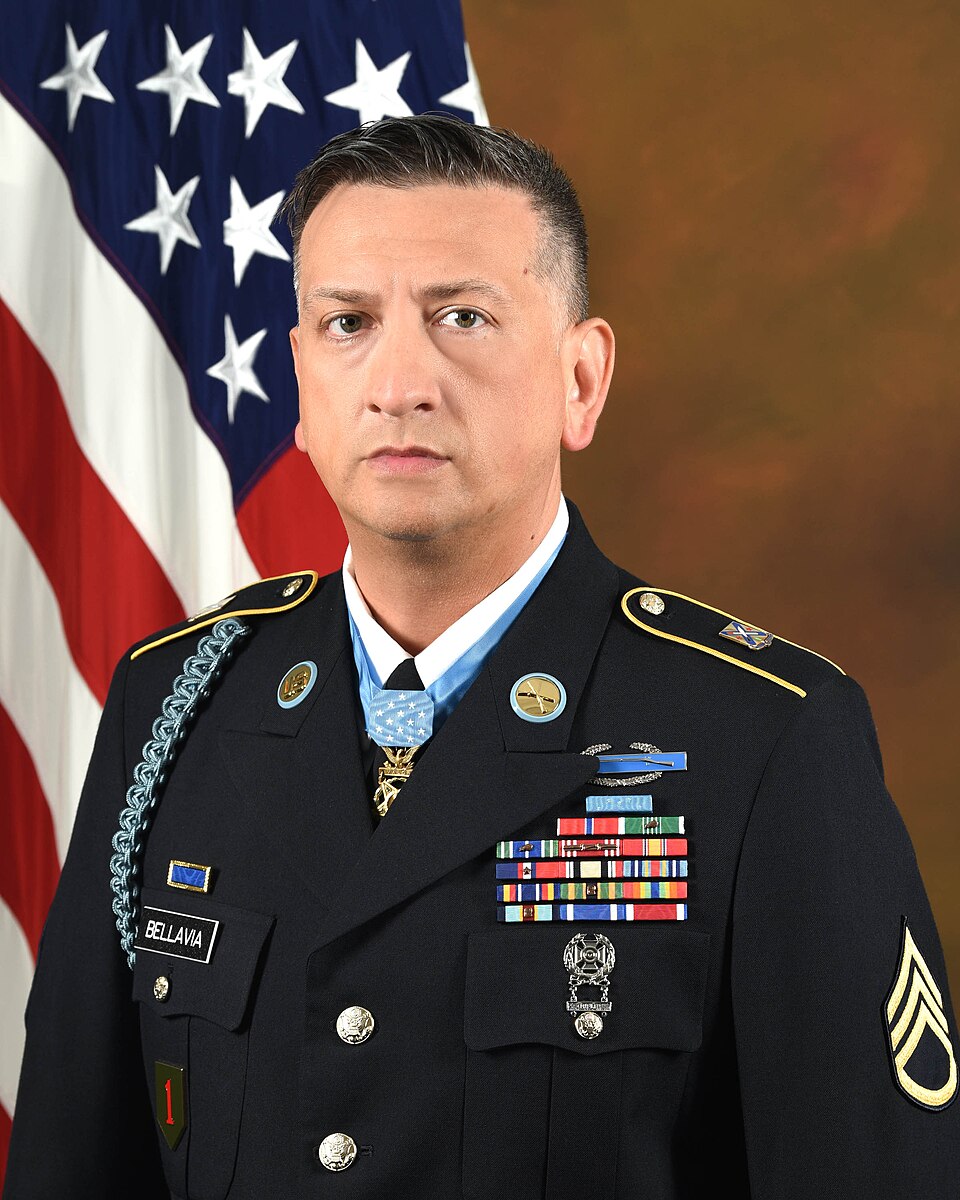
Bellavia noticed an insurgent readying an RPG and cut him down. Another insurgent fired at Bellavia, who wounded him before the man fled into another part of the house. As Bellavia moved to clear a darkened room, an insurgent came down the stairs firing, and the wounded man reappeared and engaged him. Bellavia returned fire and killed both.
Another insurgent emerged from a closet and opened fire. The running fight continued upstairs. Bellavia followed the blood trail, threw a grenade into the room and continued the fight at close quarters. The two men fought hand to hand.
Bellavia later described trying to use his helmet against the insurgent, but his equipment restricted his movement. During the struggle, the insurgent bit him near the waist. Bellavia remembered his folding knife, drew it and drove it into the insurgent’s neck until the threat was eliminated. Even then, the fight was not over. Another insurgent dropped from the roof above him. Bellavia shot him, and the man fell from the roof.
Bellavia’s men finally caught up with him. He had cleared the house, killed four insurgents and badly wounded a fifth. Bellavia received the Medal of Honor for his actions, but at that moment, he was fighting for his life and the lives of his men. You must fight like hell when your freedom and career are on the line. In your case, fighting means preparing the defense, confronting the prosecution’s witnesses and making the government prove its case. Your freedom, career and family deserve that commitment.
What Is the Maximum Punishment Under Article 80?
Now, you might be reading this because you were caught while attempting a violation of the UCMJ and you may think you got off easy. Do not assume an attempt means a minor punishment. With important exceptions, Article 80 permits the same maximum punishment as the completed offense.
The main rules are:
The death penalty is not authorized for an Article 80 attempt.
Confinement is capped at 20 years except for attempted murder. If the completed offense has a lower maximum, that lower maximum still controls. Attempted murder can carry confinement for life without eligibility for parole.
Mandatory minimum punishments generally do not apply, with specified exceptions for attempted rape or sexual assault under Article 120(a) or (b), and attempted rape or sexual assault of a child under Article 120b(a) or (b). Article 56 generally requires a dishonorable discharge or dismissal, as applicable, for those offenses, subject to its plea-agreement exception.
A maximum punishment is not a prediction of your sentence. The underlying offense, the date of the alleged conduct, the type of court-martial and any accepted plea agreement matter. Depending on the offense, other authorized punishments may include forfeitures, reduction in rank for enlisted members and a punitive separation. The rules governing discharge or dismissal depend on military status.
For noncapital general and special courts-martial, the sentencing parameter system applies when every offense of conviction occurred on or after 28 December 2023. The military judge must sentence within the applicable confinement range unless specific facts justify a departure, which must be explained in writing. Offenses assigned sentencing criteria instead require consideration of those criteria. These rules do not replace the lawful maximum punishment or the court-martial’s jurisdictional limits.
Some of you may be thinking that the military justice system won’t seek a severe punishment just for attempting a crime. That is a dangerous assumption. Good order and discipline, deterrence and the seriousness of the alleged conduct can all feature in the prosecution’s sentencing argument. Your service and the circumstances of your case also matter, and we prepare to present them.
Do not assume that 19 years of faithful service and being one year away from retirement will keep you from facing charges. The military justice system rarely deals in half measures. If an attempt allegation puts your career or retirement at risk, you need to understand the actual consequences and start preparing your defense.
Fight to Win and Fight for Your Future
Whether the prosecution has overreached and charged you with an attempt you never intended, or you indeed made a mistake but thankfully came up short, you still have to fight. If you present yourself as an easy target, you leave the government’s account unchallenged. We are here to challenge it.
If you are facing charges under Article 80, please don’t take it lightly. Do not assume you will get off easy because it is an attempt. Reach out to us and we’ll give you a free consultation to explain what you are facing and where the defense needs to focus. We’ll fight to win and work to secure the best possible outcome. We know that you and your service represent far more than the sum of the charges against you. This isn’t where you thought your military service would end up, but you are here now and the answer is to fight. Reach out, and get us into that fight.