
FLIPL Rebuttals: How Financial Liability Is Decided
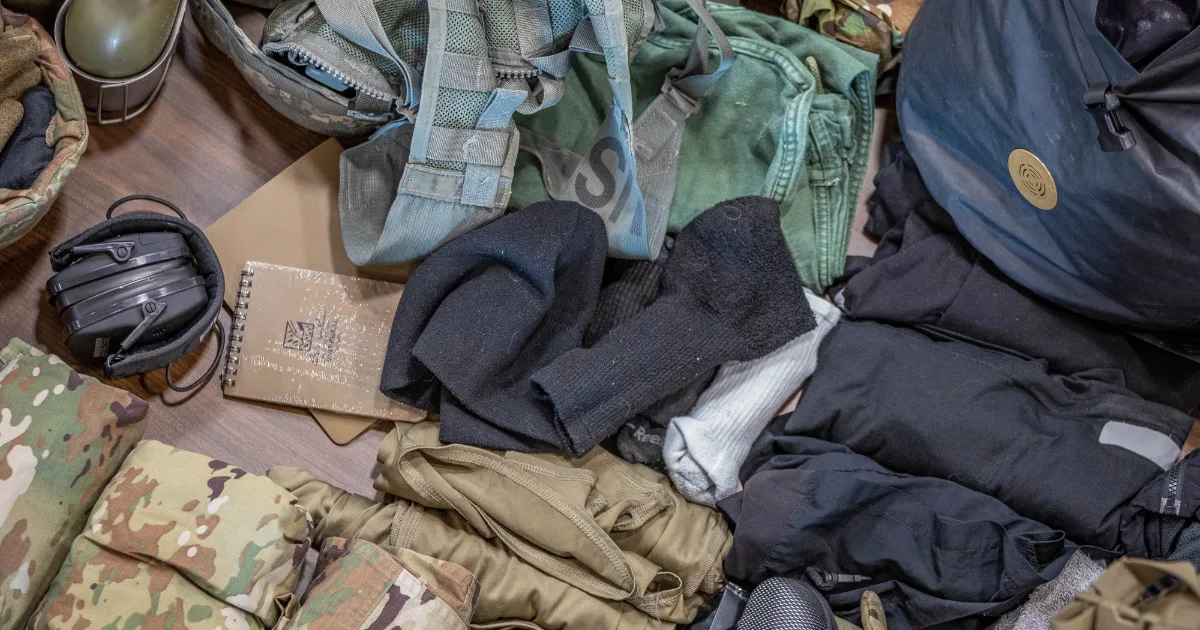
A Financial Liability Investigation of Property Loss, or FLIPL, decides whether a service member pays for government property that was lost, damaged, destroyed or stolen. It is administrative, not criminal. It still takes money out of a paycheck, and a finding of fault can follow a career.
The rebuttal is where most FLIPLs are won or lost. The service member has the right to see the findings and answer them before the approving authority decides.
This post follows two sources. The DoD Financial Management Regulation sets the rules across DoD. The Army's own regulation is AR 735-5, revised 30 April 2026 and effective 30 May 2026. The Navy, Marine Corps, Air Force and Space Force have their own procedures.
What has to be shown
Under the DoD Financial Management Regulation, financial liability requires three things: (DoD FMR, Vol. 12, Ch. 7)
- Responsibility. The loss must be linked to an identified individual.
- Culpability. Negligence or abuse. Negligence is the failure to act as a reasonably prudent person would have acted under similar circumstances. Abuse includes willful misconduct or deliberate unauthorized use.
- Proximate cause. The negligence or abuse must be the primary moving cause, or the predominant cause, of the loss.
A rebuttal that defeats any one of the three defeats liability. Common examples: the property was never properly signed over, the member acted as a reasonable person would have, or something else caused the loss.
The Army regulation makes the causation point directly. Simply being the last person responsible for property when the loss occurred is not enough to assess financial liability. A finding of negligence or willful misconduct is not enough either, unless the evidence shows it caused the loss. (AR 735-5, para 12-2b)
The level of fault matters too. Simple negligence is the failure to act as a reasonably prudent person would have acted under similar circumstances. Gross negligence is an extreme departure from that standard, marked by a reckless, deliberate or wanton disregard of the foreseeable consequences. (AR 735-5, para 12-4)
How much you can owe
Liability is based on the actual loss, limited by the member's rate of pay where a limit applies, whichever is less. (DoD FMR, Vol. 12, Ch. 7, para 2.8.2) For damage to government housing caused by simple negligence, liability is limited to one month's basic pay. For gross negligence or abuse, the member is assessed the full loss. (DoD FMR, Vol. 12, Ch. 7, paras 7.2.2 and 7.2.4)
In the Army, assessed liability is normally limited to the actual value of the loss or one month's base pay at the time of the loss, whichever is less. (AR 735-5, para 4-10c) The full actual value can be assessed in listed exceptions. They include loss of public funds, loss of personal arms and equipment, and damage to government housing or its furnishings caused by gross negligence or willful misconduct. When housing damage comes from simple negligence, the normal limit applies. (AR 735-5, para 4-10d) The approving authority may reduce or waive the amount. (AR 735-5, para 4-10e)
Your rights when liability is recommended
- Notice. You must be notified and may examine the report. (DoD FMR, Vol. 12, Ch. 7, paras 2.9 and 4.3.6.1)
- Representation and rebuttal. You may obtain representation and make a rebuttal statement, which is attached to the DD Form 200. Any statement you make may be used against you. (DoD FMR, Vol. 12, Ch. 7, paras 2.9 and 4.3.6.2 through 4.3.6.4)
- Deadlines. In the Army, a respondent who is handed the FLIPL has 7 days from receipt to submit a rebuttal. A respondent who is unavailable but in the same country has 15 days, and one in a different country has 30 days, counted from receipt of mailed notice or the date the email was sent. (AR 735-5, para 14-6b) A late rebuttal is still reviewed for new evidence. (AR 735-5, para 14-6c(2))
- Collection. The Army notice tells the respondent that collection begins 30 days from the date the notice is delivered or mailed, or 60 days for the Army National Guard. Exercising the respondent's rights temporarily halts collection. (AR 735-5, para 14-2e(6))
- New evidence. The financial liability officer must consider new evidence received after a recommendation. (DoD FMR, Vol. 12, Ch. 7, para 4.3.6.8)
- Housing waiver. For damage to government housing, you may request a waiver under 10 U.S.C. 2775. (DoD FMR, Vol. 12, Ch. 7, para 2.9)
The recommendation is advisory. The approving authority makes the decision and may overrule it. (DoD FMR, Vol. 12, Ch. 7, paras 4.3.5 and 3.1.1.14)
After liability is approved, an Army respondent may request reconsideration one time. The request goes through the immediate commander to the approving authority and must rest on legal error, meaning the facts, including any new facts, do not support liability. Information already presented in the rebuttal will not be reconsidered. If the approving authority does not reverse, the request goes to the appeal authority, whose decision is final apart from an application to the Army Board for Correction of Military Records. A request for reconsideration stops collection while it is pending. (AR 735-5, paras 14-4, 14-5 and 14-13)
How to write the rebuttal
- Ask for the full FLIPL packet and read the evidence, not just the findings.
- Answer responsibility, culpability and proximate cause one at a time.
- Attach documents: hand receipts, inventories, emails, statements from people who saw what happened.
- Put everything in the rebuttal. A later request for reconsideration must show legal error and will not revisit what the rebuttal already said.
- Know the deadline. In the Army it can be as short as 7 days. If you need more time, ask in writing before it runs.
How Bilecki Law Group helps
Military defense is all we do. The firm takes FLIPL rebuttals on a limited basis. Call 813-669-3500 or contact the firm to see whether your FLIPL is one the firm can take.
Frequently asked questions
What has to be proven to hold me liable in a FLIPL?
Responsibility for the property, negligence or abuse, and that the negligence or abuse was the proximate cause of the loss.
How much can a FLIPL make me pay?
In the Army, normally no more than the actual loss or one month's base pay, whichever is less. Exceptions include loss of personal arms and equipment, loss of public funds, and damage to government housing caused by gross negligence or willful misconduct.
How long do I have to respond to a FLIPL?
In the Army, 7 days from receipt if the FLIPL is handed to you, 15 days if you are elsewhere in the same country, and 30 days if you are in a different country. Ask in writing before the deadline if you need more time.