Off Limits on Okinawa: Nine Gate 2 Street Bars and Article 92
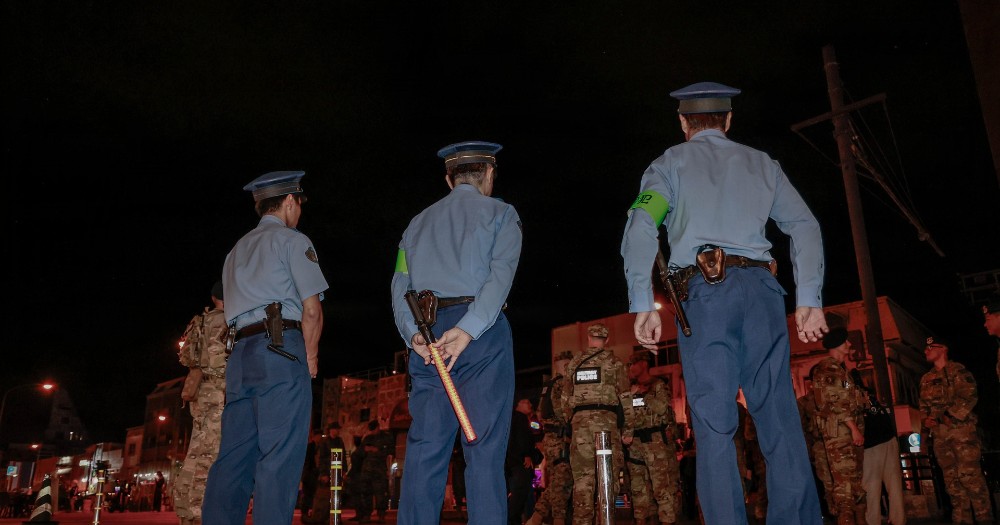
U.S. Forces Japan has added four more Gate 2 Street establishments outside Kadena Air Base to its off limits list. Nine have gone on the list since September. The same week, Japan's foreign minister said joint police patrols of Okinawa's nightlife areas will run more often and in more places.
The Okinawa curfew for E-1 through E-4 runs through 7 December 2026. Nothing in the reporting ties the off limits list to that date. This post explains how an off limits designation works, how long it lasts and how Article 92 reaches a Soldier, Sailor, Airman or Marine who walks into a listed bar.
Key facts
- On 31 October 2026, U.S. Forces Japan added Bar Goodlife, Rabbit Hole (also known as King of Kings), New York Terminal 2 and King 4 Party to its off limits list. All are on or near Gate 2 Street, outside Kadena (Stars and Stripes, 9 November 2026).
- Center Bar, Patron Tequila, VIBEZ, Blue Café and Star Bar joined the U.S. Forces Japan list on 27 September 2026, two days after the 18th Wing commander declared them off limits. His order said he had "received credible information" that the bars served alcohol to service members or allowed them to remain after curfew (Stars and Stripes).
- A U.S. Forces Japan spokesman declined to say why the four were added. He wrote that installation commanders can place specific commercial venues off limits to military personnel, and that some may remain off limits if unsafe conditions persist (Stars and Stripes).
- Okinawa Prefectural Police arrested nine people on 30 and 31 October on suspicion of providing premises for prostitution at a business in Okinawa City's Chuo district. Police did not name the business. The Ryukyu Shimpo identified it as New York Terminal 2 (Stars and Stripes). Those arrested are presumed innocent. We covered the raid in our Gate 2 Street post.
- Foreign Minister Toshimitsu Motegi said on Friday, 6 November 2026, that joint police patrols of nightlife areas, run in Okinawa City since April 2025, will increase in frequency and expand to new spots. The newcomer briefing for U.S. personnel on Okinawa will be updated with input from the Okinawa Prefectural Government (Stars and Stripes, 9 November 2026).
How an off limits designation works
The Army, Navy, Air Force, Marine Corps and Coast Guard share one regulation on off limits designations. It is Army Regulation 190-24, also issued as OPNAVINST 1620.2A, AFI 31-213, MCO 1620.2D and COMDTINST 1620.1E, dated 27 July 2006. It sets these rules.
- It is a command decision. The regulation says "the establishment of off-limits areas is a function of command." Installation commanders may set up Armed Forces Disciplinary Control Boards to advise them.
- The owner gets notice first. Before a board recommends off limits, it sends written notice by certified mail to the person or firm responsible. The notice sets a reasonable time to correct the problem and offers a chance to present information to the board.
- Commanders can act fast. Where sufficient cause exists, a commander may declare an establishment temporarily off limits to personnel of the command in an emergency. The board then takes up the restriction as a first priority.
- Service personnel may not enter. The regulation says Service personnel are prohibited from entering establishments or areas declared off limits under it. It says violations may subject the member to disciplinary action under Service regulations and the UCMJ. Family members and others associated with the Service or installation "should be made aware" of the restrictions.
- A new name does not lift it. A change in ownership, management or name of an off limits establishment does not, in and of itself, revoke the restriction. Stars and Stripes reports that Rabbit Hole is also known as King of Kings.
- There is no end date. The regulation says "a specified time limit will not be established when an off-limits restriction is invoked." The owner may petition the board president at any time to remove it.
- Overseas, the SOFA applies. Outside the continental United States, off limits procedures must be consistent with the Status of Forces Agreement.
U.S. Forces Japan and the installations may also have their own instructions on off limits. This post does not quote them.
How Article 92 reaches an off limits bar
The regulation does not name an article of the UCMJ. The article that reaches a violated order or regulation is Article 92. It covers anyone who "violates or fails to obey any lawful general order or regulation." It also covers anyone who, "having knowledge of any other lawful order issued by a member of the armed forces, which it is his duty to obey, fails to obey the order."
The difference is knowledge.
- If the list is a general order. The Manual for Courts-Martial says general orders include orders generally applicable to a command and issued by an officer with general court martial jurisdiction, a general or flag officer in command, or a commander superior to either. For a general order, the Manual says knowledge "need not be alleged or proved" and "a lack of knowledge does not constitute a defense."
- If it is another lawful order. The government must prove "actual knowledge of the order or regulation." The Manual says knowledge "may be proved by circumstantial evidence."
The reports do not say how the U.S. Forces Japan list is published or whether it is a general order. Do not count on not knowing.
At court martial, the Manual's maximum for violating a general order is a dishonorable discharge, forfeiture of all pay and allowances and 2 years of confinement. For another lawful order, it is a bad-conduct discharge, forfeiture of all pay and allowances and 6 months of confinement. These are maximums, not predictions. Our Okinawa liberty post covers nonjudicial punishment under Article 15. Our Gate 2 Street post covers the separate Article 134 questions tied to the raid.
Joint patrols and the Japanese track
On 6 November 2026, U.S. military personnel and Okinawa Prefectural Police officers were briefed on Gate 2 Street before a joint patrol, and U.S. service members checked identification during it (Stars and Stripes photo captions). The two sides work under different rules.
- U.S. military police. Article XVII, paragraph 10, of the Status of Forces Agreement lets U.S. military police take all appropriate measures to keep order and security inside U.S. facilities and areas. Outside them, military police may be employed only subject to arrangements with the Japanese authorities and in liaison with them, and only as far as necessary to maintain discipline and order among members of the U.S. armed forces.
- Japanese jurisdiction. Under Article XVII, paragraph 3, the United States has the primary right over offenses solely against U.S. property or security, offenses solely against the person or property of another member of the force, the civilian component or a dependent, and offenses arising out of official duty. Japan has the primary right over any other offense. That can include an off duty offense like one in a Gate 2 Street bar.
The Japanese case is separate. Bilecki Law Group advises on the UCMJ and military administrative action. We do not advise on Japanese law, and we cannot tell you whether to speak with Japanese police or prosecutors. For advice on the Japanese case, talk to a lawyer licensed in Japan.
If CID, NCIS or OSI contacts you
This list covers U.S. investigators, U.S. military police and your command only.
Under Article 31b of the UCMJ you have the right to remain silent. The Military Rules of Evidence also give you the right to a lawyer before and during questioning in custody.
You cannot talk your way out of an investigation, only into charges, so the time to get a lawyer is before you sit down.
- Check your command's current off limits list before you go out. It changes.
- If U.S. investigators or your command ask about an off limits visit, tell them you want a lawyer and will not answer questions. Then stop talking.
- Do not sign a written statement for U.S. investigators until a lawyer has reviewed it.
- Do not delete texts, photos, receipts or location data.
- Follow your command's lawful orders.
Article 31 says a statement obtained in violation of the article may not be received in evidence against you in a trial by court martial. Get the lawyer before charges are preferred.
The firm
Military defense is all we do. Tim Bilecki served as Senior Defense Counsel for the Army's Trial Defense Service across the Pacific Rim, covering Okinawa, mainland Japan, Korea and the Philippines. He has made more than 75 trips to Japan. The firm has taken more than 250 courts martial to verdict.
Tim Bilecki travels to Okinawa to defend the court martial and the administrative case. Flat fees, travel billed separately. See our Kadena Air Base page or call 813-669-3500.
FAQs
Which Okinawa bars are off limits to U.S. service members?
Nine Gate 2 Street establishments were added to the U.S. Forces Japan list in September and October 2026: Bar Goodlife, Rabbit Hole (also known as King of Kings), New York Terminal 2, King 4 Party, Center Bar, Patron Tequila, VIBEZ, Blue Café and Star Bar. The full list may include others, and it changes. Check your command's current list.
Do you have to know a bar is off limits to be charged under Article 92?
Not if the list is a general order. The Manual for Courts-Martial says knowledge of a general order is not an element and a lack of knowledge is not a defense. For any other lawful order, the government must prove actual knowledge, and it may prove it with circumstantial evidence.
Does an off limits bar come off the list if it changes its name?
Not by itself. The joint service regulation says a change in ownership, management or name does not, in and of itself, revoke an off limits restriction.
Sources
- Stars and Stripes, 9 November 2026 (off limits additions)
- Stars and Stripes, 9 November 2026 (joint patrols and orientation)
- AR 190-24 / OPNAVINST 1620.2A / AFI 31-213 / MCO 1620.2D / COMDTINST 1620.1E, Armed Forces Disciplinary Control Boards and Off-Installation Liaison and Operations, 27 July 2006, paragraphs 2-1 and 2-6, appendix B
- 10 U.S.C. 892 (Article 92)
- 10 U.S.C. 831 (Article 31)
- Manual for Courts-Martial (2023 edition), Part IV, paragraph 18; Mil. R. Evid. 305(c)(2)
- U.S.-Japan Status of Forces Agreement, Article XVII (Ministry of Foreign Affairs of Japan)