Drugs Through Military Mail: The Camp Humphreys Customs Case and Article 112a
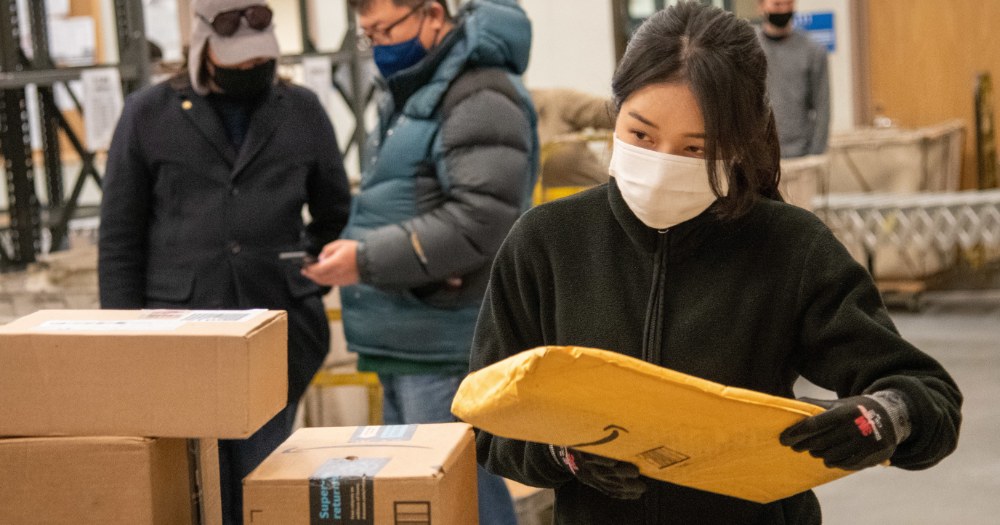
Korean customs officers say two U.S. Soldiers at Camp Humphreys smuggled liquid cannabis, or a synthetic version of it, into Korea through the military mail. Pyeongtaek Customs announced the case on 4 November 2026. It is now with Korean prosecutors. Both Soldiers are presumed innocent, and the reports say they have denied the allegations.
The case matters beyond these two Soldiers. Customs says it found signs of another suspected case on a U.S. base and passed that information to Army criminal investigators. A package that reaches a base post office can start a Korean case and a military one at the same time. This post explains both tracks and what to do if CID calls.
Key facts
- Customs says the substance came into Korea in March through the U.S. military postal system. An X-ray flagged the parcel, and the liquid was in small containers inside a protein supplement container (Korea Herald, 4 November 2026; JoongAng Daily, 5 November 2026; Stars and Stripes, 6 November 2026).
- Customs worked with U.S. Army criminal investigators. The Korea Herald and JoongAng Daily say one suspect was arrested when he came to collect the parcel at the Camp Humphreys military post office, and the other later. Stars and Stripes describes a sting on 18 March and a second operation the same day at the principal suspect's home on Humphreys.
- One Soldier was referred to prosecutors in custody and the other without detention (Korea Herald; JoongAng Daily). Stars and Stripes reports the case went to the Suwon District Prosecutors' Office in September 2026.
- An Eighth Army spokesman confirmed the Soldiers are assigned to the command and said "Eighth Army takes all allegations of misconduct seriously" (Stars and Stripes).
- The reports differ on the substance. Stars and Stripes says liquid cannabis, 30 vials weighing 6.3 ounces. The Korea Herald and JoongAng Daily say synthetic cannabinoids. On the military side, that difference matters.
Track one: the Korean prosecution
JoongAng Daily reports that the arrested Soldier is suspected of violating Korea's Narcotics Control Act. The Korean case is in the hands of Korean prosecutors.
Article XXII of the U.S.-Korea Status of Forces Agreement gives Korea jurisdiction over U.S. service members for offenses committed in Korea and punishable under Korean law. The United States has the primary right over offenses solely against U.S. property or security, offenses solely against another member of the force, the civilian component or a dependent, and offenses arising out of official duty. In the case of any other offense, Korea has the primary right. An off duty offense like the one customs alleges falls in that second group.
A Korean verdict does not always end the military case. Article XXII, paragraph 8, bars a second trial for the same offense within Korea by the other state once a member has been tried. The same paragraph still allows U.S. military authorities to try the member for a violation of rules of discipline arising from the same act.
The Korean case is separate. Bilecki Law Group advises on the UCMJ and military administrative action. We do not advise on Korean law, and we cannot tell you whether to speak with Korean police or prosecutors. For advice on the Korean case, talk to a lawyer licensed in Korea.
Track two: Article 112a and the military case
Article 112a of the UCMJ punishes anyone who wrongfully uses, possesses or distributes a controlled substance, or introduces one into an installation, vessel, vehicle or aircraft used by or under the control of the armed forces. Marijuana is listed by name, along with "any compound or derivative" of it. So is any substance in Schedules I through V of the Controlled Substances Act.
Introduction. The Manual for Courts-Martial lists wrongful introduction as its own offense: introducing a controlled substance onto an installation used by or under the control of the armed forces. A parcel delivered to a base post office raises that element. Article 112a also reaches importation, but only into the customs territory of the United States, which the Manual defines as the States, the District of Columbia and Puerto Rico. Korea is outside it.
Possession. The Manual says possession "must be knowing and conscious." It can be constructive, and more than one person can possess the same item. The Manual says an accused "may not be convicted of possession of a controlled substance if the accused did not know that the substance was present under the accused's control." Awareness can still be inferred from circumstantial evidence.
Wrongfulness and knowledge. Possession or introduction is not wrongful if done "without knowledge of the contraband nature of the substance." The Manual adds that a service member who "consciously avoids knowledge" faces the same liability as one who knows. Not knowing what was inside a package can be a defense. Choosing not to know is not.
Cannabis or a synthetic. The label matters. Marijuana is covered by Article 112a by name. A synthetic cannabinoid is covered if the compound is on a federal schedule. Army Regulation 600-85 separately prohibits Army personnel from possessing, distributing or introducing controlled substance analogues, including synthetic cannabis known as spice, into an installation. It says: "This prohibition is punitive." A punitive Army regulation is a general regulation that can be charged under Article 92, which we covered in our Okinawa liberty post.
Maximum punishments. For marijuana, introduction carries a dishonorable discharge, forfeiture of all pay and allowances and 5 years of confinement at any amount. Possession of 30 grams or more carries the same. Distribution, or possession or introduction with intent to distribute, carries 15 years. For offenses after 27 December 2023, the sentencing parameters put introduction in Category 2 (1 to 36 months) and possession in Category 1 (0 to 12 months). If the substance is a scheduled synthetic, the Schedule I row carries the same 5 and 15 year maximums, with no 30 gram line. Charged instead as a violation of a general regulation under Article 92, the maximum is a dishonorable discharge, forfeiture of all pay and allowances and 2 years. These are maximums and ranges, not predictions.
If CID contacts you
This list covers CID, U.S. military police and your command only.
Under Article 31b of the UCMJ you have the right to remain silent. The Military Rules of Evidence also give you the right to a lawyer before and during questioning in custody.
You cannot talk your way out of an investigation, only into charges, so the time to get a lawyer is before you sit down.
- Tell CID you want a lawyer and will not answer questions. Then stop talking.
- Do not sign a written statement for CID until a lawyer has reviewed it.
- Talk to a lawyer before you agree to let CID search your phone, your room or your car.
- Do not delete texts, photos, app accounts or shipping records.
- Do not pick up, sign for or forward a package for someone else.
- Do not discuss what happened with your chain of command or your friends until you have talked to a lawyer.
- Follow your command's lawful orders.
Article 31 says a statement obtained in violation of the article may not be received in evidence against you in a trial by court martial. Get the lawyer before charges are preferred.
The firm
Military defense is all we do. Tim Bilecki served as Senior Defense Counsel for Trial Defense Service Pacific Rim, covering Korea, Okinawa, mainland Japan and the Philippines, with tours as an Army defense counsel at Camp Casey and as Senior Defense Counsel at Yongsan. He has returned to Korea more than 75 times since.
We have defended a case like this one. An Army Specialist at Camp Humphreys came under CID investigation over drugs, including synthetic substances, brought into Korea. Korean authorities took over the prosecution, and a Korean court imposed a suspended sentence. We represented him as civilian military defense counsel, not in Korean court. When the case came back to the Army, the Army agreed not to prosecute, and he left with an Honorable discharge. Past results do not guarantee a similar outcome.
Tim Bilecki travels to Camp Humphreys to defend the court martial and the administrative case. Flat fees, travel billed separately. Call 813-669-3500.
FAQs
Can you be court martialed for drugs sent through military mail?
Yes. Article 112a covers wrongful introduction of a controlled substance onto an installation used by the armed forces, along with possession and distribution. A Korean prosecution does not always end the military case.
Is spice or synthetic cannabis illegal under the UCMJ?
It can be charged two ways. Article 112a covers it if the compound is on a federal schedule, and Army Regulation 600-85 prohibits synthetic cannabis for Army personnel in a punitive provision.
What if I did not know what was in the package?
Possession or introduction is not wrongful without knowledge of the contraband nature of the substance. Knowledge can be inferred from circumstantial evidence, and deliberately avoiding knowledge carries the same liability as knowing.
Sources
- Korea Herald, 4 November 2026
- JoongAng Daily, 5 November 2026
- Stars and Stripes, 6 November 2026
- 10 U.S.C. 912a (Article 112a)
- Manual for Courts-Martial (2023 edition), Part IV, paragraphs 18 and 50; Manual for Courts-Martial (2024 edition), Appendix 12B and 12C
- Army Regulation 600-85, The Army Substance Abuse Program (23 July 2020), paragraphs 4-2l and 4-2m
- 10 U.S.C. 831 (Article 31)
- U.S.-Korea Status of Forces Agreement, Article XXII (USFK)