Tried in Japan: What a Japanese Verdict Does Not End for a Marine
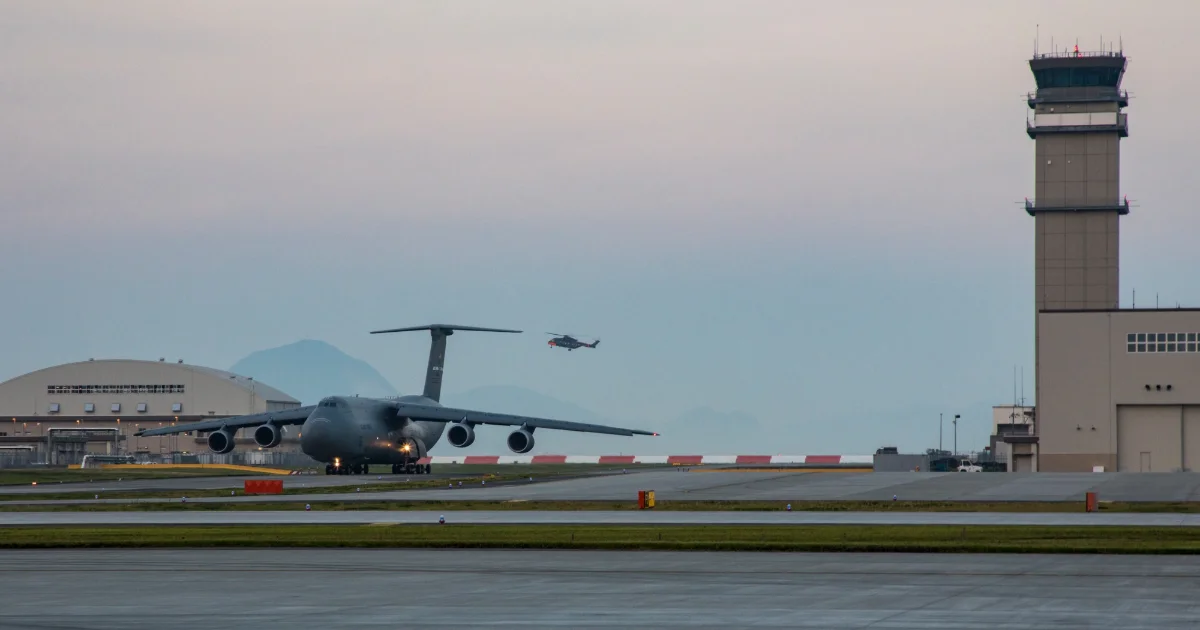
Two Marines based at Marine Corps Air Station Iwakuni appeared in Fukuoka District Court on 30 October. Stars and Stripes reports that they admitted to a string of business break-ins across Japan. Prosecutors asked for four years in prison for one and three years for the other. The defense asked for suspended sentences. The court is set to rule on 20 November. Until it does, neither Marine is convicted, and both are presumed innocent.
A service member prosecuted in Japan faces two tracks: the Japanese case and the military side, which covers the UCMJ, court martial and administrative action. The second can stay open after the first ends.
Key facts
Source: Stars and Stripes, 2 November 2026, unless noted.
- One Marine admitted seven counts of unlawful entry, theft and attempted theft in Fukuoka, Hiroshima, Tokyo and Yamaguchi. The other admitted three counts in Fukuoka and Tokyo.
- The reported losses total more than $74,000. About $69,324 of that came from three Tokyo businesses on 24 December.
- Prosecutors in various prefectures filed indictments in March (Stars and Stripes, 8 April 2026).
- Both Marines testified that they have been held in the brig at Iwakuni since January.
- A Marine Corps spokesman said in April: "Under our Status of Forces Agreement, the Government of Japan has primary criminal jurisdiction."
- Defense lawyers cited restitution efforts for both Marines.
- Not reported: any U.S. military charge or administrative action against either Marine.
Track one: the Japanese case
Article XVII of the U.S.-Japan Status of Forces Agreement gives Japan jurisdiction over U.S. service members for offenses committed in Japan and punishable by Japanese law. It gives U.S. military authorities, within Japan, criminal and disciplinary jurisdiction over persons subject to U.S. military law. When both apply, the agreement sets who goes first.
The United States has the primary right over offenses solely against U.S. property or security, offenses solely against another member of the force, the civilian component or a dependent, and offenses arising from official duty. Japan has the primary right over any other offense. An off duty offense like this one, against businesses outside the force, falls on the Japanese side.
Custody is a separate question. Article XVII, paragraph 5(c), says an accused service member in U.S. hands, over whom Japan is to exercise jurisdiction, stays in U.S. custody until Japan charges him. The Agreed Minutes add that U.S. authorities shall, on request, transfer custody to Japan at the time of indictment. The reports do not say whether Japan made that request for these two Marines.
Japan's Penal Code punishes theft under Article 235 with up to 10 years or a fine of up to 500,000 yen. Breaking into a residence, or into guarded premises or a guarded building, without just cause, under Article 130 carries up to 3 years or a fine of up to 100,000 yen. Attempts are punished under Articles 132 and 243. Article 25 says a court may suspend a sentence of not more than 3 years for defendants who meet its conditions.
If Japan prosecutes, Article XVII of the Status of Forces Agreement entitles the service member to a prompt and speedy trial, to be told the charges in advance, to confront the witnesses, to compel favorable witnesses, to a lawyer of his choice, to a competent interpreter, and to communicate with a U.S. government representative and have one present at trial. Those guarantees attach to the prosecution. They do not put a lawyer in the room when Japanese authorities question a suspect.
The Japanese case is separate. Bilecki Law Group advises on the UCMJ and military administrative action. We do not advise on Japanese law, and we cannot tell you whether to speak with Japanese police or prosecutors. For advice on the Japanese case, talk to a lawyer licensed in Japan.
Track two: the UCMJ and the command
A Japanese trial limits the military case. It does not always end it.
Article XVII, paragraph 8, covers a member tried by Japan under the Article who is acquitted, who is convicted and is serving or has served the sentence, or who is pardoned. That member may not be tried again for the same offense within Japan by U.S. authorities. The same paragraph says this does not prevent U.S. military authorities from trying a member for any violation of rules of discipline arising from the same act.
The Navy and Marine Corps have written rules on this. Section 0124 of the Manual of the Judge Advocate General is titled "Exercise of Courts-Martial Jurisdiction in Cases Tried in Domestic or Foreign Criminal Courts." Section 0108(e) points to it for nonjudicial punishment in cases already decided in a foreign criminal court.
The UCMJ has its own articles for this kind of allegation. Article 121 of the UCMJ covers larceny. Article 129 covers breaking and entering the building of another with intent to commit an offense under the UCMJ, and unlawful entry onto the real property of another. Article 80 covers attempts. No court martial has been reported in this case.
Administrative separation is another track. Change 2 to the Marine Corps Separation and Retirement Manual says a court martial conviction, a civilian conviction or a ruling tantamount to a finding of guilty by a civilian court is binding on an administrative board. It then says a conviction from a court of a foreign nation is not binding on the board. A Japanese verdict does not by itself decide what the board finds.
If NCIS, CID or OSI contacts you
This list covers U.S. investigators and your command only.
Under Article 31b of the UCMJ you have the right to remain silent. The Military Rules of Evidence also give you the right to a lawyer before and during questioning in custody.
You cannot talk your way out of an investigation, only into charges, so the time to get a lawyer is before you sit down.
- Tell U.S. investigators you want a lawyer and will not answer questions. Then stop talking.
- Do not sign a written statement for U.S. investigators until a lawyer has reviewed it.
- Keep your texts and social media off the subject.
- Follow your command's lawful orders.
A statement obtained in violation of Article 31 cannot be received in evidence against you at a court martial. That is a motion to suppress, not a reason to talk first. Get the lawyer before charges are preferred.
The firm
Military defense is all we do. Bilecki Law Group has taken more than 250 courts martial to verdict and represented more than 500 clients. Tim Bilecki served as Senior Defense Counsel for Trial Defense Service Pacific Rim, covering Okinawa, mainland Japan, Korea and the Philippines, and he has made more than 75 trips to Japan. Flat fees, travel billed separately.
Tim Bilecki travels to Japan to defend the court martial and the administrative case. Call 813-669-3500.
FAQs
Can a Marine be tried by court martial under the UCMJ after a Japanese trial?
Not for the same offense in Japan, but yes for a violation of rules of discipline. Article XVII, paragraph 8, of the SOFA preserves that trial.
Under the Status of Forces Agreement, who has primary jurisdiction over an off duty theft from a Japanese business by a U.S. service member?
Japan does. Article XVII, paragraph 3, gives Japan the primary right over any offense that does not fall in the U.S. categories.
Does a Japanese conviction bind a Marine Corps administrative board?
No. Change 2 to the Marine Corps Separation and Retirement Manual says a conviction from a court of a foreign nation is not binding on an administrative board.
Sources
- Stars and Stripes, "Pair of Marines plead guilty to stealing $74,000 from businesses across Japan," 2 November 2026
- Stars and Stripes, "Prosecutors indict 2 Marines accused in string of thefts across Japan," 8 April 2026
- Stars and Stripes, "US Marines suspected of thefts in Tokyo and Hiroshima," 18 February 2026
- U.S.-Japan Status of Forces Agreement, Article XVII, and Agreed Minutes (Ministry of Foreign Affairs of Japan)
- Penal Code of Japan, Articles 25, 130, 132, 235, 243 (Japanese Law Translation)
- Ministry of Justice of Japan, FAQ on the criminal justice system
- 10 U.S.C. 921 (Article 121)
- 10 U.S.C. 929 (Article 129)
- 10 U.S.C. 880 (Article 80)
- 10 U.S.C. 831 (Article 31)
- JAGINST 5800.7G, CH-2 (1 December 2023), table of contents and section 0108(e)
- MARADMIN 105/19, Change 2 to MCO 1900.16, paragraph 2.ac
- Mil. R. Evid. 305(c)(2), as quoted in United States v. Flanner, No. 24-0093 (C.A.A.F. 2024)