Worldwide Court-Martial Defense · All Branches
A court-martial can put your career, your freedom, your retirement, and your reputation on the line. A conviction can bring confinement, a punitive discharge or dismissal, and a criminal record that follows you long after the trial ends. When the government decides to prosecute, trial experience is not a luxury. It is the difference between hoping the system gets it right and forcing the government to prove its case.
Worldwide Defense · CONUS Defense
Request a Defense Consultation. Tell us what happened and where the case stands.
If the Military Wants to Question You, Stop and Get Counsel.
- Do not answer questions about the allegation or consent to a search before speaking with defense counsel. Clearly invoke your right to remain silent and your right to counsel.
- Preserve messages, photographs, location records, social media, medical records, and other potential evidence. Do not delete, alter, or manufacture anything.
- Preserve only material you may lawfully access. Do not enter another person’s account, coordinate witness accounts, or copy or send classified or other restricted material. Ask counsel how to preserve and transfer sensitive evidence lawfully.
- Do not contact the person who made the allegation or other potential witnesses. Do not post about the case. Continue following lawful orders.
- Call (813) 669-3500. The defense has more options when counsel enters before statements, evidence loss, preferral, and referral.
The Government Has a Case. You Need a Defense.
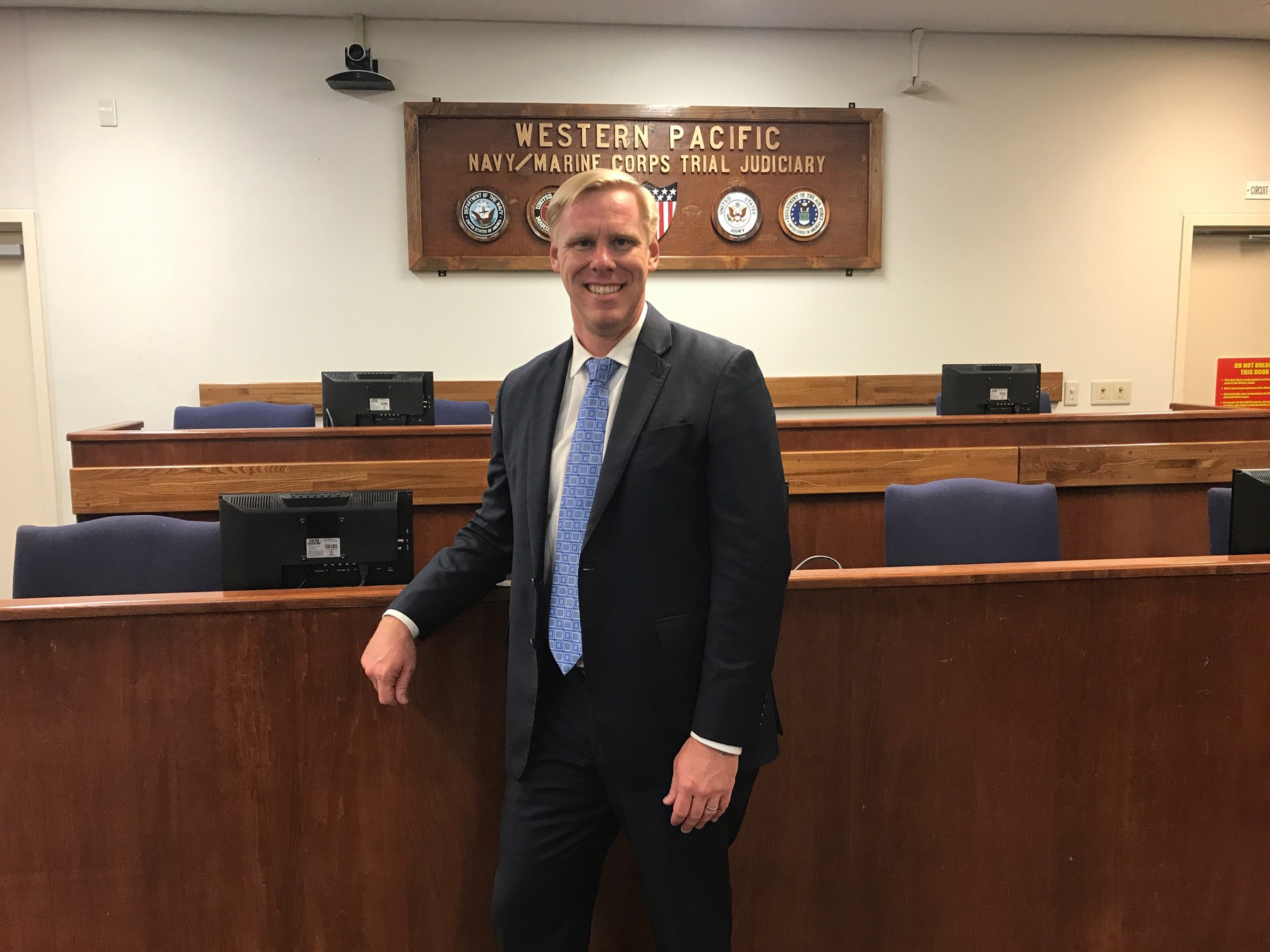
Nobody joins the military expecting to end up here. If you are a Marine, maybe it was the commercial where the Marine fought a fire breathing dragon with a sword. If you joined the Navy, maybe you wanted to become a SEAL. Maybe you joined after 9/11 because you wanted to serve and do your part. You did not join to become the accused in a court-martial.
But if you are reading this, that may be exactly where you are. It is scary as hell, and it should be. Your freedom, career, retirement, family, and name can all be in the line of fire.
The government may have spent months building its case before you ever saw a charge sheet. Investigators have interview teams, digital evidence tools, laboratories, command access, and government lawyers helping shape the case. That does not mean their report is complete. It does not mean their witnesses are telling the truth. It does not mean their theory survives when someone finally tests it.
Your answer is not to hope the system fixes itself. Your answer is to give the government a fight and force it to prove every element of every offense.
The defense starts the moment you learn that you are under investigation. It starts before another interview, before you consent to a search, before messages disappear, before witnesses transfer, and before charges are preferred. We build our own defense file, find what the investigation missed, challenge what the government got wrong, and prepare the case from the beginning as though it will be tried.
We are not here to coexist with the government’s case. We are here to make you a hard target.
"Being innocent is no longer enough."
Timothy J. Bilecki, Managing Attorney
Three Levels of Court-Martial
Summary, special, and general courts-martial have different procedures and punishment authority. We defend at every level, and our work is concentrated in serious cases involving confinement, punitive separation, retirement, and a lasting criminal record.
What Retained Counsel Adds
Your detailed military defense counsel may be capable. Many are. Bilecki Law Group can lead or work alongside that lawyer, bringing limited intake, continuity, independent defense investigation, and trusted outside expert support.
Pretrial and Trial Strategy
The fight starts before the first witness testifies. We identify missing evidence, challenge unlawful searches and coerced statements, pursue necessary outside experts, make the Article 32 decision strategically, and prepare the cross-examinations that decide contested courts-martial.
Worldwide Trial Capability
OCONUS defense is central to this practice. We also continue to defend serious cases throughout the United States. The case determines where we go.
Immediate Retention
Once you know you are under investigation, the clock is moving. Memories change, repeated interviews harden accounts, and digital records can disappear. Call (813) 669-3500 before the next interview, search decision, or charging milestone.
A Military Criminal Case Has Its Own Rules, Decision Makers, and Pressure Points
An Article I Military Tribunal
A court-martial is an Article I military tribunal, not a federal district court. The government must prove guilt beyond a reasonable doubt. A conviction can produce a lasting criminal record and consequences that depend on the offense, forum, sentence, and law of the jurisdiction using the record.
The Charging Authority
CID, NCIS, OSI, CGIS, or another agency may investigate. Under the current special trial counsel system, a special trial counsel decides whether an allegation is a covered offense and whether to exercise authority. Once that authority is exercised, the special trial counsel controls preferral, referral, plea agreements, withdrawal, and dismissal as the law provides. Commanders retain authority over other offenses and specified residual actions. The defense must take its evidence to the official who can make the next decision.
The Article 32 Decision
Before referral to a general court-martial, an Article 32 preliminary hearing is required unless the accused submits a written waiver and the convening authority or special trial counsel exercising authority determines that a hearing is not required. The hearing addresses probable cause, jurisdiction, charge form, and a recommended disposition before referral to a general court-martial. It is not discovery, the government often proceeds through records, and the recommendation is not binding. We use or waive the hearing based on what helps the defense.
Members, Challenges, and Sentencing
At initial impaneling, a general court-martial panel has eight members in a noncapital case or 12 in a capital case, and a special court-martial panel has four. A noncapital general court-martial may continue with as few as six members under the statutory rules. An enlisted accused may request that at least one third be enlisted. Counsel questions and challenges members through voir dire. Under the current sentencing system, a military judge generally sentences a case containing only noncapital convictions for conduct after 27 December 2023. Capital cases and cases involving convictions from more than one sentencing era require separate analysis.
Three Tiers of Military Justice
The level of court-martial determines the government's power, the possible punishment, the trial procedure, and the defense strategy. We defend at all three levels, but our record is built in the most serious cases.
Summary Court-Martial
A summary court-martial handles minor misconduct involving enlisted service members. A single commissioned officer presides; there is no military judge or panel. The accused may refuse it. It is not a federal criminal conviction, but confinement, reduction, forfeiture, and serious career harm can still follow. Refusal requires the government to decide whether to use another forum.
Special Court-Martial
A special court-martial is an Article I criminal trial, not minor discipline. An ordinary special court-martial may proceed before a military judge alone or with a four member panel and can impose up to 12 months of confinement, reduction, forfeitures, and, when authorized, a bad-conduct discharge. A separate military judge alone special court-martial has lower punishment limits and cannot impose a bad-conduct discharge. Either form can create a criminal record, but the precise federal and state consequences depend on the offense and sentence.
General Court-Martial
A general court-martial is the highest military trial forum. At initial impaneling, a members case has eight panel members if noncapital or 12 if capital; the statutory rules permit later continuation of a noncapital case with as few as six. Depending on the offense, the sentence can include decades or life in confinement, total forfeitures, reduction, a dishonorable discharge, or dismissal. Sexual assault, homicide, major fraud, drug distribution, and other serious allegations are commonly tried here.
We Fight Every Step of the Way
A court-martial defense is not passive. The best result is often the one obtained before trial, before referral, or before charges are preferred. But when the case has to be tried, we prepare it to win.
Step 1: Preserve the Evidence and Protect the Client
The government's report is not the whole case. We preserve messages, video, records, and devices; identify missing witnesses; review how statements and searches were obtained; and help the client avoid creating unnecessary evidence. The defense begins with the facts available now.
Step 2: Take Defense Evidence to the Charging Authority
Early involvement can affect whether charges are preferred or referred. For covered offenses, we take the evidence to the Office of Special Trial Counsel. In other cases, we address the commander. The point is to reach the official with authority before the government's position hardens.
Step 3: Make the Article 32 Decision for a Reason
The hearing addresses probable cause, jurisdiction, charge form, and recommended disposition. It is often based on reports rather than live testimony, and its recommendation is not binding. We decide whether to use it or waive it only after identifying what that choice can accomplish.
Step 4: Litigate the Evidence and Obtain Needed Experts
Complex cases may require trusted outside experts in digital forensics, medicine, psychology, or toxicology. We identify the discipline, determine whether the defense should request government funded assistance or retain the expert privately, and build the factual showing the request requires. When a necessary request is denied, we can litigate a motion to compel under R.C.M. 703.
Step 5: Choose the Forum and Question the Members
Forum choice depends on the charge, evidence, judge, witnesses, defense theory, and likely panel. If members decide guilt, we question them in voir dire and challenge those who cannot fairly hear the case. The task is not to select allies. It is to expose disqualifying bias.
Step 6: Try the Government's Proof
The government carries the burden. We cross-examine witnesses regardless of rank, test timelines and digital evidence, expose unsupported forensic assumptions, and identify investigative shortcuts. If the case reaches findings, we fight for the acquittal specification by specification. That work must be prepared before trial begins.
Step 7: Fight Through Sentencing When Necessary
If the case reaches sentencing, we present the client’s service, family, character, and full human story in extenuation and mitigation. We pursue lawful sentence credit and challenge unsupported aggravation. A listed conviction can trigger Department of Defense notification and registration duties in the jurisdictions where the person lives, works, or attends school. The exact offense and jurisdiction control, which is why the charge itself matters.
The point is not a legal theory. It is your life. We prepare the case to win, and we keep fighting through every stage of the trial.
The Charge Changes. The Government Still Has to Prove It.
Serious UCMJ Charges
Every charge turns on different elements, evidence, defenses, and consequences. We identify exactly what the government must prove, then test the witnesses, digital evidence, forensic assumptions, and investigative work behind the accusation.
Sexual Offenses
Article 120 cases often turn on consent, mistake of fact, credibility, digital communications, alcohol evidence, and what the investigation failed to preserve. We prepare these cases for contested trial from the beginning.
- Rape and Sexual Assault, Article 120
- Sexual Offenses Involving a Minor
- Online Sting Operations
- CSAM and Child Pornography Allegations
- SHARP and SAPR Investigations
Drug Offenses
A positive test does not answer every question. The government must still prove knowing and wrongful use, possession, introduction, manufacture, or distribution. We examine laboratory records, collection procedures, chain of custody, witnesses, and innocent explanations.
- Distribution and Trafficking
- Use and Possession, Article 112a
- Spice and Synthetic Drugs
- Military Urinalysis Cases
Violent Offenses
Violent offense cases can turn on self-defense, intent, injury evidence, eyewitness reliability, and who started or escalated the encounter. We test each accusation against the physical evidence and the government's burden of proof.
- Murder and Manslaughter, Articles 118 and 119
- Assault and Aggravated Assault, Article 128
- Domestic Violence, Article 128b
- Robbery and Burglary
- Self-Defense
Larceny, Fraud, and False Statements
Financial cases are built from records, authorizations, payment systems, and claims about intent. A discrepancy is not automatically a crime. We trace the transactions and test whether the government can prove knowing deception or an intent to steal.
- BAH, OHA, and DTS Fraud
- Larceny, Article 121
- Procurement Card Allegations
- Fraud Against the United States, Article 124
- False Official Statements, Article 107
The Sentence Is Only the Beginning
What a Conviction Can Cost
The exact exposure depends on the charge, the date of the alleged offense, the level of court-martial, and the sentence. The defense must account for both the punishment in court and the consequences that can follow afterward.
Criminal Record and Reporting
Criminal Record
A conviction at a special or general court-martial can create a criminal record reported through military and federal systems. Depending on the offense and sentence, it can affect employment, professional licensing, firearms eligibility, immigration, housing, and future background investigations. Those consequences are not identical in every case.
Confinement and Sentencing Ranges
Freedom
Depending on the offense, confinement can range from months to decades. In a qualifying case containing only noncapital convictions for conduct after 27 December 2023, a military judge generally sentences within any applicable sentencing parameters and must explain an authorized departure in writing. When an offense has sentencing criteria instead of a parameter, the judge must consider those criteria.
Punitive Discharge or Dismissal
Military Status
An enlisted service member may face a bad-conduct or dishonorable discharge. An officer may face dismissal. A punitive separation can end a career and affect veteran status, benefits eligibility, and civilian employment. The precise benefit consequence depends on the discharge, the benefit, and the agency applying its own law.
Rank, Pay, and Retirement
Financial
A sentence may include reduction in grade and forfeiture of pay and allowances. A punitive discharge or dismissal can end military service before retirement eligibility and cause the loss of anticipated retirement benefits.
Sex Offender Registration
Registration
A conviction for a listed sexual offense can trigger Department of Defense notification and registration duties under the law of each jurisdiction where the person resides, works, or attends school. The exact offense, conduct date, age facts, and jurisdiction matter. An allegation, reprimand, or nonjudicial punishment does not by itself create the same obligation.
Career and Clearance Consequences
Future Employment
The allegation or conviction may trigger a separate security clearance review and close military or civilian career paths. We do not handle clearance adjudications. We fight the charge that created the risk.
Credentials Matter. Recent Contested Trial Work Matters More.
Why Bilecki Law Group
Military defense is the firm's entire practice. The difference is not a slogan. It is the work done before trial, the ability to try the case when the government will not back down, and a record the client can examine before making a decision.
Proof You Should Demand
Do not accept a promise about experience. Ask to see deidentified results that identify the allegations, location, defense work, and outcome. You should be able to examine what a law firm has actually done before making this decision.
Independent Evidence and Trusted Outside Experts
We pursue the footage, messages, records, and witnesses the government missed or misunderstood. When the case requires specialized knowledge, we work with a trusted outside network in digital forensics, medicine, psychology, toxicology, and other disciplines.
A Defense Team Built for the Work
Tim Bilecki leads the trial strategy. Ben Gold works through the discovery, builds timelines, interviews and prepares witnesses and develops the strategy with Tim. The goal is one integrated theory carried from the investigation through the final witness and, when necessary, sentencing.
Straight Advice, Even When It Is Hard
We will shoot you straight. We explain what helps, what hurts, what the government still has to prove, and whether the case should be tried or resolved another way. No guarantee. No theater. A real plan.
A Defense Team Built Around Serious Military Cases
Your Defense Team
Bilecki Law Group represents service members worldwide. The firm's work is military defense, and its attorneys bring different but complementary experience to the investigation, motions, and trial.
Timothy J. Bilecki
Managing Attorney
He earned a degree in finance from Boston College, a law degree from the University of Miami, and an MBA from Babson College. Examples from Tim’s closing arguments appear in Michael Waddington’s 2018 book, Kick-Ass Closings: A Guide to Giving the Best Closing Argument of Your Life. Today he leads Bilecki Law Group's defense of service members in contested courts-martial worldwide.
Benjamin H. Gold
Associate Attorney
Evidence, Strategy and Preparation
Ben works through the discovery, builds timelines, interviews and prepares witnesses and develops the strategy with Tim. He puts the research, motions and written arguments behind that strategy.
Court-Martial Defense Questions
Direct Answers
1. I already have a detailed military defense counsel. Can I also hire Bilecki Law Group?
Yes. A service member may retain civilian counsel at personal expense and may ordinarily continue working with the detailed military defense counsel. The lawyers can divide responsibilities based on the needs of the case, or retained counsel can serve as lead counsel. Many detailed military defense counsel are capable lawyers. The practical question is whether the defense has the time, independence, investigation, expert support, motions practice, and contested trial experience this particular case requires. We assess that with you directly rather than assuming one arrangement fits every case.
2. What is an Article 32 preliminary hearing?
An Article 32 preliminary hearing generally occurs before charges may be referred to a general court-martial. It need not be held if the accused submits a written waiver and the convening authority or special trial counsel exercising authority determines that a hearing is not required. The preliminary hearing officer addresses probable cause, jurisdiction, the form of the charges, and a recommended disposition. It is not a trial and it is not a general discovery proceeding. The government may rely heavily on reports and records instead of producing every witness for live testimony. We decide whether to waive the hearing or use it based on the evidence, the charging posture, and what will actually help the defense.
3. Can a court-martial case be stopped before trial?
Sometimes. The strongest opportunity may arise before charges are preferred, while investigators and charging authorities are still deciding what the evidence means. Under current law, a special trial counsel decides whether to exercise authority over a covered offense and controls specified decisions once that authority is exercised. Commanders retain authority over other offenses and specified residual actions. We can present records, digital evidence, witness information, and legal analysis to the official who can act. After preferral, litigation, negotiations, and defects in the evidence may still produce dismissal, reduction, or another resolution. No lawyer can promise that result, but waiting can eliminate options that existed earlier.
4. Should I choose a military judge or a panel of members?
There is no universal answer. The decision depends on the charges, the military judge, the witnesses, the defense theory, the legal issues, and how military members may evaluate the evidence. If members decide guilt, the defense questions them through voir dire and challenges members who cannot fairly hear the case. In a qualifying case containing only noncapital convictions for conduct after 27 December 2023, a military judge generally determines the sentence even when members decide the findings. We give forum advice only after studying the actual case.
5. Can Bilecki Law Group defend me if I am stationed outside the United States?
Yes. OCONUS court-martial defense is a central part of the firm. We also accept serious cases throughout the United States. Work begins before the flight, with immediate advice, preservation of electronic evidence, review of the investigation, witness development, and engagement with the official who can act when that can help. Overseas cases may involve local witnesses, host nation evidence, time zone complications, and command pressure far from home. We account for those realities and travel to the military courtroom where the case will be heard.
Related Services
- What You’re Up Against
- Absent Without Leave (AWOL) and Desertion
- UCMJ Investigations: Get counsel involved before the investigation becomes a charging decision.
- Administrative Separations: Defend your career and characterization of service at a separation board.
- Nonjudicial Punishment: Understand the evidence, the punishment risk, and whether to demand trial.
- GOMOR Rebuttals: Answer the allegation before a reprimand becomes part of your permanent file.
The Government Is Already Moving. Get Us Into the Fight.
Your Defense Starts Now
If you know the military is investigating you, or charges have already been preferred, call now. We will listen, tell you exactly what we see, and explain what needs to happen next. The only way out is through.
Tell the intake team where you are stationed, what stage the matter has reached, and whether an interview, search request, preferral, hearing, or trial date is pending. Attorney availability is confirmed during intake.