
Navy Sailor Arrested in Yokosuka for Property Damage: Article 109 UCMJ and NJP Aboard Ship
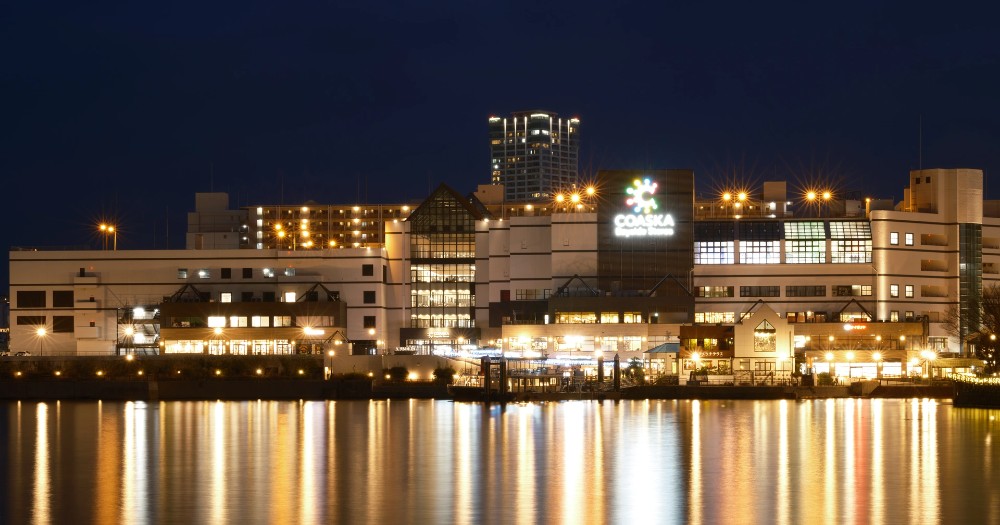
Yokosuka police arrested a 26-year-old U.S. Navy Sailor early on Tuesday, 17 November 2026, after the glass door at the back entrance of an apartment building in Otaki-cho was broken with a fire extinguisher. Police say he was drunk and admitted the damage. He is presumed innocent.
According to Xinhua, it was the third alcohol-related arrest of U.S. personnel in Japan in four days, following the 14 November arrests of a Kadena captain and a Kadena Airman. This one involves a Sailor in mainland Japan, and the Navy side of a case like it has features of its own. This post covers four of them: Article 109 of the UCMJ, which reaches damage to property that is not military property; drunk and disorderly conduct under Article 134; NJP for a Sailor attached to a ship, where the usual right to refuse captain's mast may not apply; and Article 139, which lets a command charge assessed damages against a service member's pay.
Key facts
- Yokosuka Police Station arrested the Sailor at the scene on 17 November 2026 on suspicion of property damage (Kanagawa Shimbun).
- Police allege that at about 12:45 a.m. he broke one glass door at the back entrance of an apartment building in Otaki-cho 1-chome, Yokosuka, with a fire extinguisher (Kanagawa Shimbun).
- About ten minutes earlier, a resident called 110 to report someone banging on the door (tvk).
- Officers found him at the scene. The door measured about 1.1 meters by 75 centimeters, and a fire extinguisher was at his feet (Livedoor News).
- Police say he was drunk and admitted the allegation, saying he did it out of frustration (tvk).
- Daily Sports reports that he became violent in the patrol car. None of the reports we read mentions any further allegation.
- Reports describe him as assigned to the U.S. Navy base in Yokosuka. His unit was not reported, and none of the reports includes a Navy statement.
Article 109 UCMJ: damage to non-military property
Article 109 of the UCMJ makes it a crime to waste, spoil, destroy or damage property that is not military property of the United States. The statute applies to anyone subject to the UCMJ "who willfully or recklessly wastes, spoils, or otherwise willfully and wrongfully destroys or damages any property other than military property of the United States." The Manual for Courts-Martial divides the offense by the type of property involved.
- Real property. Wasting or spoiling means "voluntary destruction of or permanent damage to real property," such as buildings or fences. It can be done willfully or recklessly.
- Personal property. Damage "consists of any physical injury to the property," and it must be willful (intentional) and wrongful.
The difference matters for something like a door that is part of a building. The real property offense can rest on recklessness, but it requires destruction or permanent damage. The personal property offense covers any physical injury, but it requires intent. Which offense the government charges determines what it has to prove.
Article 109 maximum punishment. The maximum depends on a $1,000 line. At or below $1,000, it is a bad-conduct discharge, forfeiture of all pay and allowances and 1 year of confinement. Above $1,000, it is a dishonorable discharge, forfeiture of all pay and allowances and 5 years. For damage, the Manual says that as a general rule the amount is the estimated or actual cost of repair by local tradespeople, or the replacement cost, whichever is less. That makes the repair estimate more than paperwork: it decides whether the one-year maximum or the five-year maximum applies. These are maximums, not predictions.
Drunk and disorderly under Article 134
Drunk and disorderly conduct is an Article 134 offense. The government has to prove that the accused was drunk, disorderly, or both, and that the conduct was prejudicial to good order and discipline, service discrediting, or both. The Manual says disorderly conduct includes "any disturbance of a contentious or turbulent character."
Where the conduct happens matters. Aboard ship, the maximum includes a bad-conduct discharge. Ashore, the maximum is 6 months of confinement and forfeiture of two-thirds pay per month for 6 months when the conduct is service discrediting, and 3 months of confinement and forfeiture of two-thirds pay per month for 3 months otherwise. Ashore, drunk and disorderly conduct on its own carries no punitive discharge. Our disorderly conduct and drunkenness page covers the offense in more detail.
Navy NJP aboard ship: the vessel exception and captain's mast
Most service members can turn down NJP and demand a court martial instead. Article 15(a) makes an exception for anyone attached to or embarked in a vessel: "except in the case of a member attached to or embarked in a vessel, punishment may not be imposed upon any member of the armed forces under this article if the member has, before the imposition of such punishment, demanded trial by court-martial in lieu of such punishment."
Under the Manual, a person is attached to or embarked in a vessel if, when NJP is imposed, the person is assigned or attached to the vessel, is on board for passage, or is assigned or attached to an embarked unit or other regularly organized body. The test is the person's assignment, not whether the ship is underway.
The Navy's JAGMAN limits the exception in three ways. Commanders may not apply it when the vessel is not operational, such as during a major shipyard maintenance period or before commissioning. No one may be ordered to a vessel just to take away the right to refuse NJP. And an unwarranted use of the vessel exception is grounds to appeal the NJP as unjust.
Captain's mast punishment aboard ship. For enlisted members attached to or embarked in a vessel, NJP can include confinement for up to 3 consecutive days. The Secretary concerned may limit which enlisted members can receive it.
In practice, a Sailor at a shore command can refuse NJP and demand a court martial. A Sailor attached to an operational ship cannot, so the important decisions come before and during the mast itself. Since the December 2024 amendments to the Manual, service members have the right to consult a lawyer before making their NJP decision, unless military exigencies prevent it. My advice is simple: talk to a lawyer before you go to captain's mast, not after.
Article 139 UCMJ: paying for property damage
Article 139 of the UCMJ is a way to recover the cost of damaged property from the service members responsible. When someone complains to a commanding officer that "willful damage has been done to the property of any person" by members of the armed forces, the commanding officer may convene a board of one to three commissioned officers. The board can summon witnesses, take evidence and assess the damages against the responsible members. Once the commanding officer approves the amount, it "shall be charged against the pay of the offenders."
Two features stand out. The process begins with a complaint, not with a charge or a conviction. And the statute covers willful damage, so the question of intent matters here as well. If a board is assessing damages, have someone check the repair estimate before the commanding officer approves the amount.
The Japanese case: Penal Code Article 261 and the SOFA
Japan's Penal Code. Under Article 261, apart from the cases in the three articles before it, a person who damages another person's property may be punished by imprisonment for up to three years, a fine of up to 300,000 yen or a petty fine. Under Article 264, an offense under Article 261 cannot be prosecuted without a complaint.
Who goes first. Under Article XVII, paragraph 3, of the Status of Forces Agreement, the United States has the primary right to prosecute three kinds of offense: those solely against U.S. property or security, those solely against the person or property of another member of the force, the civilian component or a dependent, and those arising out of official duty. Japan has the primary right over every other offense. Paragraph 8 bars a second trial in Japan for the same offense once Japan has tried a member to an acquittal, a sentence served or being served, or a pardon. It also says that nothing in it stops the U.S. military from trying the member for a violation of rules of discipline arising from the same act. Our post on custody, indictment and trial in Japan explains how a Japanese case moves.
The Japanese case is separate. Bilecki Law Group advises on the UCMJ and military administrative action. We do not advise on Japanese law, and we cannot tell you whether to speak with Japanese police or prosecutors. For advice on the Japanese case, talk to a lawyer licensed in Japan.
If NCIS or your command contacts you
This list is for NCIS, your command and anyone in your chain of command asking questions.
Under Article 31b of the UCMJ you have the right to remain silent. The Military Rules of Evidence also give you the right to a lawyer before and during questioning in custody.
You cannot talk your way out of an investigation, only into charges, so the time to get a lawyer is before you sit down.
- Tell NCIS that you want a lawyer and that you will not answer questions, and then stop talking.
- Do not give NCIS or your command a written statement without a lawyer, even one meant only to explain.
- If you are offered NJP, talk to a lawyer before you accept or refuse it. If you are attached to a ship, find out whether the vessel exception applies and whether your ship is considered operational.
- If you learn of an Article 139 complaint, involve a lawyer before the board completes its work.
- Do not post about the incident on social media.
- Follow every lawful order, including any liberty restriction your command imposes.
Military defense for Sailors in Yokosuka
Military defense is all we do. I served as Senior Defense Counsel for the Army's Trial Defense Service across the Pacific Rim, which covered Okinawa, mainland Japan, Korea and the Philippines. Since then I have made more than 75 trips to Japan and taken more than 250 courts martial to verdict. Ben Gold and I work our cases together, and the firm has represented more than 500 clients.
I travel to Yokosuka to defend the court martial and the administrative case. We charge flat fees, with travel billed separately. Call 813-669-3500.
FAQs
What is Article 109 of the UCMJ?
Article 109 punishes willfully or recklessly wasting or spoiling another person's real property, and willfully and wrongfully damaging or destroying another person's personal property, when the property is not military property of the United States. The maximum punishment depends on whether the value or damage is $1,000 or less (a bad-conduct discharge and 1 year of confinement) or more than $1,000 (a dishonorable discharge and 5 years).
Can a Sailor refuse NJP on a ship?
Usually not. Article 15(a) lets a member demand trial by court martial instead of NJP, except a member attached to or embarked in a vessel. The Navy's JAGMAN bars commanders from using that exception when the vessel is not operational, such as during a major shipyard maintenance period.
What is Article 139 of the UCMJ?
Article 139 is a way to pay for willful damage to someone's property. On a complaint, a commanding officer may convene a board of one to three commissioned officers to assess the damages, and the amount the commanding officer approves is charged against the pay of the members responsible.
Sources
- Kanagawa Shimbun, 17 November 2026 (the arrest, in Japanese)
- tvk via Yahoo Japan News, 17 November 2026 (in Japanese)
- TV Asahi (ANN) via Yahoo Japan News, 17 November 2026 (in Japanese)
- Livedoor News, 17 November 2026 (in Japanese)
- Daily Sports, 17 November 2026 (in Japanese)
- Xinhua via People's Daily Online, 17 November 2026
- 10 U.S.C. 909 (Article 109)
- 10 U.S.C. 815 (Article 15)
- 10 U.S.C. 939 (Article 139)
- 10 U.S.C. 934 (Article 134)
- 10 U.S.C. 831 (Article 31)
- Manual for Courts-Martial (2024 edition), Part IV, paragraphs 45 and 98; Part V, paragraphs 3 and 5.c.(5)
- Executive Order 14130 (2024 amendments to the Manual for Courts-Martial), adding Part V, paragraph 2A
- JAGMAN (JAGINST 5800.7G, Change 2), section 0108a
- Penal Code (Act No. 45 of 1907), Articles 261 and 264 (e-Gov, in Japanese)
- U.S.-Japan Status of Forces Agreement, Article XVII (Ministry of Foreign Affairs of Japan)