
A Second Kadena Arrest the Same Day: Indecent Exposure, Article 120c and Drunk and Disorderly
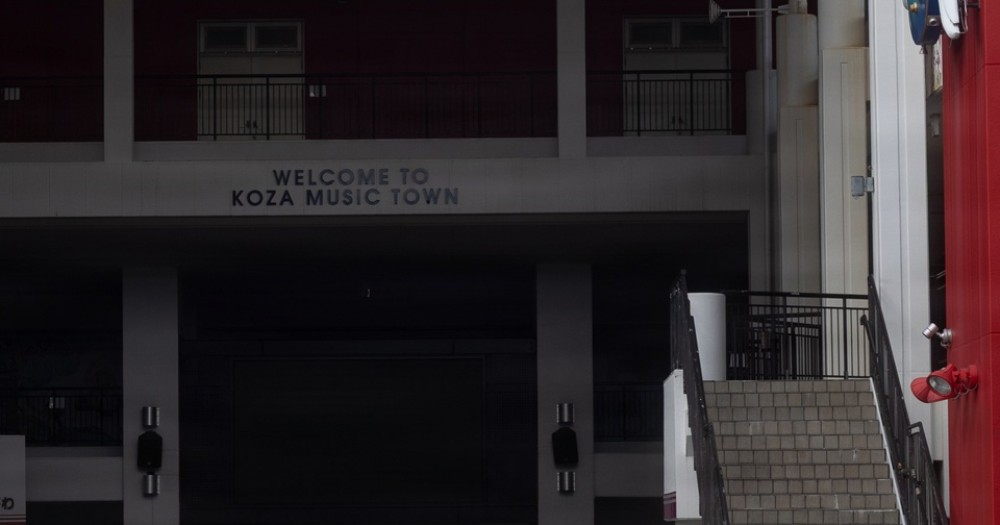
Okinawa police arrested a 25-year-old Airman assigned to Kadena Air Base at about 11:04 p.m. on Saturday, 14 November 2026, on suspicion of public indecency at Koza Music Town in Okinawa City. Ryukyu Shimpo reports that he denies the allegation and appeared heavily intoxicated when he was arrested. He is presumed innocent.
It was the second arrest of a Kadena service member that day. About 20 hours earlier, police had arrested a Kadena captain on suspicion of drunk driving. Both arrests came less than a week after the Period of Reflection ended. Here's the military side of an allegation like this one: indecent exposure under Article 120c, drunk and disorderly under Article 134, the special trial counsel, and where the Okinawa curfew fits the reported facts.
Key facts
- Okinawa Police Station arrested the Airman at the scene on suspicion of public indecency. Police allege he exposed his lower body in the first floor plaza of Koza Music Town, Ueji 1-chome, Okinawa City (Ryukyu Shimpo, 15 November 2026).
- Police say a passerby saw it and reported it (Ryukyu Shimpo).
- Police say he denies the allegation, telling them he did not know. He appeared heavily intoxicated when he was arrested (Ryukyu Shimpo).
- Reports differ on his rank. This post calls him a 25-year-old Airman.
- None of the reports includes a statement from the 18th Wing.
The curfew and the reported time
The liberty guidance in force runs from 8 November through 7 December 2026 (III MEF readout, 5 November 2026). It sets two rules.
- E-1 through E-4 are under curfew from midnight to 5 a.m.
- No service member may buy or drink alcohol outside a primary residence after midnight.
At the reported time, about 11:04 p.m., neither rule had started for the night. The readout also lets commanders set stricter rules for their own units. None of the reports mentions a stricter Kadena rule. Our Okinawa liberty post explains how Article 92 reaches a liberty order.
Article 120c: indecent exposure
Article 120c punishes anyone subject to the UCMJ who "intentionally exposes, in an indecent manner, the genitalia, anus, buttocks, or female areola or nipple." The Manual for Courts-Martial lists three elements.
- The accused exposed the accused's genitalia, anus, buttocks, or female areola or nipple.
- The exposure was in an indecent manner.
- The exposure was intentional.
The statute defines "indecent manner" as "conduct that amounts to a form of immorality relating to sexual impurity which is grossly vulgar, obscene, and repugnant to common propriety, and tends to excite sexual desire or deprave morals with respect to sexual relations."
Exposure alone is not the offense. It must be intentional, and it must be indecent as the statute defines the word.
The maximum is a dishonorable discharge, forfeiture of all pay and allowances and 1 year of confinement. Under the sentencing parameters, indecent exposure is a Category 1 offense, 0 to 12 months. These are maximums, not predictions.
A covered offense
Article 1(17) of the UCMJ lists Article 120c among the covered offenses. Under Article 24a, a special trial counsel "shall have exclusive authority to determine if a reported offense is a covered offense." The special trial counsel then exercises authority over that offense.
Article 24a goes further. Once a special trial counsel finds a reported offense is covered, the special trial counsel may also exercise authority over any offense it determines to be related, and over any other offense alleged against the same person. If an allegation of drunk and disorderly conduct arose from the same night, it could be one of them.
Drunk and disorderly under Article 134
The Manual lists two elements.
- The accused was drunk, disorderly, or drunk and disorderly, on board ship or in some other place.
- The conduct was prejudicial to good order and discipline in the armed forces, of a nature to bring discredit upon the armed forces, or both.
Drunk. The Manual defines it as intoxication by alcohol "sufficient to impair the rational and full exercise of mental or physical faculties," or an alcohol concentration of 0.08 grams or more per 100 milliliters of blood or per 210 liters of breath.
Disorderly. The Manual defines disorderly conduct as conduct that affects the peace and quiet of people who may witness it and may disturb them or provoke them to resentment. It includes conduct that "endangers public morals or outrages public decency."
The maximum. For drunk and disorderly under circumstances that bring discredit upon the military Service, it is 6 months of confinement and forfeiture of two-thirds pay per month for 6 months. In other cases it is 3 months and two-thirds pay for 3 months. Only aboard ship does the Manual list a bad-conduct discharge. Each form falls in Category 1 of the sentencing parameters, and the offense's own lower maximum controls.
The two articles are far apart. Indecent exposure carries a dishonorable discharge and turns on an intentional, indecent exposure. On its own, drunk and disorderly ashore carries no punitive discharge, and it turns on drunkenness and disorder. Our Article 134 disorderly conduct and drunkenness page covers that offense in full.
The Japanese case
Japan's Penal Code. Under Article 174, anyone who publicly commits an obscene act may be punished by imprisonment for up to six months, a fine of up to 300,000 yen, penal detention or a petty fine.
SOFA jurisdiction. The Status of Forces Agreement divides the primary right to prosecute. Under Article XVII, paragraph 3, the United States holds it for offenses solely against U.S. property or security, offenses solely against another member of the force, the civilian component or a dependent, and offenses arising out of official duty. For any other offense, Japan holds it. Under paragraph 8, once Japan has tried the member and he has been acquitted, or convicted and is serving or has served the sentence, or pardoned, U.S. authorities may not try him again in Japan for the same offense. Paragraph 8 does not prevent the U.S. military from trying him for a violation of rules of discipline arising from the same act. Our post on custody, indictment and trial in Japan explains how a Japanese case moves.
The Japanese case is separate. Bilecki Law Group advises on the UCMJ and military administrative action. We do not advise on Japanese law, and we cannot tell you whether to speak with Japanese police or prosecutors. For advice on the Japanese case, talk to a lawyer licensed in Japan.
If OSI contacts you
This list is for U.S. investigators, a special trial counsel's office and your command.
Under Article 31b of the UCMJ you have the right to remain silent. The Military Rules of Evidence also give you the right to a lawyer before and during questioning in custody.
You cannot talk your way out of an investigation, only into charges, so the time to get a lawyer is before you sit down.
- Tell OSI you want a lawyer and will not answer questions. Then stop talking.
- Give no written statement to U.S. investigators without a lawyer.
- Do not post about the night on social media. Not a joke, not a meme, not a vague post about a rough weekend.
- Keep your phone's data. Do not delete messages, photos or location history.
- Follow every lawful order, including any restriction your command imposes.
Article 31 says a statement obtained in violation of it may not be received in evidence against you at a court martial. The Military Rules of Evidence allow narrow exceptions, such as impeaching your own testimony if you take the stand. The lawyer still comes first, before charges are preferred.
The firm
Military defense is all we do. I've taken more than 250 courts martial to verdict. I served as Senior Defense Counsel for Trial Defense Service Pacific Rim, covering Okinawa, mainland Japan, Korea and the Philippines, and we were based in Honolulu from 2010 to 2021.
I travel to Okinawa to defend the court martial and the administrative case. Flat fees, travel billed separately. Call 813-669-3500.
FAQs
What is the maximum punishment for indecent exposure under Article 120c?
A dishonorable discharge, forfeiture of all pay and allowances and 1 year of confinement. Under the sentencing parameters it is a Category 1 offense, 0 to 12 months. These are maximums, not predictions.
Is indecent exposure a covered offense under the UCMJ?
Yes. Article 1(17) lists Article 120c among the covered offenses, and a special trial counsel has exclusive authority to determine whether a reported offense is covered.
What is the difference between indecent exposure and drunk and disorderly under the UCMJ?
Intent and the maximum. Article 120c requires an intentional exposure in an indecent manner and carries a dishonorable discharge. Drunk and disorderly under Article 134 requires drunkenness and disorder that harms good order or discredits the service, and on its own, ashore, it carries no punitive discharge.
Sources
- Ryukyu Shimpo, 15 November 2026 (the Airman's arrest, in Japanese)
- Ryukyu Shimpo, 14 November 2026, updated 15 November (the captain's arrest, in Japanese)
- Ryukyu Shimpo, 8 November 2026, updated 14 November (the rules through 7 December, in Japanese)
- III MEF readout, 5 November 2026
- 10 U.S.C. 920c (Article 120c)
- 10 U.S.C. 801(17) (covered offense)
- 10 U.S.C. 824a (Article 24a)
- 10 U.S.C. 934 (Article 134)
- 10 U.S.C. 892 (Article 92)
- 10 U.S.C. 831 (Article 31)
- Manual for Courts-Martial (2023 edition), Part IV, paragraphs 49, 63 and 98; R.C.M. 1003(d); Mil. R. Evid. 304(e) and 305; Appendix 12B and 12C (2024 edition)
- Penal Code (Act No. 45 of 1907), Article 174 (e-Gov, in Japanese)
- U.S.-Japan Status of Forces Agreement, Article XVII (Ministry of Foreign Affairs of Japan)