
Parasomnia, Alcohol and Mental Responsibility: A Naha Trial and the UCMJ
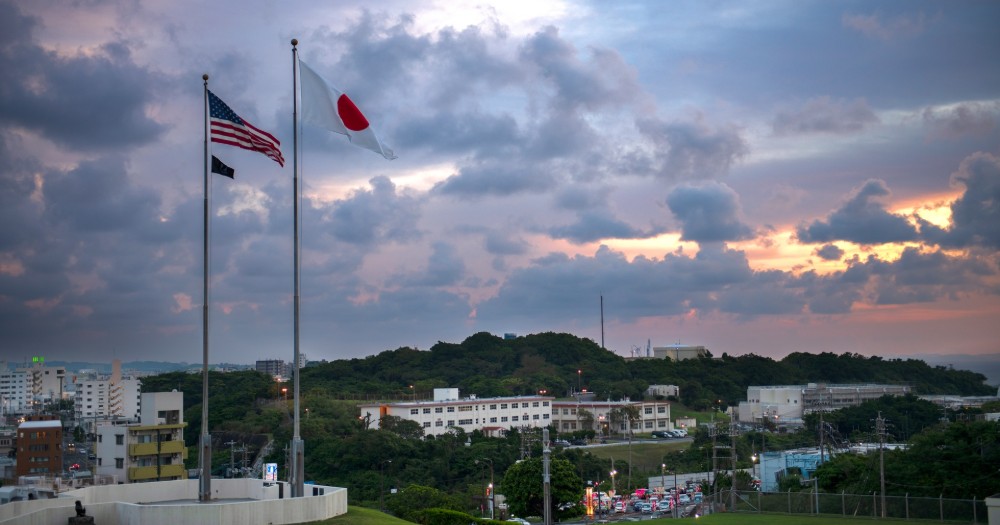
A sleep disorder specialist testified in Naha District Court on 11 November 2026 for the defense of a U.S. Marine on trial for sexual assault. He said the Marine was in a situation that could trigger non-REM parasomnia, a sleep disorder, and that the behavior likely resulted from parasomnia and alcohol together. The Marine, a private first class, has pleaded not guilty by reason of insanity. He is presumed innocent.
Japan is trying the case under Japanese law. But the same questions come up in courts martial. What happens when a service member says alcohol, medication or a sleep disorder left him unaware of what he was doing? Here's how the UCMJ answers that question, and what a sanity board is.
Key facts
- The charges, as Ryukyu Shimpo reports them, are non-consensual sexual intercourse and injury. Stars and Stripes describes them as forcible sexual intercourse and injuring a second woman, a gym employee who tried to intervene.
- Prosecutors say the incident happened in the women's restroom at the Gunners Fitness Center on Camp Foster at about 10 p.m. on 18 March 2025 (Stars and Stripes, 10 June 2026).
- The Marine has pleaded not guilty by reason of insanity to both counts (Stars and Stripes, 16 July and 12 November 2026). The defense argues he lacked criminal responsibility because of alcohol or parasomnia (Ryukyu Shimpo, 12 November 2026).
- Defense filings say he had been drinking and had taken ibuprofen before the incident (Stars and Stripes, 10 June 2026).
- On 11 November, the defense witness, a sleep disorder specialist at the University of the Ryukyus, testified about parasomnia and alcohol. On cross-examination, he called climbing over the stall "atypical" for non-REM parasomnia (Stars and Stripes, 12 November 2026).
- The Marine testified in August that he remembered falling asleep on a sofa in the gym lobby, then being outside before provost marshals took him into custody (Stars and Stripes, 12 November 2026).
- A three-judge panel is hearing the case. No verdict date has been reported.
The Japanese case
Japan's Penal Code says acts committed in a state of insanity are not punished, and the punishment for acts committed with diminished capacity is reduced (Article 39).
Under Article XVII of the Status of Forces Agreement, the United States has the primary right to exercise jurisdiction over offenses solely against U.S. property or security, offenses solely against the person or property of another member of the force, the civilian component or a dependent, and offenses arising out of official duty. Japan has the primary right over any other offense. Japan is trying this case in its own court.
Our earlier posts explain custody, indictment and trial in Japan and what a Japanese verdict does not end on the military side.
The Japanese case is separate. Bilecki Law Group advises on the UCMJ and military administrative action. We do not advise on Japanese law, and we cannot tell you whether to speak with Japanese police or prosecutors. For advice on the Japanese case, talk to a lawyer licensed in Japan.
How the UCMJ treats mental responsibility
Article 50a of the UCMJ makes lack of mental responsibility an affirmative defense. It applies only if, at the time of the acts, the accused, as a result of a severe mental disease or defect, was unable to appreciate the nature and quality or the wrongfulness of the acts. The statute adds: "Mental disease or defect does not otherwise constitute a defense."
- The accused carries the burden. Article 50a and R.C.M. 916(b)(2) require the accused to prove the defense by clear and convincing evidence.
- The presumption runs against the defense. R.C.M. 916(k)(3) says the accused is presumed to have been mentally responsible at the time of the alleged offense. The presumption continues until the accused proves otherwise by clear and convincing evidence.
- A lesser condition is not enough. R.C.M. 916(k)(2) says a mental condition that does not amount to a lack of mental responsibility is not an affirmative defense.
- The findings have a third option. When the defense is properly at issue, the members are instructed on it. The possible findings are guilty, not guilty, or not guilty only by reason of lack of mental responsibility (Article 50a(c)).
The sanity board
In a court martial, the formal route for this question is an inquiry under R.C.M. 706, often called a sanity board.
- Anyone in the case can raise it. If a commander considering the charges, the preliminary hearing officer, trial counsel, defense counsel, the military judge or a member has reason to believe the accused lacked mental responsibility or lacks capacity to stand trial, that fact and its basis go through channels to the officer who can order an inquiry (R.C.M. 706(a)).
- Who sits on it. Each member of the board must be a physician or a clinical psychologist (R.C.M. 706(c)(1)).
- What it answers. The board makes separate findings on four questions. At the time of the alleged conduct, did the accused have a severe mental disease or defect? What is the clinical psychiatric diagnosis? Was the accused, as a result, unable to appreciate the nature and quality or wrongfulness of the conduct? Is the accused now unable to understand the proceedings or to cooperate intelligently in the defense (R.C.M. 706(c)(2))?
How a board answers those questions for a sleep disorder, alone or with alcohol, depends on the evidence in each case.
Alcohol is not a defense
R.C.M. 916(l)(2) says: "Voluntary intoxication, whether caused by alcohol or drugs, is not a defense." Evidence of any degree of voluntary intoxication may be offered to raise a reasonable doubt about actual knowledge, specific intent, willfulness or a premeditated design to kill. That applies only when one of those is an element of the offense charged.
If CID, NCIS or OSI contacts you
What follows is for U.S. investigators, U.S. military police and your command.
Under Article 31b of the UCMJ you have the right to remain silent. The Military Rules of Evidence also give you the right to a lawyer before and during questioning in custody.
You cannot talk your way out of an investigation, only into charges, so the time to get a lawyer is before you sit down.
- Tell U.S. investigators you want a lawyer and will not answer questions. Then stop talking.
- Do not sign a written statement for U.S. investigators until a lawyer has reviewed it.
- Tell your lawyer, not investigators, about drinking, medications, sleep problems and medical history. Your lawyer decides whether those facts support a request for a sanity board.
- Do not delete texts, photos or other records.
Article 31 says no statement obtained in violation of the article, or through coercion, may be received in evidence against you in a trial by court martial. Get the lawyer before charges are preferred.
The firm
Military defense is all we do. I've taken more than 250 courts martial to verdict. I served as Senior Defense Counsel for the Army's Trial Defense Service across the Pacific Rim, which covered Okinawa, mainland Japan, Korea and the Philippines, and I've been back to Japan more than 75 times.
I travel to Okinawa to defend the court martial and the administrative case. Flat fees, travel billed separately. See our Camp Foster page or call 813-669-3500.
FAQs
Is being drunk a defense at a court martial?
No. R.C.M. 916(l)(2) says voluntary intoxication, whether caused by alcohol or drugs, is not a defense. Evidence of it may be offered only to raise a reasonable doubt about actual knowledge, specific intent, willfulness or a premeditated design to kill, where one of those is an element of the offense.
What is a sanity board in the military?
It is an inquiry under R.C.M. 706 into an accused's mental responsibility, capacity to stand trial, or both. Each board member is a physician or clinical psychologist. The board answers set questions, starting with whether the accused had a severe mental disease or defect at the time of the alleged conduct.
Who has to prove lack of mental responsibility at a court martial?
The accused. Article 50a requires proof by clear and convincing evidence, and R.C.M. 916(k)(3) presumes the accused was mentally responsible until that proof is made.
Sources
- Stars and Stripes, "Okinawa Marine accused of sexual assault was likely sleepwalking, psychiatrist says," 12 November 2026
- Stars and Stripes, 16 July 2026, and 10 June 2026 (trial coverage)
- Stars and Stripes, 20 May 2026 (sleep disorder insanity defense)
- Ryukyu Shimpo, 12 November 2026 (Japanese)
- 10 U.S.C. 850a (Article 50a)
- 10 U.S.C. 831 (Article 31)
- Manual for Courts-Martial (2024 edition), R.C.M. 706, R.C.M. 916(b)(2), (k) and (l)(2), and Mil. R. Evid. 305(c) and (d)
- Penal Code of Japan, Article 39 (Japanese Law Translation)
- U.S.-Japan Status of Forces Agreement, Article XVII (Ministry of Foreign Affairs of Japan)