
V Corps General Order Puts Bars and Nightclubs Off Limits for Soldiers in Poland: Article 92 UCMJ
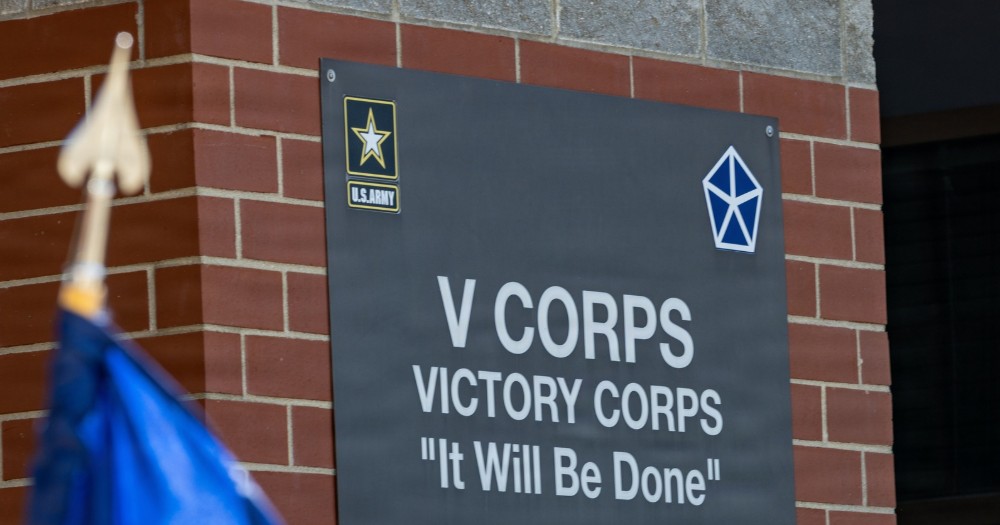
On 5 November 2026, Lt. Gen. Thomas Feltey, the V Corps commander, signed a revised general order for Soldiers across V Corps' area of responsibility, which Stars and Stripes says covers 16 countries, including Poland, Romania and the Baltic states. The biggest change is who it reaches. The 2024 version exempted Soldiers on permanent change of station orders from most restrictions on off limits establishments. The new order drops that exemption, so its bar and nightclub prohibitions now apply to permanently stationed Soldiers, including those living off the installation in Poznan.
If you're stationed in Poland, a bar you could walk into last month may now be off limits. Stars and Stripes reports that violations of the order's prohibited activity provisions are punishable under Article 92 of the UCMJ. This post covers what the order is reported to say, how Article 92 treats a general order, and what to do if CID or your command asks you about a violation.
Key facts
- Lt. Gen. Thomas Feltey, the V Corps commander, signed the revised general order on 5 November 2026. It took effect immediately (Stars and Stripes, 10 November 2026; Task & Purpose, 14 November 2026).
- The order applies across V Corps' area of responsibility, which Stars and Stripes reports covers 16 countries, including Poland, Romania and the Baltic states. By the command's estimate, more than 15,000 assigned, rotational and supporting personnel are subject to it (Stars and Stripes).
- The 2024 version exempted Soldiers on permanent change of station orders from most of its restrictions on off limits establishments. The new order has no such exemption, and it reaches Soldiers who live off the installation in Poznan (Stars and Stripes).
- According to Stars and Stripes, Lt. Col. Vincent Gothard, the V Corps public affairs director, said the change is a proactive measure and not a response to any particular incident or increase in misconduct. Commanders are briefing Soldiers and adding the new requirements to in-processing (Stars and Stripes).
- The order's number and full text were not published with the reports we read. The descriptions below come from those reports.
What the V Corps general order prohibits
The reports describe the order in some detail. The order itself controls, so get the text from your chain of command.
- Bars. Stars and Stripes reports that the order treats a bar as prohibited when its primary purpose is serving alcohol and it has no tables and menus for seated dining.
- Karaoke and hookah lounges. According to Stars and Stripes, these are prohibited when they mainly serve alcohol and offer no seated dining.
- Nightclubs. The order defines them by significant space dedicated to dancing, a disc jockey and a primary purpose of serving alcohol (Stars and Stripes).
- Restaurants. Stars and Stripes reports that a restaurant is not prohibited just because it serves alcohol or offers karaoke.
- Strip clubs. Task & Purpose and Defence24 list strip clubs among the prohibited establishments. The Stars and Stripes report does not mention them.
The order also sets alcohol rules. Stars and Stripes reports that personnel on temporary change of station or temporary duty orders of more than 30 days may not drink to the point of intoxication, defined as impairment or a blood alcohol concentration of 0.08. Task & Purpose states the intoxication rule without the 30-day limit, and it also reports a rule against possessing or drinking alcohol on an installation or forward operating site. Both the old and new versions bar alcohol within eight hours of duty or operating a vehicle. The 2024 ban on drinking during the first 96 hours in the European Command area, for Soldiers on orders over 30 days, does not appear in the new order. The 2024 policy also set a 0.15 blood alcohol limit for permanently assigned Soldiers, and the reports do not say whether that limit remains.
Soldiers on temporary assignments of more than 30 days need an approved battle buddy when leaving an installation or forward operating site between 10 p.m. and 5 a.m., unless they are on approved leave or pass. The earlier window ran to 6 a.m. Gothard said, according to Stars and Stripes, that permanently assigned Soldiers do not need a battle buddy for routine local travel. Task & Purpose describes the battle buddy rule without the 30-day limit, so check the order itself.
The order also covers electronic cigarette purchases and use, alcohol possession at forward operating sites, and a new prohibition on interfering with wild animals during official activities or at forward operating sites, with limited exceptions.
A Soldier who spoke to Stars and Stripes asked whether troops would have to leave an establishment when its kitchen closes. The reports do not answer that question. Your chain of command can.
Article 92 UCMJ: violating a lawful general order
Article 92 of the UCMJ makes it a crime for anyone subject to the code to violate or fail to obey "any lawful general order or regulation." The same article also covers failing to obey any other lawful order that the service member knew of and had a duty to obey, and dereliction in the performance of duties.
To convict under the general order clause, the government must prove three elements: that a certain lawful general order or regulation was in effect, that the accused had a duty to obey it, and that the accused violated or failed to obey it.
Who can issue a general order. The Manual for Courts-Martial includes orders properly published by the President, the Secretary of Defense, the Secretary of Homeland Security or the Secretary of a military department. It also includes orders generally applicable to the command of the officer issuing them, throughout the command or a part of it, that are issued by an officer having general court martial jurisdiction, a general or flag officer in command, or a commander superior to either. Lt. Gen. Feltey is a general officer in command of V Corps.
Knowledge is not an element. Under the Manual, knowledge of a general order need not be alleged or proved, and a lack of knowledge does not constitute a defense. A Soldier who missed the briefing can still be charged with violating a general order that applies to him or her. We have written about Article 92 and liberty orders on Okinawa in our posts on the Okinawa liberty order and Kadena's tiered liberty system.
Not every provision is punitive. The Manual says that not all provisions in general orders or regulations can be enforced under Article 92(1), and that regulations which only supply general guidelines or advice may not be enforceable. Stars and Stripes reports that the V Corps order's "prohibited activity provisions" are punishable under Article 92. Which provisions those are is a question for the text of the order.
Article 92 punishment for a general order violation
The maximum punishment for violating a lawful general order or regulation is a dishonorable discharge, forfeiture of all pay and allowances and confinement for 2 years. The Manual sets that maximum aside if, without the order, the same facts would make the accused guilty of another specific offense that carries a lower punishment, or if the violation is a breach of restraint imposed as a result of an order. These are maximums, not predictions.
Stars and Stripes also reports that a violation can lead to disciplinary or adverse administrative action. Our Article 92 page covers the other Article 92 offenses and their maximums.
If CID or your command contacts you
This list is for CID, the military police and anyone in your chain of command asking questions.
Under Article 31b of the UCMJ you have the right to remain silent. The Military Rules of Evidence also give you the right to a lawyer before and during questioning in custody.
You cannot talk your way out of an investigation, only into charges, so the time to get a lawyer is before you sit down.
- Ask your chain of command for the order, or at least the part that defines prohibited establishments, and read it.
- If you are not sure whether a place is prohibited, ask your chain of command before you go, and keep a record of the answer.
- Do not give CID or your command a written statement without a lawyer, even one meant only to explain.
- If you are offered NJP, talk to a lawyer before you accept or refuse it.
- Do not post about an incident on social media.
My advice is simple: if you have to ask whether a place is off limits, ask before you walk in, not after.
Military defense for Soldiers in Poland and Europe
Military defense is all we do. I have taken more than 250 courts martial to verdict, and the firm has represented more than 500 clients. Ben Gold and I work our cases together. I served as Senior Defense Counsel for the Army's Trial Defense Service across the Pacific Rim, which covered Okinawa, mainland Japan, Korea and the Philippines.
V Corps runs its forward headquarters from Camp Kościuszko in Poznan. I travel to Poland to defend the court martial and the administrative case. We charge flat fees, with travel billed separately. Call 813-669-3500.
FAQs
What is Article 92 of the UCMJ?
Article 92 makes it a crime to violate a lawful general order or regulation, to fail to obey any other lawful order you knew of and had a duty to obey, or to be derelict in the performance of your duties. A general order violation carries a maximum of a dishonorable discharge, forfeiture of all pay and allowances and 2 years of confinement.
Can you be punished under Article 92 for a general order you did not know about?
Yes. Under the Manual for Courts-Martial, knowledge of a lawful general order is not an element of the offense, and a lack of knowledge is not a defense. The government must still prove that the order was in effect, that you had a duty to obey it and that you violated it.
Does the V Corps general order apply to Soldiers on PCS orders?
Yes, for the establishment prohibitions, according to Stars and Stripes. The 2024 version exempted Soldiers on permanent change of station orders from most of its off limits restrictions, and the revised order signed on 5 November 2026 does not. Stars and Stripes reports that some other rules, such as the battle buddy rule, apply to Soldiers on temporary orders of more than 30 days.
Sources
- Stars and Stripes, 10 November 2026
- Task & Purpose, 14 November 2026
- Defence24, 15 November 2026 (Polish)
- 10 U.S.C. 892 (Article 92)
- Manual for Courts-Martial, United States (2024 edition), Part IV, paragraph 18