
MCBH Brawl Follow-Up: A Barracks Order, the Threat of Pretrial Confinement and Article 92 UCMJ
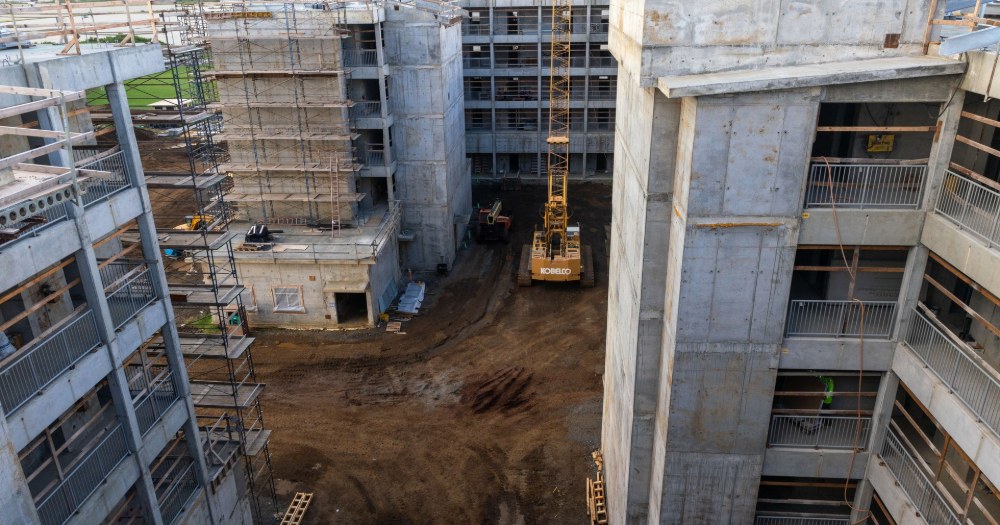
Screenshots circulating on social media show what are described as commanders' messages sent after the 10 November 2026 barracks fight at Marine Corps Base Hawaii. One message tells Marines of Marine Aircraft Group 24 that they are not permitted at barracks outside their group, and warns that a Marine found at another unit's barracks will be placed in pretrial confinement for violating a direct order. The Marine Corps has not confirmed the messages. Military police are investigating the fight, no charges have been reported, and every Marine involved is presumed innocent.
We covered the charges a barracks fight can bring in our first post on the MCBH barracks brawl. This post is about what came after: an order that keeps Marines out of other units' barracks, the threat of the brig for breaking it, and talk of a "round 2." Each one raises a question a Marine at Kaneohe Bay should be able to answer before the next weekend: is the order lawful, can the command confine you for breaking it, and can a group chat get you charged for a fight that never happens?
Key facts
- The fight: A brawl reportedly involving dozens of Marines took place at a barracks building on Marine Corps Base Hawaii on 10 November 2026, the Marine Corps' 251st birthday, according to service officials (Stars and Stripes, 16 November 2026).
- The investigation: Military police are investigating. Installation spokesperson 2nd Lt. Keagan Bolman told Stars and Stripes that no further information was available because of the investigation.
- The videos: Footage of the fight was shared by the unofficial military accounts NotInRegz and NotInRegss and drew more than a million views combined.
- The first message: Stars and Stripes reported that a second video carried a message attributed to Col. Gabriel Diana, commander of 3rd Littoral Combat Team, which called the fight a breakdown of good order and discipline and said the commanding general would address it directly. Stars and Stripes could not verify that the message was authentic or that Col. Diana wrote it.
- The later messages: A reel posted by NotInRegss shows further messages laid over the fight footage. They describe the interior guard ordered to stand to, any physical altercation in the barracks made a reportable event, a commanding general flying in, and threats of a "round 2." One message orders Marine Aircraft Group 24 Marines not to go to barracks outside their group and warns that a Marine found at another barracks will be put in pretrial confinement for violating a direct order. The screenshots carry no date, and the Marine Corps has not confirmed any of these messages.
- Not confirmed: Base officials have not confirmed the units involved, any arrest, any injuries or the circumstances of the fight. No charges have been reported. Every Marine involved is presumed innocent.
Article 92 UCMJ: is an order to stay out of other barracks lawful?
Article 92 of the UCMJ makes it a crime to violate a lawful general order or regulation, to fail to obey any other lawful order that a service member knows about and has a duty to obey, or to be derelict in the performance of duties. An order keeping Marines out of other units' barracks would ordinarily fall under the second part, failure to obey an other lawful order.
Is the order lawful? The Manual for Courts-Martial says an order requiring the performance of a military duty or act may be inferred to be lawful, and it is disobeyed at the peril of the subordinate. The inference does not apply to a patently illegal order, such as one that directs the commission of a crime. Whether an order is lawful is a question of law for the military judge. A lawful order must come from someone with authority to give it, must relate to military duty, and must not conflict with the Marine's statutory or constitutional rights. Military duty includes activities that safeguard or promote the morale, discipline and usefulness of members of a command and are directly connected with the maintenance of good order.
An order to stay out of other units' barracks after a large fight, with talk of a second one circulating, is the kind of order that definition was written for. The Manual's lawfulness test, set out under Article 90 and applied to general orders under Article 92, does set limits. An order may not interfere with private rights or personal affairs without a valid military purpose. And the Manual says disobeying an order given for the sole purpose of increasing the penalty for an offense the command expects the Marine may commit is not punishable.
Knowledge. For an other lawful order, the government must prove the Marine had actual knowledge of the order, although knowledge may be proved by circumstantial evidence. That matters when an order is passed from a commander to unit commanders, duty officers and group chats. A Marine who never received the order is in a different position from one who acknowledged it. A general order is different: knowledge is not an element and lack of knowledge is not a defense. A general order is one published by the President, the Secretary of Defense, the Secretary of Homeland Security or the secretary of a military department, or issued for a command by an officer with general court martial jurisdiction, a general or flag officer in command, or a commander above either of them.
Article 90 or Article 92: the "direct order." The message calls it a "direct order." Article 90 punishes willfully disobeying a lawful command of a superior commissioned officer. Under Article 90 the order must be directed specifically to the subordinate. The Manual says violations of standing orders or directives are not punishable under Article 90 but may violate Article 92. The way an order is transmitted does not matter, so a relayed order can still be personal. An order announced to every Marine in an aviation group, however, reads more like a directive to a unit than a command aimed at one Marine. Article 90 also requires willful disobedience, meaning intentional defiance of authority. A failure to comply through heedlessness or forgetfulness is not an Article 90 offense, but it may violate Article 92.
Maximum punishment. The maximum sentence for failing to obey an other lawful order is a bad conduct discharge, forfeiture of all pay and allowances, and confinement for 6 months. For a lawful general order or regulation, it is a dishonorable discharge, forfeiture of all pay and allowances, and confinement for 2 years. For willfully disobeying a superior commissioned officer under Article 90 outside time of war, it is a dishonorable discharge, forfeiture of all pay and allowances, and confinement for 5 years.
Pretrial confinement under R.C.M. 305: when the command can put you in the brig
Pretrial confinement is physical restraint, imposed by order of competent authority, that deprives a person of freedom pending disposition of charges. The message warns that a Marine found at another barracks "will be put in pretrial confinement." Rule for Courts-Martial 305 does not work automatically. It sets conditions that must be met for each Marine, and reviews that start within hours.
The standard. No one may be ordered into pretrial confinement except for probable cause, meaning a reasonable belief that an offense triable by court martial was committed, that the person committed it, and that confinement is required by the circumstances. Within 72 hours, the commander must release the Marine unless the commander believes, upon probable cause, that:
- an offense triable by court martial was committed;
- the Marine committed it;
- confinement is necessary because it is foreseeable that the Marine will not appear at trial or a hearing, or will engage in serious criminal misconduct; and
- less severe forms of restraint are inadequate.
Serious criminal misconduct includes intimidation of witnesses or other obstruction of justice, serious injury of others, and offenses that pose a serious threat to the safety of the community or to the effectiveness, morale, discipline, readiness or safety of the command. The Discussion to the rule says a person should not be confined as a mere matter of convenience or expedience, and that less serious forms of restraint must always be considered first. It also quotes Article 10: a person charged only with an offense normally tried by summary court martial ordinarily shall not be ordered into confinement.
A commander could argue that a planned second fight threatens the safety and discipline of the command. But walking into another unit's barracks is not, by itself, a ticket to the brig. The rule still asks whether something less than confinement would do.
Lesser forms of restraint under R.C.M. 304. Pretrial restraint can be conditions on liberty, restriction in lieu of arrest, arrest or confinement. Conditions on liberty are orders to do or not do specified acts; the Discussion's examples include orders not to go to a certain place and not to associate with specified persons. Every form of pretrial restraint requires probable cause, and R.C.M. 304(f) says pretrial restraint is not punishment and shall not be used as such.
The clock once a Marine is confined.
| When | What happens | Rule |
|---|---|---|
| Promptly | The Marine is told the offenses, the right to remain silent, the right to civilian counsel at no expense to the United States and to request military counsel, and how the confinement will be reviewed | R.C.M. 305(e) |
| 24 hours | If the Marine's commander did not order the confinement, a report goes to the commander | R.C.M. 305(i)(1) |
| 48 hours | A neutral and detached officer reviews probable cause | R.C.M. 305(j)(1) |
| 72 hours | The commander decides whether confinement continues and, if it does, writes a memorandum giving the reasons | R.C.M. 305(i)(2) |
| On request | Military counsel is provided before the initial review or within 72 hours of the request, whichever comes first | R.C.M. 305(g) |
| 7 days (10 for good cause) | A neutral and detached officer reviews probable cause and the need for continued confinement; the Marine and counsel may appear and make a statement if practicable | R.C.M. 305(j)(2) |
| After referral, or earlier in an R.C.M. 309 proceeding | A military judge reviews the confinement on a motion for appropriate relief | R.C.M. 305(k) |
Article 13 and credit. Article 13 of the UCMJ says no person held for trial may be subjected to punishment or penalty other than arrest or confinement, and the confinement may not be more rigorous than the circumstances require to ensure the person's presence. If a Marine is later sentenced to confinement, the sentence is credited one day for each day of pretrial confinement. Where the command does not follow R.C.M. 305(g), (i), (j) or (k), the Marine receives an additional day of administrative credit for each day served as a result, and the military judge may order more credit for confinement that involves an abuse of discretion or unusually harsh circumstances.
Planning a "round 2": conspiracy under Article 81 and solicitation under Article 82
Article 81 of the UCMJ makes it a crime to conspire with another person to commit an offense under the UCMJ when one or more of the conspirators does an act to carry out the plan. The government must prove two things: that the accused entered into an agreement with one or more persons to commit a UCMJ offense, and that while the agreement existed, the accused or at least one co-conspirator performed an overt act for the purpose of bringing about its object.
The agreement does not need any particular form or formal words. It is enough that the parties arrive at a common understanding, and that can be shown by their conduct. The overt act does not have to be a crime. Any act is enough, however preliminary, as long as it shows the agreement is being carried out, and an overt act by one conspirator becomes the act of all. The planned offense never has to happen. A conspiracy is a separate offense from its object, so a "round 2" that never takes place can still be charged as a conspiracy if the agreement and an overt act can be proved.
Withdrawal matters, and timing decides it. A Marine who abandons the agreement before any conspirator commits an overt act is not guilty of conspiracy. After an overt act, withdrawal does not undo the conspiracy, although it ends liability for offenses the others commit afterward. An effective withdrawal requires affirmative conduct wholly inconsistent with the agreement that shows the person has cut all connection with it.
The maximum punishment for conspiracy is the maximum authorized for the offense that was its object. If the object was a riot under Article 116, which our first post covers, that is a dishonorable discharge, forfeiture of all pay and allowances, and confinement for 10 years.
Article 82 makes it a crime to solicit or advise another person to commit an offense under the UCMJ, with the intent that the offense actually be committed. The offense is complete when the solicitation is made. The person solicited does not have to agree or act on it. Any act or conduct that reasonably may be construed as a serious request or advice to commit an offense can be a solicitation, and it can be made through other people. For most offenses, the maximum punishment is a dishonorable discharge, forfeiture of all pay and allowances, and confinement for 10 years, or the maximum for the offense solicited, whichever is less.
In practical terms, a message urging other Marines to join a fight can be charged as a solicitation even if no one shows up. A reply agreeing to go, followed by anything done to make it happen, can supply the agreement and the overt act for a conspiracy charge. None of this means anyone at Kaneohe Bay did either, and every Marine is presumed innocent.
Article 91 UCMJ: striking or assaulting an NCO in the execution of office
Article 91 of the UCMJ makes it a crime for a warrant officer or enlisted member to strike or assault a warrant officer, noncommissioned officer or petty officer while that officer is in the execution of office. The same article covers willfully disobeying their lawful orders and treating them with contempt or disrespect. This section explains the law in general. No report says it happened at Marine Corps Base Hawaii.
To prove striking or assaulting an NCO, the government must show that:
- the accused was a warrant officer or enlisted member;
- the accused struck or assaulted a certain warrant officer, NCO or petty officer;
- the striking or assault was committed while the victim was in the execution of office; and
- the accused then knew the person was a warrant officer, NCO or petty officer.
When the victim was the accused's own superior NCO, the government must also prove that relationship and that the accused knew of it.
An officer is in the execution of office when engaged in any act or service required or authorized by treaty, statute, regulation, the order of a superior, or military usage. "Strikes" means an intentional contact and includes any offensive touching, however slight. The accused must have actual knowledge that the victim was an NCO, although that can be proved by circumstantial evidence. Unlike Articles 89 and 90, Article 91 does not require a superior and subordinate relationship. It does not protect an acting NCO, or military police who are not NCOs.
The maximum punishment for striking or assaulting a superior NCO is a dishonorable discharge, forfeiture of all pay and allowances, and confinement for 3 years. For any other NCO, it is a dishonorable discharge, forfeiture of all pay and allowances, and confinement for 1 year. For a warrant officer, it is a dishonorable discharge, forfeiture of all pay and allowances, and confinement for 5 years.
If military police, NCIS or your command contacts you
Under Article 31b of the UCMJ you have the right to remain silent. The Military Rules of Evidence also give you the right to a lawyer before and during questioning in custody.
You cannot talk your way out of an investigation, only into charges, so the time to get a lawyer is before you sit down.
- Do not post about the fight, the order or a "round 2," and do not comment on the videos.
- Do not start, join or forward a group chat about getting even. Leave the chat and keep what is already in your phone.
- Do not delete messages, photos or videos. Our first post on the brawl explains how deleting evidence can become a separate charge.
- Ask for a lawyer before you answer questions or write a statement.
My advice is simple: stay out of the other barracks while the order stands, and talk to a lawyer before you talk to anyone about that night.
How Bilecki Law Group can help
Military defense is all we do. This firm called Honolulu home from 2010 to 2021, so Hawaii's installations are not new ground for us. Before that I served as Senior Defense Counsel for the Army's Trial Defense Service across the Pacific Rim. I have taken more than 250 courts martial to verdict, and the firm has represented more than 500 clients. Ben Gold and I work every case together. We charge flat fees, and travel is billed separately.
When a command threatens the brig, the first days matter: the confinement reviews happen fast, and so does the evidence a command collects. I travel to Kaneohe Bay to defend the court martial and the administrative case. Call 813-669-3500 for a confidential consultation.
Frequently asked questions
Can the military put you in pretrial confinement for disobeying an order?
Only if R.C.M. 305 is met. Within 72 hours the commander must release the service member unless there is probable cause that an offense was committed by that person, confinement is necessary because it is foreseeable that the person will not appear at trial or a hearing or will engage in serious criminal misconduct, and less severe forms of restraint are inadequate. A neutral and detached officer reviews probable cause within 48 hours and the need for confinement within 7 days.
What is Article 92 of the UCMJ?
Article 92 makes it a crime to violate a lawful general order or regulation, to fail to obey another lawful order that the service member knows about and has a duty to obey, or to be derelict in the performance of duties. The maximum sentence for failing to obey an other lawful order is a bad conduct discharge, forfeiture of all pay and allowances, and confinement for 6 months.
Can you be charged with conspiracy under the UCMJ if the crime never happens?
Yes. Article 81 requires an agreement to commit a UCMJ offense and an overt act by any conspirator to carry it out, but the planned offense does not have to be committed. The maximum punishment is the maximum for the offense that was the object of the conspiracy.
Sources
- Stars and Stripes, "Marine Corps birthday barracks brawl in Hawaii sparks military investigation," 16 November 2026.
- Manual for Courts-Martial, United States (2024 edition), Part IV, paragraphs 5 (Article 81), 6 (Article 82), 15.c.(3) (execution of office; strikes), 16 (Article 90), 17 (Article 91), 18 (Article 92) and 54.d (Article 116 maximums); R.C.M. 304, 305 and 1102(b)(2)(B); Appendix 2, Article 13.
- 10 U.S.C. 813, 881, 882, 890, 891, 892.