
Marine Corps Base Hawaii Barracks Brawl: Article 116 Riot and Article 128 Assault Under the UCMJ
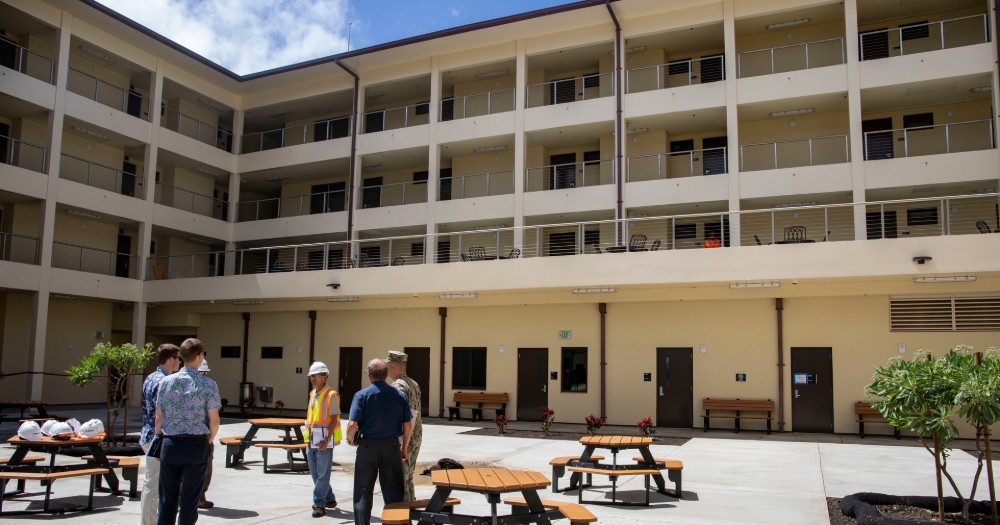
Military police at Marine Corps Base Hawaii are investigating a fight at a barracks building on 10 November 2026, the Marine Corps' 251st birthday, Stars and Stripes reported on 16 November. Videos of the fight spread widely on social media, and the report describes a brawl reportedly involving dozens of Marines. Base officials have not said which units were involved, whether anyone was hurt, or whether anyone has been arrested or charged. Every Marine involved is presumed innocent.
The birthday is supposed to be the best night of the Marine Corps year. When it ends in a fight that plays out on social media, the command is going to feel pressure to do something about it, and a video with dozens of people in the frame puts a lot of Marines in front of investigators, including some who only watched. I want to shoot you straight about what comes next: the charges a command can consider after a barracks fight, why the videos and the phones that recorded them matter, and what to do if military police or your command want to talk to you.
Key facts
- Date and place: 10 November 2026, at a barracks building on Marine Corps Base Hawaii, according to service officials (Stars and Stripes, 16 November 2026).
- Investigation: Military police are investigating, installation spokesperson 2nd Lt. Keagan Bolman told Stars and Stripes. He said no further information was available because of the investigation.
- Videos: Footage of the fight was shared by unofficial military social media accounts and circulated widely.
- Not confirmed: Messages posted with the videos named the units involved and claimed that at least one Marine was arrested. Base officials have not confirmed the units, any arrest, any injuries or the circumstances that led to the fight. No charges have been reported.
What happens if you fight in the military
A fight in the barracks can be charged under several articles of the UCMJ. The two that fit a group fight most directly are Article 116, which covers riot and breach of the peace, and Article 128, which covers assault. Which charge a command considers depends on what each Marine is shown to have done, not on how many people were in the building.
Stars and Stripes reported that the investigation followed the videos. In my view, that is what turned a barracks fight into a case the whole Marine Corps is watching, and a command under that kind of attention looks for someone to make an example of. Your job is to make sure it is not you by default.
Article 116 UCMJ: riot or breach of the peace
Article 116 of the UCMJ makes it a crime to cause or participate in a riot or a breach of the peace. The Manual for Courts-Martial treats them as two separate offenses.
Riot. To prove riot, the government must show that:
- the accused was a member of an assembly of three or more persons;
- the accused and at least two others in the group mutually intended to assist one another against anyone who might oppose them in doing an act for some private purpose;
- the group or some of its members, in furtherance of that purpose, unlawfully committed a tumultuous disturbance of the peace in a violent or turbulent manner; and
- these acts terrorized the public in general, in that they caused or were intended to cause public alarm or terror.
The Manual calls terrorization of the public the gravamen of the offense. It also says the common purpose does not have to be formed before the group assembles, and that the "community" and "public" include a military post or camp. The elements require more than presence in the building: the government must prove that the accused was part of the group and shared its intent to assist the others.
That is where a riot charge deserves a fight. It reaches everyone in the group and has a maximum sentence of 10 years of confinement, so it can make every Marine in the video look equally guilty. Standing in a courtyard while other people throw punches is not the same as agreeing to back them up, and the government has to prove the difference for each Marine it charges.
Breach of the peace. Breach of the peace requires an act of a violent or turbulent nature that unlawfully disturbed the peace. The Manual lists engaging in an affray as an example, and its sample specification describes a fist fight in a dayroom. The Manual also says that tumultuous conduct is not excused because others incited it.
Maximum punishment. For riot: a dishonorable discharge, forfeiture of all pay and allowances, and confinement for 10 years. For breach of the peace: confinement for 6 months and forfeiture of two-thirds pay per month for 6 months.
Article 128 UCMJ: assault in a barracks fight
Article 128 of the UCMJ makes it a crime to attempt, offer or do bodily harm to another person unlawfully and with force or violence. In a fight, the charge usually turns on who struck whom and how badly anyone was hurt.
The maximum punishments in the Manual include:
- Simple assault: confinement for 3 months and forfeiture of two-thirds pay per month for 3 months.
- Assault consummated by a battery: a bad conduct discharge, forfeiture of all pay and allowances, and confinement for 6 months.
- Aggravated assault inflicting substantial bodily harm: a dishonorable discharge, forfeiture of all pay and allowances, and confinement for 3 years.
- Aggravated assault inflicting grievous bodily harm: a dishonorable discharge, forfeiture of all pay and allowances, and confinement for 5 years.
An assault on military police or other law enforcement personnel in the execution of law enforcement duties carries a higher maximum: a dishonorable discharge, forfeiture of all pay and allowances, and confinement for 3 years.
Self-defense is a defense under the Rules for Courts-Martial, but it has limits. Under R.C.M. 916(e)(4), the right to self-defense is lost if the accused was an aggressor, engaged in mutual combat, or provoked the attack, unless the accused withdrew in good faith before the offense. In a group fight, those facts are often disputed, and the videos may decide them.
Videos cut both ways. A clip that starts in the middle of a fight can make the Marine who threw the last punch look like the aggressor and leave out the shove or the threat that started it. We want the full footage from every phone, not the cut that made the rounds online, before anyone decides who did what.
Videos, phones and Article 131b obstruction of justice
Article 131b of the UCMJ makes it a crime to wrongfully do an act with the intent to influence, impede or obstruct the due administration of justice in the case of a person the accused had reason to believe faced, or would face, criminal or disciplinary proceedings. The Manual says the offense can rest on conduct before charges are preferred, that disciplinary proceedings include nonjudicial punishment, and that the obstruction does not have to succeed. Wrongfully influencing or intimidating a witness is one of its examples. The maximum punishment is a dishonorable discharge, forfeiture of all pay and allowances, and confinement for 5 years.
That matters after a fight that was filmed. I understand the instinct to delete the video once the command starts asking questions, and it is the wrong move. Deleting videos or messages, or telling another Marine what to say to investigators, can add a separate charge with a maximum sentence of 5 years of confinement, far more than the maximum for breach of the peace or a battery.
NJP, court martial and administrative action
A command does not have to send a fight to court martial. It can use nonjudicial punishment under Article 15, and the same facts can support administrative action, including processing for separation. A Marine who is not attached to or embarked in a vessel may refuse NJP and demand trial by court martial before punishment is imposed. That decision has consequences either way. If you're a Lance Corporal with a clean record who got swept up in the crowd, NJP can look like the fast way to make this go away, and sometimes it is. Other times, especially when the video does not show what the command thinks it shows, making the government prove its case is the right call. That's a decision to make with a lawyer who has seen the evidence, not one to make standing in front of your first sergeant.
If military police, NCIS or your command contacts you
Under Article 31b of the UCMJ you have the right to remain silent. The Military Rules of Evidence also give you the right to a lawyer before and during questioning in custody.
Under Military Rule of Evidence 305, a person subject to the UCMJ may not interrogate or request any statement from a suspect without first telling the suspect the nature of the accusation, that the suspect has the right to remain silent, and that any statement made may be used as evidence against the suspect in a trial by court martial. That applies to military police and to members of your chain of command who question you as a suspect.
You cannot talk your way out of an investigation, only into charges, so the time to get a lawyer is before you sit down.
- Do not delete videos, photos or messages about the fight.
- Do not post about the fight or comment on the videos.
- Do not discuss what happened with other Marines who may be witnesses.
- Ask for a lawyer before you answer questions or write a statement.
My advice is simple: if you were in that building on 10 November, talk to a lawyer before you talk to anyone about it.
How Bilecki Law Group can help
Military defense is all we do, and Hawaii is familiar territory for this firm. We were based in Honolulu from 2010 to 2021. I have taken more than 250 courts martial to verdict, Ben Gold and I work our cases together, and the firm has represented more than 500 clients. We charge flat fees, and travel is billed separately.
When a command needs to make an example out of someone, we want every video, every statement and every witness on the table before anyone decides what you did. I travel to Kaneohe Bay to defend the court martial and the administrative case. Call 813-669-3500 for a confidential consultation.
Frequently asked questions
What happens if you fight in the military?
A fight can lead to charges under the UCMJ, nonjudicial punishment or administrative separation. The usual charges are assault under Article 128 and breach of the peace or riot under Article 116, and the outcome depends on what each service member is shown to have done and on any injuries.
What is Article 116 of the UCMJ?
Article 116 makes it a crime to cause or participate in a riot or a breach of the peace. Riot requires a group of three or more acting together in a violent or turbulent way that terrorized the public, and its maximum sentence is 10 years of confinement. The maximum sentence for breach of the peace is 6 months of confinement.
Can you get kicked out of the military for fighting?
Yes. A court martial can adjudge a bad conduct discharge for assault consummated by a battery and a dishonorable discharge for riot or aggravated assault. A command can also process a service member for administrative separation based on the same conduct.
Sources
- Stars and Stripes, “Marine Corps birthday barracks brawl in Hawaii sparks military investigation,” 16 November 2026
- Manual for Courts-Martial, United States (2024 edition), Part IV, paragraph 54 (Article 116), paragraph 77 (Article 128) and paragraph 83 (Article 131b); Part V, paragraph 3; R.C.M. 916(e)(4); Mil. R. Evid. 305(c)(1)
- 10 U.S.C. 916 (Article 116), 10 U.S.C. 928 (Article 128), 10 U.S.C. 931b (Article 131b)