
Types of Pleas in a Court Martial
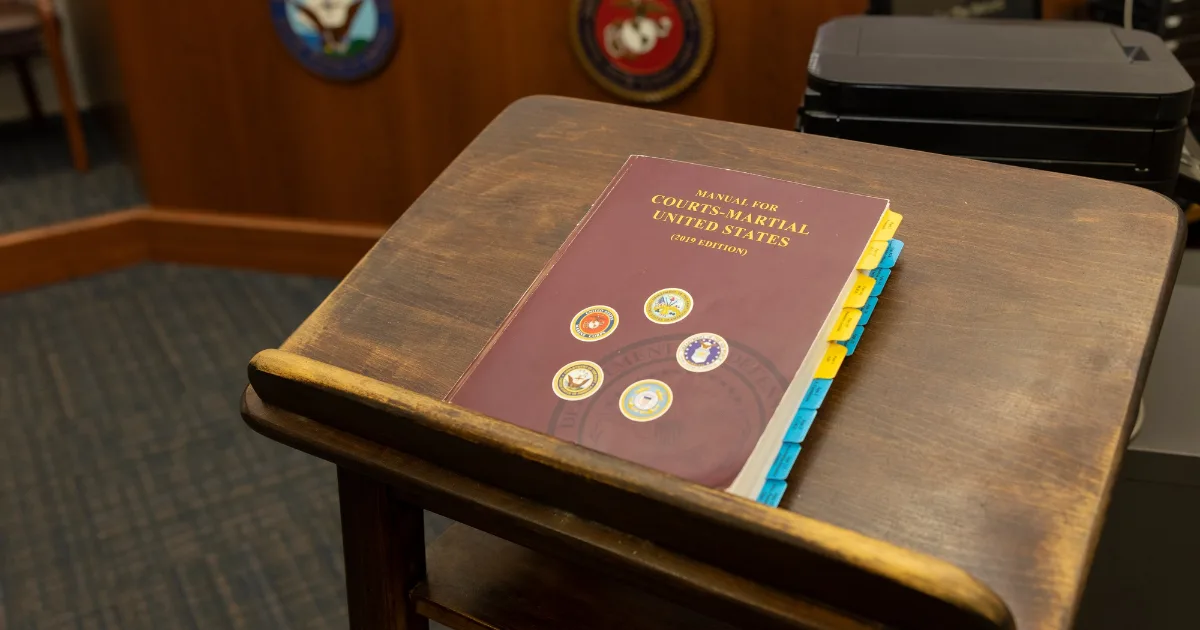
A plea in a court martial works differently from a plea in a civilian court. The Rules for Courts-Martial do not provide for a no contest plea or an Alford plea. They allow four pleas, a conditional guilty plea, and a detailed inquiry by the military judge before any guilty plea is accepted. This post explains each one, how they compare with civilian pleas, and what a guilty plea gives up.
The pleas the rules allow
An accused may plead: (Rule for Courts-Martial 910(a)(1))
- Guilty.
- Not guilty of the offense as charged, but guilty of a named lesser included offense.
- Guilty with exceptions, with or without substitutions. The accused admits the specification except for certain words, and pleads not guilty to the excepted words.
- Not guilty.
A guilty plea to a lesser included offense does not stop the government from going forward on the offense as charged. (R.C.M. 910(a), Discussion) If an accused refuses to plead or enters an irregular plea, such as guilty without criminality, the military judge enters a plea of not guilty. (R.C.M. 910(b))
How court martial pleas compare with civilian pleas
Plea rules vary from state to state, so this table compares the court martial rules with the federal rules.
| Plea | Federal court | Court martial |
|---|---|---|
| Guilty | Allowed. (Fed. R. Crim. P. 11(a)(1)) | Allowed. (R.C.M. 910(a)(1)) |
| Not guilty | Allowed. (Fed. R. Crim. P. 11(a)(1)) | Allowed. (R.C.M. 910(a)(1)) |
| No contest (nolo contendere) | Allowed with the court's consent. (Fed. R. Crim. P. 11(a)(1)) | Not allowed. (R.C.M. 910(a)(1)) |
| Alford plea: guilty while maintaining innocence | The court may accept it. (North Carolina v. Alford, 400 U.S. 25 (1970)) | Not allowed. (Article 45(a), UCMJ; R.C.M. 910(e)) |
| Conditional guilty plea | With the consent of the court and the government. (Fed. R. Crim. P. 11(a)(2)) | With the military judge's approval and the government's consent. (R.C.M. 910(a)(2)) |
| Guilty to a named lesser included offense, or with exceptions and substitutions | Not a plea listed in Rule 11(a)(1). | Allowed. (R.C.M. 910(a)(1)) |
The Alford difference matters most. In a court martial, the accused must admit the facts of each offense under oath. If the accused sets up matter inconsistent with a guilty plea, Article 45(a) of the UCMJ requires a plea of not guilty, and the court proceeds as though the accused had pleaded not guilty.
Conditional guilty pleas
With the approval of the military judge and the consent of the government, an accused may enter a conditional guilty plea. It preserves the right to appellate review of a specified pretrial motion the defense lost. If the accused prevails on appeal, the accused may withdraw the plea. Unless the service secretary provides otherwise, trial counsel may consent for the government. (R.C.M. 910(a)(2))
This matters most after a lost suppression motion. Without a conditional plea, a guilty plea ordinarily gives up that issue.
What the judge asks before accepting a guilty plea
The military judge must address the accused personally and confirm that the accused understands: (R.C.M. 910(c))
- The nature of each offense, any mandatory minimum, the maximum possible penalty, and the effect of any sentence limits in a plea agreement.
- The right to plead not guilty, to be tried by court martial, to confront and cross-examine witnesses, and the right against self-incrimination.
- That a guilty plea means there will be no trial on those offenses, so the plea waives those rights.
- That the judge will question the accused under oath, and the answers can later be used in a prosecution for perjury or false statement.
The judge must also find that the plea is voluntary and not the result of force, threats, or promises outside a plea agreement. (R.C.M. 910(d)) The judge then questions the accused under oath to establish a factual basis for the plea. (R.C.M. 910(e)) Military lawyers call this the providence inquiry, or the Care inquiry, after United States v. Care, 18 C.M.A. 535, 40 C.M.R. 247 (C.M.A. 1969). The accused must admit every element of each offense. If the accused's account raises a possible defense, the judge should not accept the plea unless the accused admits facts that negate it. The accused does not have to remember every detail personally, but must be convinced of, and able to describe, the facts that establish guilt. (R.C.M. 910(e), Discussion)
When a guilty plea falls apart
After the judge accepts a guilty plea, and before sentence is announced, the accused may withdraw it only for good cause shown. (R.C.M. 910(h)(1))
If the accused later says or presents something inconsistent with the plea, the judge must inquire into the providence of the plea. If the plea was improvident, a plea of not guilty is entered on the affected charges. (R.C.M. 910(h)(2); Article 45(a), UCMJ) In a judge alone trial, the judge will ordinarily recuse. With members, a mistrial will ordinarily be necessary. (R.C.M. 910(h), Discussion)
What a guilty plea gives up
A guilty plea that results in a finding of guilty waives any objection to the factual issue of guilt. It also waives any non-jurisdictional defect, as to those offenses, that occurred before the plea. The exception is a conditional plea. (R.C.M. 910(j))
A guilty plea also does not keep the government from introducing evidence, both to support the factual basis for the plea and, after findings, in aggravation. (R.C.M. 910(a), Discussion)
That is why the motions come first. Suppression issues, discovery problems and defects in the charges should be litigated, or preserved through a conditional plea, before any decision to plead guilty.
Plea agreements
Most guilty pleas are entered under a plea agreement with the convening authority or special trial counsel. The judge must confirm that the accused understands the agreement and that both sides agree on its terms. Once the judge accepts it, the agreement binds the parties and the court martial. (R.C.M. 910(f)) Our post on plea agreements in a court martial explains how they work.
How Bilecki Law Group helps
Military defense is all we do. Tim Bilecki has taken more than 250 courts martial to verdict, and the firm has represented more than 500 clients. Before any plea, the firm tests the evidence, litigates the motions that matter and explains exactly what a plea would give up. Call 813-669-3500 or contact the firm for a confidential consultation.
Frequently asked questions
Is there a no contest plea in a court martial?
No. The rules allow guilty, not guilty, guilty to a named lesser included offense, and guilty with exceptions and substitutions, plus a conditional guilty plea.
Is an Alford plea allowed in a court martial?
No. An Alford plea lets a defendant plead guilty while maintaining innocence, and federal courts may accept one. In a court martial, the accused must admit the facts of each offense. If the accused sets up matter inconsistent with the plea, Article 45(a) of the UCMJ requires a plea of not guilty.
What is a conditional guilty plea?
A guilty plea, entered with the judge's approval and the government's consent, that preserves appellate review of a specified pretrial motion. If the accused wins on appeal, the plea may be withdrawn.
Can I take back a guilty plea in a court martial?
After the judge accepts it and before sentence is announced, only for good cause shown. If you later say something inconsistent with the plea, the judge must inquire, and the plea may be set aside.
Sources
- Manual for Courts-Martial, United States (2024 ed.), R.C.M. 910 (pages II-123 to II-126)
- 10 U.S.C. 845 (Article 45, UCMJ)
- Federal Rule of Criminal Procedure 11
- North Carolina v. Alford, 400 U.S. 25 (1970)
- United States v. Care, 18 C.M.A. 535, 40 C.M.R. 247 (C.M.A. 1969)