Kadena Air Base: The Tip of the Spear in the Pacific, and a Justice System That Bites Just as Hard
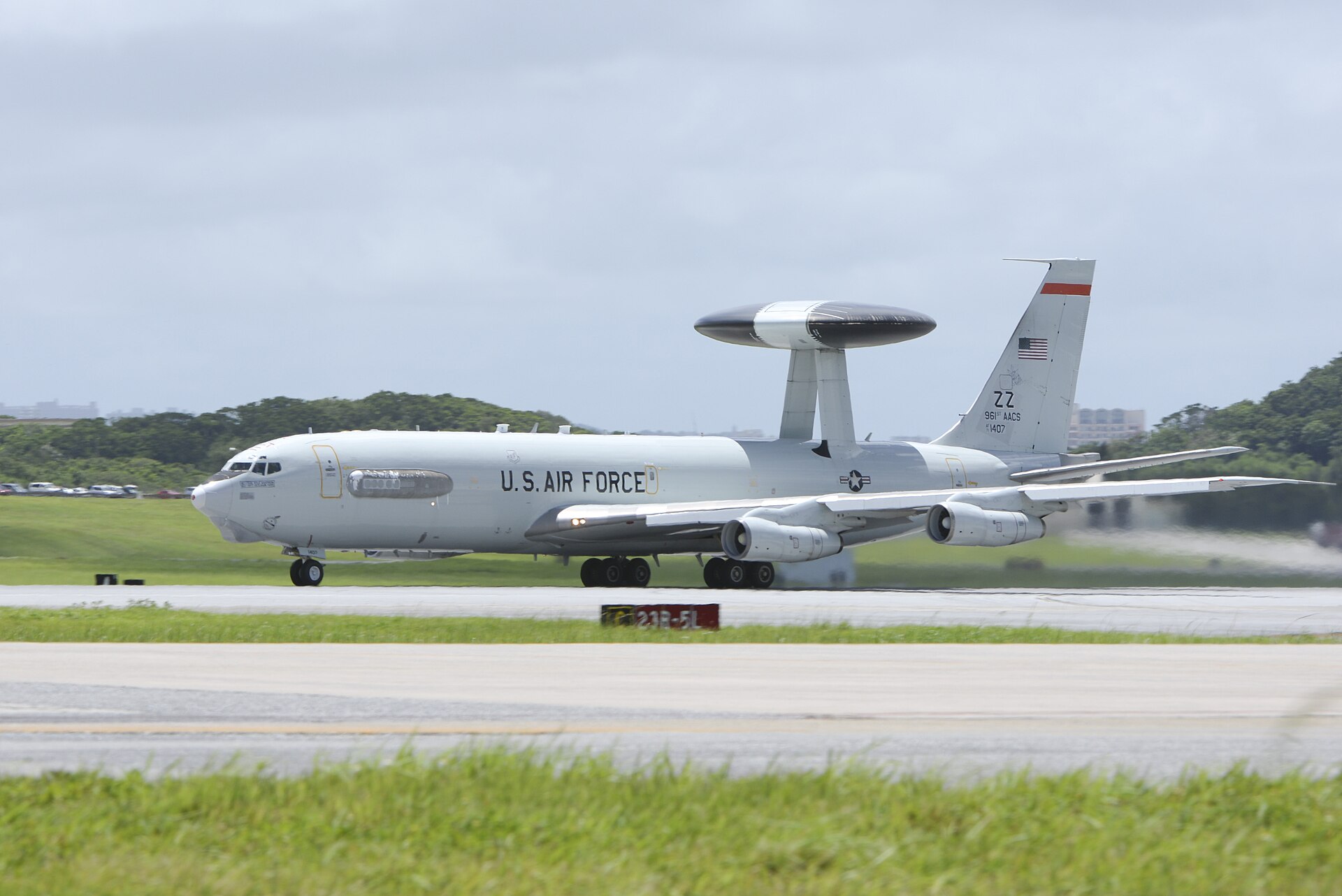
Kadena Air Base is the largest U.S. Air Force installation in the Pacific and the home of the 18th Wing, the force everyone calls the Keystone of the Pacific. Two long parallel runways sit in the middle of Okinawa, ringed by Kadena Town, Chatan, and Okinawa City, the place older Airmen still call Koza, with the bars of Gate 2 Street running straight out of the fence line. The base sits a few hundred miles from Taiwan, which is exactly why it matters: when the Pacific gets tense, the airpower that answers flows through here. The old F-15C Eagles that flew out of Kadena for forty years have stood down, and for now the fighter presence rotates through, F-22s, F-35s, and F-15Es, while the F-15EX bed-down is sorted out, alongside the tankers, the AWACS, the rescue birds, and the special operations crews of the 353rd.
None of that strategic weight buys an Airman a thing when the military justice system comes for him. Aircrew, maintainers, security forces, and support Airmen run into the UCMJ here like everywhere else, with one added complication most never think about until it lands: on Okinawa, an off base incident can put a service member in front of the Japanese authorities at the same time the Air Force is building a court martial. A case out of Kadena is a fight for a career, a clearance, and sometimes freedom, and the only way to win it is to deny the prosecution the easy conviction it expects and force it to prove every element of what it has charged.
The Airman Who Carried the Fire
If you want a model for doing the impossible thing because no one else can, look at Staff Sergeant Henry "Red" Erwin, who earned the Medal of Honor in the Pacific air war that the fight for Okinawa was meant to enable. On April 12, 1945, Erwin was the radio operator aboard a B-29 Superfortress leading a formation toward Japan when a white phosphorus marker bomb he was launching detonated in the chute and blew back into the aircraft, searing off his nose, blinding him, and filling the plane with smoke at low altitude. He knew the burning bomb would bring the aircraft down with the whole crew aboard. So he picked it up with his bare hands, the phosphorus burning into him at more than a thousand degrees, crawled forward past the gun turret, and threw it out the cockpit window before he collapsed in flames. The crew lived. Erwin somehow survived, and the Medal of Honor was pinned on him within the week. That is the standard, an Airman who carried the fire himself so the people counting on him would make it home, and it is exactly the posture you need when the military justice system decides to make an example of you.
Why Airmen at Kadena Fly Us In
Okinawa is familiar ground for this firm, and not from a distance. Tim Bilecki spent his last active duty tour, from 2008 to 2010, as the Senior Defense Counsel for the Army's Trial Defense Service across the Pacific Rim, responsible for the defense of service members throughout Korea, Okinawa, and mainland Japan, and that tour gave him a front row education in how the military justice system actually runs on this island. The firm he built began in Hawaii taking cases in only three places, Hawaii, Korea, and Japan, and it has worked Okinawa ever since, up and down the island from Kadena to the Marine camps. We know how these cases move here, and how to win them at trial.
The military justice system was never built to find the truth. Its job is to preserve good order and discipline, and it does that by making a public example of someone, because a visible conviction keeps everyone else in line whether the accused was guilty or not. A serious case at Kadena is investigated by the Air Force Office of Special Investigations, and for sexual assault, domestic violence, and other covered offenses the decision to refer charges to a court martial no longer belongs to your commander; it goes to an independent Special Trial Counsel in the Air Force's Office of Special Trial Counsel. There is also a host nation layer, because under the U.S.-Japan Status of Forces Agreement the Japanese authorities hold the primary right to prosecute most off base offenses against Japanese nationals, in a system that is nothing like ours, where police and prosecutors can detain and interrogate a suspect for up to roughly twenty three days before any charge is filed, frequently without a lawyer in the room. When prosecutors at Kadena see that kind of counsel fly in, the easy conviction they were counting on is gone.
UCMJ Charges We Defend at Kadena Air Base
These are the allegations we see most at Kadena Air Base. The full range of UCMJ charges is within what we defend, listed here or not.
Sexual Assault and Sex Offenses (UCMJ Article 120 / Article 134). The pressure on commands to show they are tough on sexual misconduct has turned the accusation itself into the heart of the case, treated as established before the investigation is finished, and when the evidence will not support a charge the command falls back on administrative separation. An allegation can be wielded to settle a score or to pull scrutiny off the accuser, and a command focused on demonstrating compliance is in no position to weigh those motives. These cases now route to an independent Special Trial Counsel rather than your commander, and they demand counsel who will run an independent investigation and attack the credibility of the case early, before charges are preferred.
One Okinawa case we see again and again is the online sting, the "To Catch a Predator" operation that has swept up service members of every branch on this island, Airmen included, and drawn national and Japanese press. An agent advertises on an adults only site using photos of an adult woman, posing as a bored young woman, and only later claims to be fourteen or fifteen, then steers the target toward a meeting, sometimes a house leased for the purpose on Kadena itself, and arrests him when he arrives. Because there is no actual child, the charge is almost always an attempt under Article 80 that stands or falls on intent. The firm has defended these cases on Okinawa for years, starting with the first one ever tried on the island, which it won outright, and a long record of results since. What wins them is entrapment and the difference between a chat with someone who appeared to be an adult and the specific intent to commit a crime that the government must prove. We also examine compliance with Internet Crimes Against Children protocols for weaknesses in the investigation and the agents’ credibility. A protocol violation alone is not a legal defense; its significance depends on the charged offense, the evidence, and the applicable defense.
Fraud and Larceny (UCMJ Article 121 / Article 107). Overseas pay and housing rules are complicated, and an entitlement drawn against a dependent listed somewhere other than reality, or an off base housing allowance that does not match the lease, gets written up as deliberate fraud once an investigator decides it was. Because the rate is set by what the Airman certified on the housing or dependency form, the government usually charges it twice, as larceny under Article 121 and as a false official statement under Article 107. Proving intent to defraud is still the government's burden, which means showing you knowingly set out to cheat it, not just that a payment came out wrong, and finance errors, bad guidance, and families that actually move account for most of these. We take on BAH and OHA fraud, larceny, wrongful appropriation, and conspiracy to defraud charges, and we make the prosecution prove the intent it would rather assume.
Domestic Violence and Assault (UCMJ Articles 128b and 128). Domestic violence has surged into one of the largest parts of our practice, prosecuted by the Office of Special Trial Counsel with the weight of a sexual assault. Article 128b reaches a spouse, an intimate partner, or a family member, and makes strangulation or suffocation a serious standalone charge even where nothing is visible. The federal Lautenberg Amendment then bars an Airman with a qualifying conviction from any firearm or ammunition, which can end the career. The Article 128 assault side is real work here too. Liberty on Gate 2 Street or anywhere off the installation can turn into a confrontation in a hurry, and when the other person is an Okinawan national the command often charges hard to manage the diplomatic fallout, whether or not your Airman started it. What actually happened tends to look very different once the evidence comes in. Self defense is a recognized defense, and our violent-offense work covers assault and aggravated assault under Article 128, manslaughter under Article 119, and murder under Article 118.
Drug Offenses (UCMJ Article 112a). Japan enforces some of the strictest drug laws in the developed world, and that severity shapes how the command treats any allegation on Okinawa, where a substance brought onto the island or obtained off base can mean both a UCMJ charge and exposure to the Japanese system. A positive urinalysis is serious, but it is not a conviction. The chain of custody can be challenged, innocent ingestion is a recognized defense, and the government still has to prove that any use or possession was knowing and wrongful. These cases call for counsel who understands both the evidence and the host nation pressure that drives them.
Military Specific Offenses (UCMJ Articles 77 to 134). Dereliction, false official statement, failure to obey a lawful order, fraternization, and unauthorized absence get stacked onto a charge sheet to inflate the maximum punishment and the pressure to plead. Every count has to be proven on its own, and forced to do that across the board, the prosecution frequently cannot hold the whole list together. We challenge each charge rather than letting the government bank it for leverage.
A Mistake at Kadena Still Deserves a Real Defense
Not everyone who calls us is innocent, and we do not pretend otherwise. Some Airmen made a bad call and know it. That does not mean accepting the maximum consequence, piled high with charges built to break them and prosecuted by an institution that wants to make a spectacle of it. Whether your case calls for a firm like ours comes down to how serious it is, not to your rank. If it is genuinely minor and does not call for a civilian trial lawyer, your free Area Defense Counsel can handle it, and we will tell you so plainly, because we do not take every case and we will not take your money for one that does not need us.
But when the case is serious, all of it is on the line at once: your career, your retirement, your good name, and your freedom, and on Okinawa a host nation that can come after you on top of the court martial. A court martial conviction is a federal criminal conviction. Under the sentencing rules now in force, a military judge sentences within set confinement parameters, with mandatory minimum punishments for the most serious offenses, so it can mean confinement a judge has little discretion to avoid, a punitive discharge that follows you for life, and on a sex offense a place on a registry, no matter how junior you are. That is the moment to fight, and the system is betting you will not.
If you are facing an investigation or court martial at Kadena, reach out for a free defense strategy session. We will fly to Okinawa, tell you exactly what you are facing, and lay out how we would defend it. The investigation is already moving. The only question is whether you will have someone moving just as hard on yours.
Cases Connected to Kadena Air Base
These cases include trials, hearings, investigations, and administrative matters. A connection to this location does not necessarily mean that the trial occurred here.
- Case connected to this location: Airman Facing 89 Years for Marijuana, MDMA and Xanax Serves Less than 189 Days
- Case connected to this location: Bilecki Exposes Flaws in NCIS Sex Teen Sting, Proves No Criminal Intent for W-2
- Case connected to this location: Bilecki Challenges Spice Ban in Court, Airman Charged for Spice Fully Acquitted
- Case connected to this location: O-3 Accused for Cocaine, Marijuana and Mushrooms Remains in the Air Force
- Case connected to this location: Night of Drinking Ends in Sex Assault Case for Air Force TSgt, Bilecki Defends
- Case connected to this location: Threesome Leads to Sex Assault Case for Air Force SSgt, Averts Charges
- Case connected to this location: Bilecki Rebuts Charges Against Army LT for Using Racial Epithet
- Case connected to this location: Bilecki Walks AFOSI Off Article 120 Sexual Assault Investigation on Air Force E-4 at Kadena Pre-Charging; AFOSI Closed File Without Referring to OSJA, No Charges, No NJP, No Administrative Separation, Airman Retained on Active Duty
- Case connected to this location: Bilecki Wins Full Acquittal on Army CPL at Camp Zama in 3-Spec Article 120 GCM; DNA Pattern Affirmatively Matched the Defense
- Case connected to this location: Bilecki Walks Article 124 BAH Fraud Charge Off the Charge Sheet for Air Force SrA at Kadena via Pre-Charging Engagement; NJP on Article 92 Dereliction Only, Honorable ETS
- Case connected to this location: Bilecki Closes Article 120 OSTC Investigation on AF Special Operations TSgt at Kadena; OSTC Declined Court-Martial, Article 120 Dropped at NJP, No SORNA, Retained on Active Duty
- Case connected to this location: Bilecki Walks Two-Specification Article 121 Larceny Charge Sheet Off the Case After Article 32 Setup at the Okinawa Law Center for Army SSG at Kadena; All Charges Withdrawn and Dismissed
- Case connected to this location: Bilecki Defends Army SSG Through SOFA Gate-1 DUI Article 15 and AMHRR-Filed GOMOR at Kadena / Torii Station; No Administrative Separation, QMP Posture Only
- Case connected to this location: Bilecki Closes Article 128b Domestic Violence Across Air Force, Family Advocacy, and Florida Family-Court Tracks for AFSOC SMSgt at Kadena
FAQ
OSI opened a sexual assault investigation and I have already been pulled off flying status. Should I talk to OSI?
Decline the interview and get counsel before you say a word; an OSI interview is evidence collection, not your chance to clear things up, and under Article 31b of the UCMJ you have the right to stay silent and to a lawyer. The flying-status suspension is the wing protecting the mission, and it can happen within days of an allegation, long before anything is proven, which is exactly why the early moves matter. The most important phase of one of these cases is before charges are ever preferred: a strong defense at the investigation stage can lead the command, or the independent Special Trial Counsel who now decides covered offenses, to decline to prefer at all, and a great many of these allegations never become courts martial because they are taken apart while they are still an OSI file. Say nothing, ask for counsel, and get a defense working before the file hardens.
I hold a clearance and work a sensitive mission at Kadena. What does an investigation do to my access and my career, separate from the criminal case?
Your access can be suspended fast, on a standard far below the criminal one. Kadena runs on intelligence, command and control, and special operations work, and on a serious allegation your commander or security manager can suspend your access to classified information and pull you from the mission right away, before anything is proven. Revoking the clearance itself is a separate decision, made not by your command but by the Defense Counterintelligence and Security Agency under the National Security Adjudicative Guidelines; if it moves to revoke, you receive a Statement of Reasons laying out the concerns and a set window to answer in writing before anything is final. For an Airman whose job is the access, that process can stall a career even if the criminal allegation goes nowhere, which is why it has to be fought at the source, by taking apart the underlying allegation early, rather than handled as a separate problem later.
If my sexual assault case is deferred or I beat it, can the Air Force still end my career with a Letter of Reprimand or a separation board?
Yes, and it catches Airmen off guard. Even after the Special Trial Counsel defers the case or a panel acquits you, the command can issue a Letter of Reprimand, drop it into an Unfavorable Information File, or move to separate you administratively on the same underlying allegation, all under the preponderance standard, more likely than not, far below what a court martial requires. An LOR in your permanent record, a control roster, an administrative demotion, or a discharge can end an Air Force career as surely as a conviction, and the administrative track is where a lot of careers are quietly lost, an enlisted Airman before a separation board and an officer before a show cause board. Your rebuttal to the reprimand is the fight, and it is due fast, so it cannot wait. That is why a real defense does not stop when the criminal case does; we contest the reprimand and the separation action with the same intensity, because winning the court martial means little if the paperwork ends your career anyway.