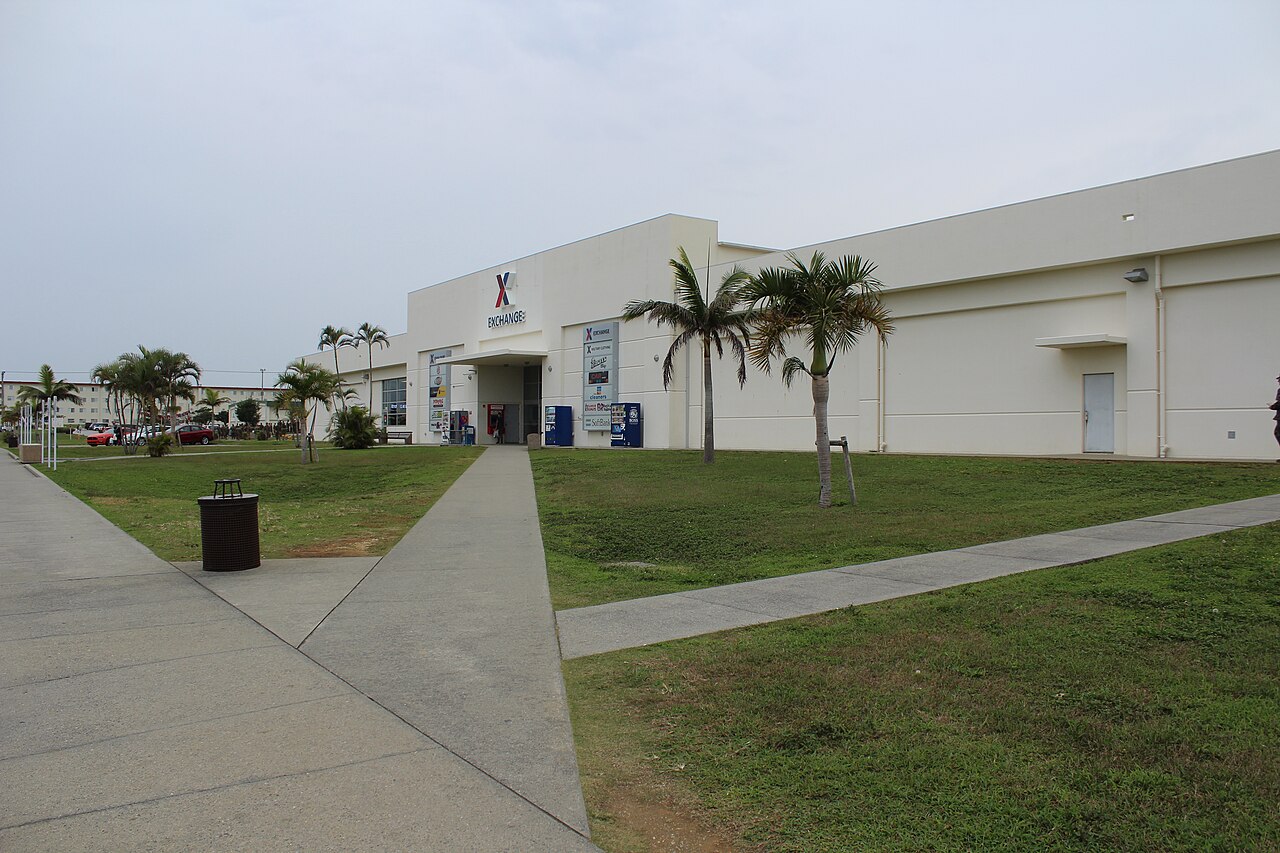
Camp Hansen: A Training Base, a Bar Town, and the Brig That Holds the Pacific
Camp Hansen sits in Kin Town, in the hills of central-northern Okinawa, and it is a working Marine base in every sense: live fire ranges that run constantly, the 12th Marine Littoral Regiment headquartered here, and the bars and tattoo shops of the old strip Marines have always called Kinville, the Shinkaichi district, running right outside Gate 1. It is also the home of the Marine Corps brig on Okinawa, the confinement facility that holds Marines and other service members in pretrial and short term confinement for the Far East. That last fact changes the math for anyone facing charges here, because the place a pretrial confinement order, or a short sentence, can send you is not an abstraction down the road. It is on this installation.
That is exactly why the quality of your defense matters so much at Camp Hansen. A Marine confined here, thousands of miles from family, learning what a year of confinement actually feels like, is often a Marine who never got the aggressive defense that would have stripped away the piled-on charges or kept him out of pretrial confinement in the first place. On Okinawa there is a second layer most Marines never think about until it lands: an off base incident can put you in front of the Japanese authorities at the same time the Corps is building a court martial. A case out of Camp Hansen is a fight for a career, a record, and sometimes your freedom in the most literal sense, and the only way to win it is to deny the prosecution the easy conviction it expects and force it to prove every element of what it has charged.
The Marine Camp Hansen Honors
Camp Hansen carries the name of a Marine who would not stop fighting on this island. Private Dale Merlin Hansen served with Company E, 2nd Battalion, 1st Marines, 1st Marine Division during the Battle of Okinawa. On May 7, 1945, in the fight for Hill 60, Hansen took a rocket launcher to an exposed forward position and knocked out a pillbox that had been holding up his company. When the launcher was destroyed, he grabbed a rifle, crossed an open ridge alone, and killed four of six enemy soldiers before his rifle jammed, beating off the last two with the butt of it. He went back for another weapon and grenades, returned to the fight, wiped out a mortar position, and killed eight more before the day was done. Four days later, on May 11, an enemy sniper killed him. The Medal of Honor was awarded posthumously, and the camp was named for him. He kept going back into the fight with whatever he could pick up, and that is the standard we bring against the military justice system.
Why Marines at Camp Hansen Fly Us In
We are on this island all the time. Tim Bilecki has spent the better part of two decades defending Marines on Okinawa, in courtrooms from Camp Foster to the camps along the northern training ranges, and in and out of the very brig that sits on this base. From 2008 to 2010 Bilecki served as the Senior Defense Counsel for the Army's Trial Defense Service across the Pacific Rim, responsible for the defense of service members throughout Korea, Okinawa, and mainland Japan. We know the commands here, and we know what confinement at Hansen means, which is precisely why we fight to keep our clients out of it.
Truth is not what the military justice system was built to find. It exists to preserve good order and discipline, and it does that by making an example of someone, because a conviction keeps the rest of the force in line whether the Marine was guilty or not. A serious case at Hansen is investigated by NCIS, and for sexual assault, domestic violence, and other covered offenses the decision to refer charges to a court martial no longer belongs to your command; it goes to an independent Special Trial Counsel in the Marine Corps Office of Special Trial Counsel. Under the U.S.-Japan Status of Forces Agreement the Japanese authorities hold the primary right to prosecute most off base offenses against Japanese nationals, and when prosecutors see that kind of counsel fly in, the easy conviction they were counting on is gone.
UCMJ Charges We Defend at Camp Hansen
We defend every kind of military charge. The ones below are simply the most common at Camp Hansen.
Sexual Assault and Sex Offenses (UCMJ Article 120 / Article 134). The pressure on commands to show they take sexual misconduct seriously has turned the accusation into the center of the case, treated as established before anyone finishes investigating, with administrative separation held back for when the evidence will not support a charge. An allegation can be a weapon, used to settle a score or to redirect scrutiny away from the accuser, and a command focused on demonstrating compliance is in no position to weigh those motives. These cases route to an independent Special Trial Counsel now, and they demand counsel who will investigate hard and contest the credibility of the case early, before charges are preferred.
A distinctive and growing piece of our Okinawa docket is the NCIS online sting case. The operation is consistent: an agent poses as a young woman on an adults only platform, claims an underage status only after steering the chat toward sex, and arrests the Marine at a meeting where no minor was ever real, so the government charges an attempt under Article 80 and has to prove intent it would rather assume. We fight these on entrapment, on the agents' failure to honor the Internet Crimes Against Children protocols, and on the daylight between a fantasy chat and a genuine intent to offend. We won the first one ever tried on this island and have defended a long line of them since, with the record to show for it.
Fraud and Larceny (UCMJ Article 121). Overseas pay and housing rules are complicated, and an allowance drawn against a dependent listed somewhere other than reality, or a government card used wrong, gets written up as deliberate fraud the moment an investigator decides it was. Intent to defraud is a required element, and the government has to prove you knowingly set out to cheat it, not merely that a payment was wrong. We defend BAH and OHA fraud, larceny, wrongful appropriation, and conspiracy to defraud, and we make the prosecution prove the intent rather than assume it.
Domestic Violence and Assault (UCMJ Articles 128b and 128). On Okinawa as everywhere, domestic violence under Article 128b is now a major part of our caseload, charged by an independent Special Trial Counsel as hard as a sexual assault. It reaches a spouse, an intimate partner, or a family member, and makes strangulation or suffocation a distinct, serious charge even with no visible injury. A qualifying conviction triggers the federal Lautenberg firearms bar, potentially career ending for a Marine who has to be able to carry a weapon. We also defend assault under Article 128. Kinville has drawn Marines off Gate 1 for generations, and a night out there that ends in a confrontation with a Japanese national becomes a serious matter fast, because the command does not want the diplomatic fallout, whether or not your Marine threw the first punch. What really happened usually looks different once the evidence comes in. Self defense is a recognized defense, and we stand up for Marines facing assault, aggravated assault, manslaughter, and murder charges.
Drug Offenses (UCMJ Article 112a). Japan enforces some of the strictest drug laws in the developed world, and that severity shapes how the command treats any allegation on the island, where a substance brought onto Okinawa or obtained off base can mean both a UCMJ charge and exposure to the Japanese system. A positive urinalysis is serious, but it is far from the end of the fight. The chain of custody can be challenged, innocent ingestion is a recognized defense, and the government still has to prove that any use or possession was knowing and wrongful. These cases reward counsel who understands both the evidence and the host nation pressure driving them.
Military Specific Offenses (UCMJ Articles 77 to 134). Unauthorized absence, dereliction, disrespect, false official statement, and fraternization get piled onto a charge sheet to inflate the maximum punishment and the pressure to plead, and these are exactly the stacked counts that turn a manageable case into a year in the brig down the hill. Every specification still has to be proven beyond a reasonable doubt on its own, and the weak ones on an inflated charge sheet are the first to fall.
Made a Mistake at Camp Hansen? Fight for What's Left
Not every Marine confined or charged at Hansen is innocent, and we do not pretend otherwise. Some made a bad call and know it. What none of them has to accept is the maximum consequence, piled high with charges built to break them and prosecuted by an institution that wants to make a spectacle of it. What decides whether you need a firm like ours is how serious the case is, not how much rank you carry. If it is genuinely minor and does not call for a civilian trial lawyer, your free detailed defense counsel through the Defense Services Organization can handle it, and we will tell you so plainly, because we do not take every case and we will not take a Marine's money for one that does not need us.
But when the case is serious, all of it is on the line at once: your career, your retirement, your good name, and your freedom, and a Japanese legal system that can prosecute you alongside the court martial. A court martial conviction is a federal criminal conviction. Under the sentencing rules now in force, a military judge sentences within set confinement parameters, with mandatory minimum punishments for the most serious offenses, so it can mean real time in the kind of confinement facility that sits on this very base, a punitive discharge that follows you for life, and on a sex offense a place on a registry, no matter how junior you are. That is why you fight, and they are counting on you to take the deal instead.
If you are facing an investigation or court martial at Camp Hansen, reach out for a free defense strategy session. We will get to Okinawa, tell you exactly what you are facing, and show you how we would defend it. The investigation is already moving. The only question is whether someone will be building yours.
Cases Connected to Camp Hansen
These cases include trials, hearings, investigations, and administrative matters. A connection to this location does not necessarily mean that the trial occurred here.
- Case connected to this location: Female Marine Goes Out with MSgt for Drinks in Uniform, Charges Resolved at NJP
- Case connected to this location: Okinawa Online Enticement and CSAM Case Cut From 13 Specifications to 2 Convictions; 36 Months Confinement
- Case connected to this location: LCpl Investigated for Stealing Panties and Child Porn, Avoids Offender Register
FAQ
The brig is right here on Hansen. If my command puts me in pretrial confinement, what does that mean and how long can they hold me before trial?
Pretrial confinement is not a sentence, and it can be challenged. The government has to clear a real bar to hold you before trial: probable cause that you committed the offense, a genuine risk that you will flee or commit serious misconduct, and a finding that lesser forms of restraint will not do. A neutral officer reviews that in the first days, and within seven days you are entitled to a hearing before an Initial Review Officer under Rule for Courts-Martial 305, where the government carries the burden and a prepared defense can push for release or a lesser restraint. Time spent in pretrial confinement is credited against any later sentence, but the better fight is keeping you out of the brig in the first place. Because the brig sits on this installation, these decisions are immediate and concrete here, which is exactly why you want counsel engaged the moment confinement is even being discussed.
NCIS wants to interview me about an allegation at Camp Hansen. Do I have to talk to them?
No, and yes. You are not required to make a statement, and under Article 31b of the UCMJ you can invoke your right to remain silent and to a lawyer, and you can refuse to hand over your phone or its passcode without a proper authorization. NCIS works for the command and the prosecution, not for you, and agents are trained to make the interview feel like your chance to explain; it is not, and the first interview is where the government tries hardest to build its case. The highest leverage work happens before charges are ever preferred, when a prepared defense can dismantle a weak case and persuade the command, or the Special Trial Counsel, not to prefer it. Decline, ask for counsel, and call a lawyer before you say anything.
Something happened on the range during live fire. Am I looking at a court martial or just administrative action?
It depends on the conduct and the harm, which is why an early, honest read matters. A range accident, a negligent discharge, or a safety violation during live fire can be handled at nonjudicial punishment, through administrative measures, or as a court martial, and a serious one will draw NCIS and, for a covered offense, the independent Special Trial Counsel. An accident is not automatically a crime, and these cases turn on what the range procedures and the standard of care actually required and whether any failure rose to the level of criminal negligence. We bring in the right expertise to reconstruct what happened rather than letting a bad outcome stand in for proof of a crime.