Naval Base Point Loma: The Quiet Side of the Harbor, and a System That Isn't Quiet at All
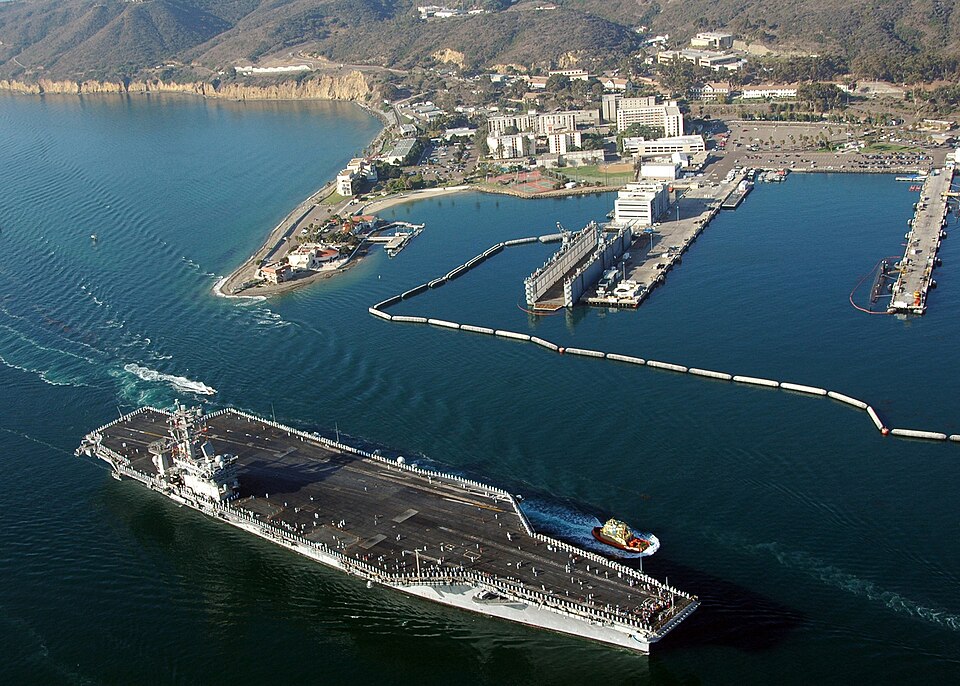
Naval Base Point Loma runs along the hilly peninsula that forms the western wall of San Diego Bay, guarding the mouth of the harbor directly across the water from North Island. It is the West Coast submarine base, home to the fast-attack boats of Submarine Squadron 11, and it is also the brain of the fleet's information warfare effort, where the scientists and Sailors of NIWC Pacific, the old SPAWAR, build the systems the Navy fights with. Third Fleet runs its headquarters here. The ground itself is layered with history; the submarine piers sit on the old Army post of Fort Rosecrans, and the national cemetery and the lighthouse at the tip of the point look out over water the Navy has guarded since before any of this was built.
It is a quieter installation than the carrier piers across the bay, but the military justice system is not quiet, and it does not care how specialized your job is. A nuclear trained submariner, a cryptologic technician, an information warfare officer with a clearance that is the entire point of the assignment, all of them run into the UCMJ, and when they do the stakes are doubled, because a serious allegation threatens not just a career but the access and the qualifications the whole career is built on. A court martial out of Point Loma is a fight for all of it, and the only way to win is to make the prosecution prove every element instead of handing it the conviction it expects.
Wounded, and He Would Not Leave the Bridge
There is no better example of holding your position under fire than Commander William McGonagle, who earned the Medal of Honor for an attack the Navy never saw coming. On June 8, 1967, his ship, the USS Liberty, was in international waters in the Mediterranean when jet aircraft and motor torpedo boats struck her without warning, the attack later established in the historical record as Israeli. McGonagle was badly wounded in the first pass, his leg torn open, and he refused to leave the bridge. For more than seventeen hours he stayed at his station, bleeding, directing damage control, maneuvering the burning ship, and fighting to keep her afloat, and he brought her through. Thirty-four of his crew were killed and more than a hundred and seventy were wounded, and the ship survived because her captain would not go below. That is the standard for a fight you did not ask for and cannot walk away from, which is exactly the fight a service member is in when the military justice system comes for him.
Why Sailors at Naval Base Point Loma Fly Us In
The military justice system does not exist to find the truth. It exists to preserve good order and discipline, and it accomplishes that by making a public example of someone, because a visible conviction keeps everyone else in line whether the accused was guilty or not. Military prosecutors run a high conviction rate, and that is the system working as designed, not luck. The defense is not built to win, which is precisely why you have to fight.
A serious case at Point Loma is investigated by NCIS and prosecuted through Region Legal Service Office Southwest. For sexual assault, domestic violence, and other covered offenses, the decision to refer charges to a court martial no longer belongs to your command; it belongs to an independent Special Trial Counsel in the Navy's Office of Special Trial Counsel. Tim Bilecki came up inside the military justice system as an Army JAG defense counsel and then a Senior Defense Counsel before going civilian, and his cross-examination work is taught in the trial guide published by the National Association of Criminal Defense Lawyers. He is admitted before every military court and the Court of Appeals for the Armed Forces, and he has built a career taking the cases other lawyers tell their clients to plead away. When prosecutors at Point Loma see that kind of counsel enter the case, the easy conviction they were counting on disappears.
UCMJ Charges We Defend at Naval Base Point Loma
We take on the full range of court martial charges. Below are the ones that come up most often at Naval Base Point Loma.
Sexual Assault and Sex Offenses (UCMJ Article 120 / Article 134). The climate around these allegations has made the accusation itself do the work of proof, and the command, under pressure to be seen taking it seriously, treats the claim as settled before the investigation is finished. When the evidence will not carry a court martial, the command turns to administrative separation, which can end a career on a far lower standard. We see allegations weaponized to gain leverage in a relationship dispute or to redirect an investigation away from the accuser, and a command focused on demonstrating compliance is in no position to weigh those motives. These cases now run through an independent Special Trial Counsel, and they call for counsel who will investigate hard and contest the credibility of the case from the start.
Fraud and Larceny (UCMJ Article 121). Pay, housing, and entitlements for Sailors in San Diego are complicated enough that an honest error looks like a scheme to an investigator who has already decided there is one. The government has to prove you knowingly set out to defraud it, not merely that an overpayment occurred, and that burden is where these cases come apart. We defend BAH and OHA fraud, larceny, wrongful appropriation, and conspiracy to defraud, and we force the prosecution to prove the intent it likes to assume.
Domestic Violence and Assault (UCMJ Articles 128b and 128). A large and rising share of our caseload is domestic violence under Article 128b, treated by the independent Special Trial Counsel as a covered offense on par with sexual assault. It reaches a spouse, an intimate partner, or a family member, and makes strangulation or suffocation a separate, serious count even with little or no injury. Behind it sits the Lautenberg Amendment, which bars a Sailor with a qualifying conviction from any firearm or ammunition and can have serious career consequences. Plain Article 128 assault remains part of the caseload. A confrontation off base or a fight in the barracks turns into an Article 128 case fast when someone is hurt or a weapon comes into it, and the command often charges aggressively to look like it keeps order. Self defense is a complete defense under the UCMJ when your force was reasonable and you were not the aggressor, but proving it takes work that the investigation rarely does on its own. We build that record, and we defend assault, aggravated assault, manslaughter, and murder charges, including the cases that turn entirely on who started it.
Drug Offenses (UCMJ Article 112a). A positive urinalysis is serious, but it settles nothing by itself. The chain of custody has documented weak points, innocent exposure is a recognized defense for some substances, and whether any use was knowing and wrongful has to be proven rather than assumed. For a nuclear-qualified Sailor or anyone in a sensitive program, the collateral damage to qualifications and access can outrun the criminal case, which is one more reason to fight the underlying charge rather than concede it.
Military Specific Offenses (UCMJ Articles 77 to 134). Dereliction of duty, false official statement, failure to obey a lawful order, fraternization, and unauthorized absence get added to a charge sheet to raise the maximum punishment and the pressure to plead to something. Every specification still has to be proven beyond a reasonable doubt on its own, and the weak ones on an inflated charge sheet are the first to fall.
One Bad Night on the Point Is Not the Whole Story
Some of the Sailors who come to us made a mistake and know it. That does not mean they have to accept the worst the system can hand out, prosecuted by an institution looking to make their case a warning to everyone else. Whether a case needs a firm like ours turns on how serious it is, not on your rank. If the matter is genuinely minor and does not call for a civilian trial lawyer, your free detailed defense counsel through the Navy's Defense Service Office can handle it, and we will tell you so honestly, because we do not take every case and we will not take your money for one that does not need us.
When the case is serious, though, all of it is on the line: your career, your retirement, your good name, and your freedom. A court martial conviction is a federal criminal conviction. Under the sentencing rules now in force, a military judge sentences within set confinement parameters, with mandatory minimum punishments for the most serious offenses, so it can mean real time in confinement, a punitive discharge that follows you for life, and on a sex offense a place on a registry, no matter how junior or senior you are. That is worth fighting for, and the prosecution is betting you will not.
If you are facing an investigation or court martial at Naval Base Point Loma, reach out for a free defense strategy session. We will tell you exactly what you are looking at and what it will take to defend it. The government is already building its case. Yours should be too.
FAQ
NCIS opened an investigation on me at Point Loma. Do I have to talk to them?
No to the interview, and get counsel first. Under Article 31b of the UCMJ you can remain silent and ask for a lawyer, and you should; an NCIS interview is evidence collection, and the first contact usually shapes the entire case. For covered offenses like sexual assault, the charging decision is no longer your commander's. An independent Special Trial Counsel in the Navy's Office of Special Trial Counsel decides whether to refer charges to a court martial. The most valuable work happens before charges are preferred, when a prepared defense can press the holes in the investigation with that prosecutor and argue against charging. Decline, ask for counsel, and call a lawyer before you give a statement.
I'm a nuclear trained submariner out of Point Loma. Can an investigation cost me my nuclear qualification before the court martial is even resolved?
Yes, and on a track separate from the criminal case. Nuclear trained Sailors hold a qualification under the Naval Nuclear Propulsion Program, which enforces some of the most exacting reliability and integrity standards in the fleet. A drug or alcohol allegation, or any serious question about your honesty or judgment, can lead the command and the program to suspend or revoke your nuclear qualification and pull you from the program on its own standard, well before a court rules on the underlying charge. For a submariner, losing that qualification can end the career on its own, regardless of how the court martial comes out. That is why the underlying allegation has to be fought early, before the program has already acted.
I work at NIWC Pacific with a security clearance. What happens to my clearance and access while an investigation is pending?
Your access can be suspended quickly, on a different standard than the criminal case. On a serious allegation, your command or security manager can suspend your access to classified information right away, which at NIWC Pacific can pull you off your job long before anything is proven. Revoking the clearance itself is a separate decision, made not by your command but by the Defense Counterintelligence and Security Agency under the National Security Adjudicative Guidelines; if it moves to revoke, you receive a Statement of Reasons spelling out the concerns and a set window to answer them in writing before anything is final. Because that process feeds off what the investigation concludes, the way to protect your clearance is to fight the underlying allegation early and hard, not to treat the security review as a separate problem for later.