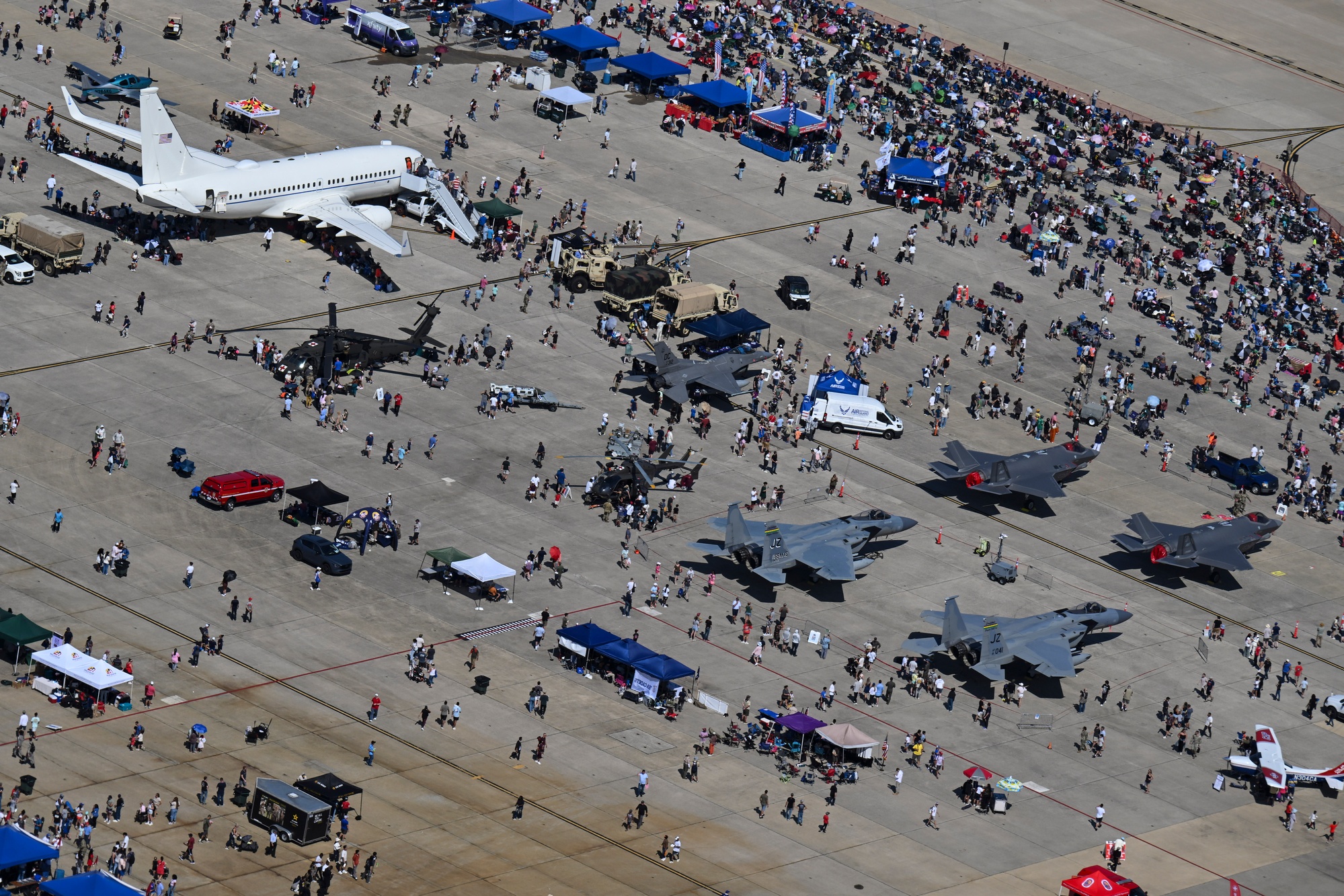
Joint Base Andrews: Home of Air Force One, and a Command Environment to Match
Joint Base Andrews sits in the heart of the National Capital Region, home to Air Force One, senior Department of Defense leadership, and a density of high ranking officers unmatched at any other U.S. installation. That concentration of command authority creates an enforcement environment where the margin for error is small and the consequences of a UCMJ violation are amplified by sheer proximity to power.
The upside of Andrews is access to the amenities and resources of the Washington, D.C. area. The downside is that you are under constant observation by senior leadership who have both the authority and the institutional incentive to make examples of service members who run into trouble. A court martial at Andrews happens in the shadow of the Pentagon, and that proximity shapes how every case is investigated and prosecuted. If you are facing charges here, understand that the stakes are higher than they would be almost anywhere else.
An Unbroken Will
Andrews is an Air Force installation, and no Airman ever embodied the will to keep fighting like Captain Lance Sijan. On November 9, 1967, his F-4 went down over Laos. He ejected with a fractured skull, a mangled hand, and a shattered leg, no food and no survival gear, and he evaded the enemy in the jungle for forty six days before he was captured on Christmas Day. Even then, broken and starving, he overpowered a guard and dragged himself back into the jungle before he was retaken. Under torture he gave his captors nothing, and he died a prisoner having never broken. He was the first Air Force Academy graduate to receive the Medal of Honor. Bring that kind of will into your own fight, and we will carry it with you.
Why Andrews Creates Unique UCMJ Risks
The concentration of senior officers at Andrews makes visibility and accountability pressures constant. You can be observed off duty by a field grade or general officer in civilian clothes without ever realizing it, and an incident that would pass unnoticed at a less high profile base becomes a formal matter the moment someone with stars on their collar decides to make it one. That visibility extends to how commands respond to allegations, because leadership here knows its decisions are watched by the Pentagon, by Congress, and by a media market that pays close attention to military misconduct in the capital. That scrutiny does not produce careful decision making. It produces risk averse decision making, and in the military justice context that means pursuing charges and administrative action more aggressively than the facts might warrant.
A serious case at Andrews is investigated by the Air Force Office of Special Investigations, and on a joint installation, by NCIS or CID for other services. For sexual assault, domestic violence, and other covered offenses, the decision to refer charges to a court martial no longer belongs to your command. It goes to an independent Special Trial Counsel in your service's Office of Special Trial Counsel. Tim Bilecki came up through the Army JAG Corps as a defense counsel and Senior Defense Counsel before crossing to the civilian side, and he knows the deck is stacked toward the prosecution. His cross examination work is featured in a national trial guide published by the country's criminal defense bar, and his cases have made national news. When prosecutors at Andrews see retained civilian counsel enter the case, the easy conviction they expected is gone.
UCMJ Charges We Defend at Joint Base Andrews
These are among the most common allegations at Joint Base Andrews. The list is not exhaustive, and we defend the full range of UCMJ charges.
Sexual Assault and Sex Offenses (UCMJ Article 120 / Article 134). The SAPR environment at Andrews carries the same pressures that drive prosecution everywhere, made worse by the proximity to oversight. Congressional staff, Pentagon leadership, and advocacy organizations are all within a few miles of the gate, and that proximity amplifies the consequences of appearing to not take an allegation seriously, so commands err on the side of over prosecution rather than careful fact finding. Service members have also learned to weaponize an allegation, to derail their own investigation, to retaliate against a former partner, or to gain leverage in a dispute, and at Andrews the institutional response to any allegation is immediate and severe. You need counsel who can surface those dynamics and force the government to prove its case.
Fraud and Larceny (UCMJ Article 121). Real estate in the Washington area is among the most expensive in the country, and housing allowances reflect it. The complexity of calculating high BAH entitlements correctly creates real exposure for anyone who makes a documentation error or fails to report a status change. An honest mistake becomes a fraud case when an investigator sees a discrepancy and assumes the worst. Intent to defraud must be proven beyond a reasonable doubt, and many of these cases collapse when the defense forces the prosecution to establish it. Our property and financial work covers BAH and OHA fraud, larceny, wrongful appropriation, extortion under Article 127, and conspiracy under Article 81 to defraud the military.
Domestic Violence and Assault (UCMJ Articles 128b and 128). In the National Capital Region as everywhere, domestic violence has become a major part of our work, charged by an independent Special Trial Counsel and treated like a sexual assault. Article 128b covers a spouse, an intimate partner, or a family member, and makes strangulation or suffocation its own serious charge even where no injury shows. The Lautenberg Amendment adds a consequence that can end careers: a qualifying conviction bars firearm and ammunition possession. Plain Article 128 assault remains part of the caseload. Service members have been fighting off duty since the Continental Army. What is different at Andrews is the likelihood that any altercation, even a straightforward bar fight, will be witnessed or reported to someone in the chain of command with the authority to turn it into a formal matter, because the National Capital Region is thick with senior officers. Self defense remains a valid defense, but it requires counsel prepared to reconstruct what actually happened. We take assault, aggravated assault, manslaughter, and murder cases.
Drug Offenses (UCMJ Article 112a). Marijuana is legal for recreational use in both Maryland and Washington, D.C., and that creates exposure for service members who attend off base parties or socialize with civilians who use legally. You do not even have to use it to test positive, because environmental exposure is documented. These cases are defensible, but they require counsel who understands both the technical side of drug testing and the elements the prosecution must prove.
Military Specific Offenses (UCMJ Articles 77 to 134). No one finishes a career without brushing up against the punitive articles somewhere, because the UCMJ is comprehensive by design and enforcement is selective. At Andrews, where leadership is concentrated and visibility is constant, commands are more likely to pursue formal action for conduct that would be ignored elsewhere, and charge stacking is used to inflate the apparent severity and pressure a plea. Each charge requires proof, and forced to establish every element, the prosecution frequently cannot sustain the full list.
Get a Defense Moving Before Andrews Does
If you are facing an investigation or court martial at Joint Base Andrews, reach out for a free defense strategy session. We will hear you out, tell you plainly where you stand, and walk you through how we would defend the case. Even if you made a mistake, the best available outcome is still worth fighting for, and the system will not reach for it on your behalf. On the line is your career, your retirement, your good name, and your freedom, because a conviction is a federal criminal conviction. Under the sentencing rules now in force, it can carry confinement a judge has little room to avoid, a punitive discharge, and on a sex offense a place on a registry, at any rank.
FAQ
OSI is investigating me and I'm on presidential support duty at Andrews. What happens to my Yankee White access?
It can be pulled long before the criminal case resolves. The airlift and distinguished-visitor mission at Andrews runs on Presidential Support Duty vetting, "Yankee White," a suitability determination for access to the President and senior national leadership held to the most stringent standard in the Department of Defense. A serious allegation, a drug issue, or a question about your honesty can cost you that access and remove you from the mission on a suitability standard far below proof beyond a reasonable doubt, and the vetting reaches even your immediate family. The criminal case is separate: OSI collects the evidence, you have the Article 31b right to silence and counsel, and for covered offenses an independent Special Trial Counsel, not your commander, decides charges. Because losing presidential-support access can end a career by itself, the underlying allegation has to be fought early, before charges are preferred.
With this much senior brass and political attention around Andrews, is unlawful command influence a real risk in my case?
It is, and it is something we watch for closely here. Unlawful command influence, improper pressure on the people who investigate, charge, advise, or decide a case, has been called the mortal enemy of military justice, and the National Capital Region is exactly where it becomes more plausible: senior officers everywhere, Pentagon and congressional attention, and a media market that notices military misconduct in the capital. When leaders feel watched, the temptation to be seen doing something can bleed into a case in ways the law forbids. We know what command influence looks like, how to surface it in the record, and how to litigate it, and at a place like Andrews that can be one of the most powerful tools in the defense.
I got into something off duty and a senior officer in civilian clothes saw it. Can that really turn into a court martial?
It can, and it happens at Andrews in ways it would not elsewhere. The density of field grade and general officers in the National Capital Region means off duty conduct is far more likely to be witnessed by someone with the authority and the inclination to push it up the chain. A scuffle that another base would handle informally can become a formal matter simply because of who happened to be standing nearby. That context does not excuse the charge, but it explains why a minor incident is being treated as a major one, and it tells you the disposition decision deserves a real fight rather than deference.