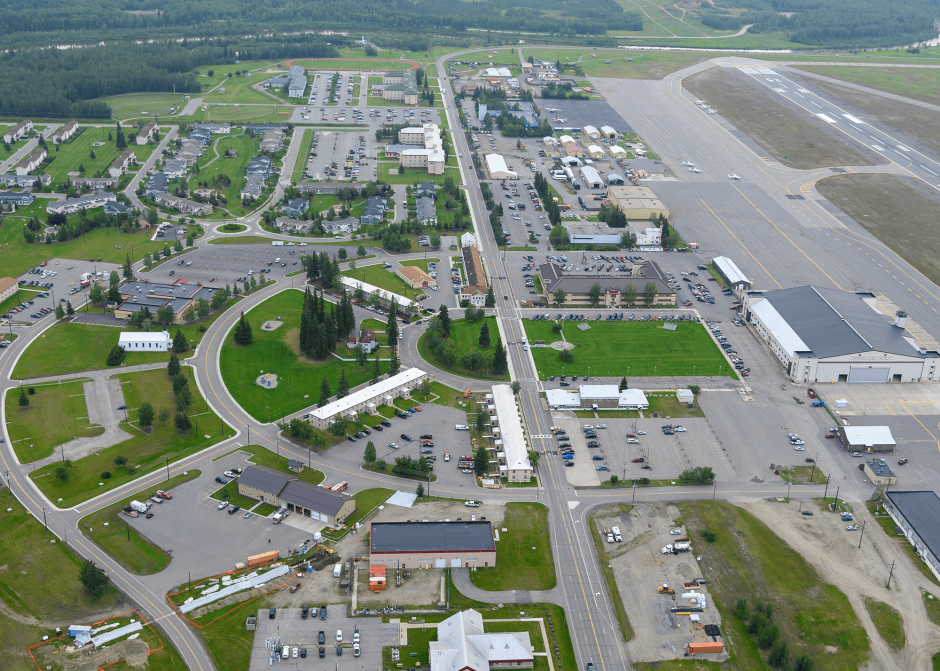
Fort Wainwright: Cold, Remote, and Hard on a Career
If you have pulled a tour at Wainwright, you know what the brochure leaves out. You plug your truck into a post in every parking lot so the engine block does not freeze solid, you learn what forty below and ice fog actually feel like, and in December you can count the daylight on one hand. Fairbanks is the only real city for hundreds of miles, a strip of pawn shops and dive bars down Airport Way and not much else, and the Army hands out blackout curtains and light therapy lamps because the dark and the cold wear people down in ways the rest of the force never sees. This is the home of the 1st Infantry Brigade Combat Team of the 11th Airborne Division, the Arctic Angels, pulling some of the most demanding duty in the Army.
That isolation and stress do not just make Wainwright a hard assignment. They make UCMJ trouble more likely and harder to fight without the right counsel, because when it comes, a remote command with few distractions has plenty of bandwidth to focus on a disciplinary matter, and a Soldier here is fighting for a career, a retirement, and sometimes freedom. The pool of experienced military defense counsel in interior Alaska is small, which is exactly the situation the prosecution is counting on.
Ladd Field Delivered the Impossible, One Plane at a Time
Fort Wainwright began life as Ladd Field, and in World War II that airfield carried one of the strangest and most important missions of the war. After 1942, Ladd Field became the American handoff point for the Lend-Lease air route that ran from Montana up through Canada to Fairbanks and on across Siberia to the Eastern Front. American pilots ferried nearly eight thousand brand new warplanes through some of the worst flying weather on earth, in cold that froze instruments and grounded lesser efforts, and handed them off to Soviet pilots who flew them west to fight the Germans. They did it one aircraft at a time, in conditions that should have made it impossible, and they kept a desperate ally in the fight. The crews at Ladd Field refused to let the conditions beat them, and we bring that same refusal to every case we try in the Alaskan interior.
Why the Interior Alaska Grind Creates UCMJ Exposure
Distance and cold do a kind of damage all their own. Soldiers at Wainwright are far from home in an environment where the long dark and the limited outlets wear on people and produce poor decisions faster than anyone expects, and a remote command uses the UCMJ to keep order. Civilian legal options in Fairbanks are limited, and many Soldiers feel stuck with assigned counsel who, capable as they are, work under structural constraints that a civilian lawyer does not.
A serious case at Wainwright is investigated by Army CID. For sexual assault, domestic violence, and other covered offenses, the decision to refer charges to a court martial no longer belongs to your command. It goes to an independent Special Trial Counsel in the Army's Office of Special Trial Counsel. Tim Bilecki spent years inside the Army's military justice system, first as a JAG defense counsel and then as a Senior Defense Counsel that included a tour in South Korea, and over more than two decades he has flown to remote and overseas postings to try the cases other lawyers would not take. When prosecutors at Wainwright see that kind of counsel enter the case, the easy win they expected is gone.
Alaska's Legal Weed Is Still a UCMJ Trap
Alaska has allowed recreational marijuana since 2014, and none of that carries any weight under the UCMJ. Federal law governs every Soldier, and marijuana remains a controlled substance no matter what Alaska permits. A Soldier at Wainwright who uses legally off post, in a state where doing so is entirely lawful, can still test positive and face an Article 112a charge, and the easy availability around Fairbanks has produced positive tests among people who did not understand the exposure they were creating. These cases are defensible, because the chain of custody is open to challenge and innocent exposure is recognized, but they require counsel who knows both the evidence and the elements the government must prove, including that any use was knowing and wrongful.
UCMJ Charges We Defend at Fort Wainwright
Do not read the list below as a menu. These are the most common charges at Fort Wainwright, and we defend any UCMJ offense a service member can face.
Sexual Assault and Sex Offenses (UCMJ Article 120 / Article 134). The Army's SHARP program operates at Wainwright with the same pressures that drive these prosecutions everywhere, and the compressed social world of a remote post makes them more volatile. Relationships form in tight units with few outlets, and when they end badly the fallout plays out in a community with no anonymity. False allegations and allegations that misrepresent a consensual encounter occur in these environments, and a Soldier under their own scrutiny knows a complaint can redirect attention. Even where the evidence will not support a charge, commands pursue administrative separation, so both tracks require a defense. You need counsel who understands how those dynamics shape a case and is prepared to investigate it independently.
Fraud and Larceny (UCMJ Article 121). BAH fraud charges are common at Wainwright, and most begin with administrative error rather than criminal intent: a miscalculated entitlement, an unreported status change, a paperwork mistake an investigator decides to call a scheme. Intent to defraud must be proven, not assumed, and many of these cases cannot survive once the defense forces the government to establish it. We handle BAH and OHA fraud, larceny, wrongful appropriation, extortion, and conspiracy to defraud.
Domestic Violence and Assault (UCMJ Articles 128b and 128). Domestic violence is now among the largest parts of what we handle, charged by the Office of Special Trial Counsel with the weight of a sexual assault. Article 128b reaches a spouse, an intimate partner, or a family member, and makes strangulation or suffocation a distinct, serious charge even where nothing is visible. A qualifying conviction triggers the federal Lautenberg firearms bar, potentially career ending for a Soldier who must be able to carry a weapon. Assault under Article 128 is real work here too. Put Soldiers in a cold, remote, high stress environment and the occasional fight is not a surprise. Most are handled informally. The ones that produce Article 128 charges involve a serious injury, a weapon, or a command that chose to make its point, and often the Soldier charged was defending himself or a friend. Self defense is a recognized defense, and we take everything from assault and aggravated assault to manslaughter and murder.
Drug Offenses (UCMJ Article 112a). As above, Alaska's marijuana laws create specific exposure here, and beyond that the standard defenses apply: the chain of custody has documented gaps, innocent exposure is recognized, the government must prove any use was knowing and wrongful, and the line between knowing possession and circumstantial contact is a factual question. A positive result is where the fight starts, not where it ends.
Military Specific Offenses (UCMJ Articles 77 to 134). Charge stacking is a prosecution tool designed to make a plea on one charge look rational when you are staring at five or six. Each requires proof, and when the defense addresses every one on its merits, the prosecution frequently cannot carry the burden it accepted. One mistake should not become six convictions through a deal built to look like mercy.
Get a Real Defense Plan for Your Wainwright Case
If you are facing an investigation or court martial at Fort Wainwright, reach out for a free defense strategy session. We will hear the whole story, give you a straight read on what you are facing, and lay out how we would fight it. We fly to Alaska, in any season. Where the post sits does not decide the quality of your defense, and neither does your rank: a conviction is a federal criminal conviction. Under today's sentencing rules, it can carry confinement a judge cannot simply set aside, a punitive discharge, and on a covered sex offense sex offender registration, on top of a career, a retirement, and a good name. Your decision to fight does.
FAQ
I'm with the infantry brigade and we're heading into a major rotation or deployment. What does a pending charge do to that?
It can pull you out of it. An investigation or a preferred charge can get you flagged, which freezes promotions, schools, and favorable actions, and a command can hold you back from a deployment or rotation while the matter is open, none of which waits for a finding of guilt. For a Soldier whose career is built around being deployable with the brigade, being left behind under a cloud is its own kind of damage. The early phase is where that gets contained or not, which is why engaging counsel before the command settles on its narrative matters so much here.
A lot of trouble at Wainwright starts with the cold, the dark, and the drinking. Does that context matter to my case?
It can matter, and a good defense knows how to use it without making excuses. The Army itself has acknowledged what the interior Alaska winter does to people here, handing out blackout curtains and light therapy lamps and standing up behavioral health programs, because the months of darkness, the forty below, and the isolation take a documented toll. That context will not erase a charge, but it can be real mitigation, it can explain how a good Soldier ended up in a bad moment, and it can change a sentencing outcome or a disposition decision. The key is to develop it properly, with records and not just a story, which is part of what we build into the defense.
Marijuana is legal in Alaska. If I use off duty and off post, can the Army still charge me?
Yes. Alaska legalized recreational marijuana for civilians, but the UCMJ does not care what state law allows; under Article 112a marijuana use remains a chargeable offense for a Soldier, and the same goes for the THC edibles and Delta-8 products sold openly around Fairbanks. A positive urinalysis is serious, but it is the start of a case, not the end. The government still has to prove the use was knowing and wrongful, and the collection, the chain of custody, and the possibility of innocent ingestion are all contestable. The dangerous assumption is that legal-for-civilians means safe-in-uniform; it is not, and these cases are defended on the evidence, not on what the dispensary down the road is allowed to sell.