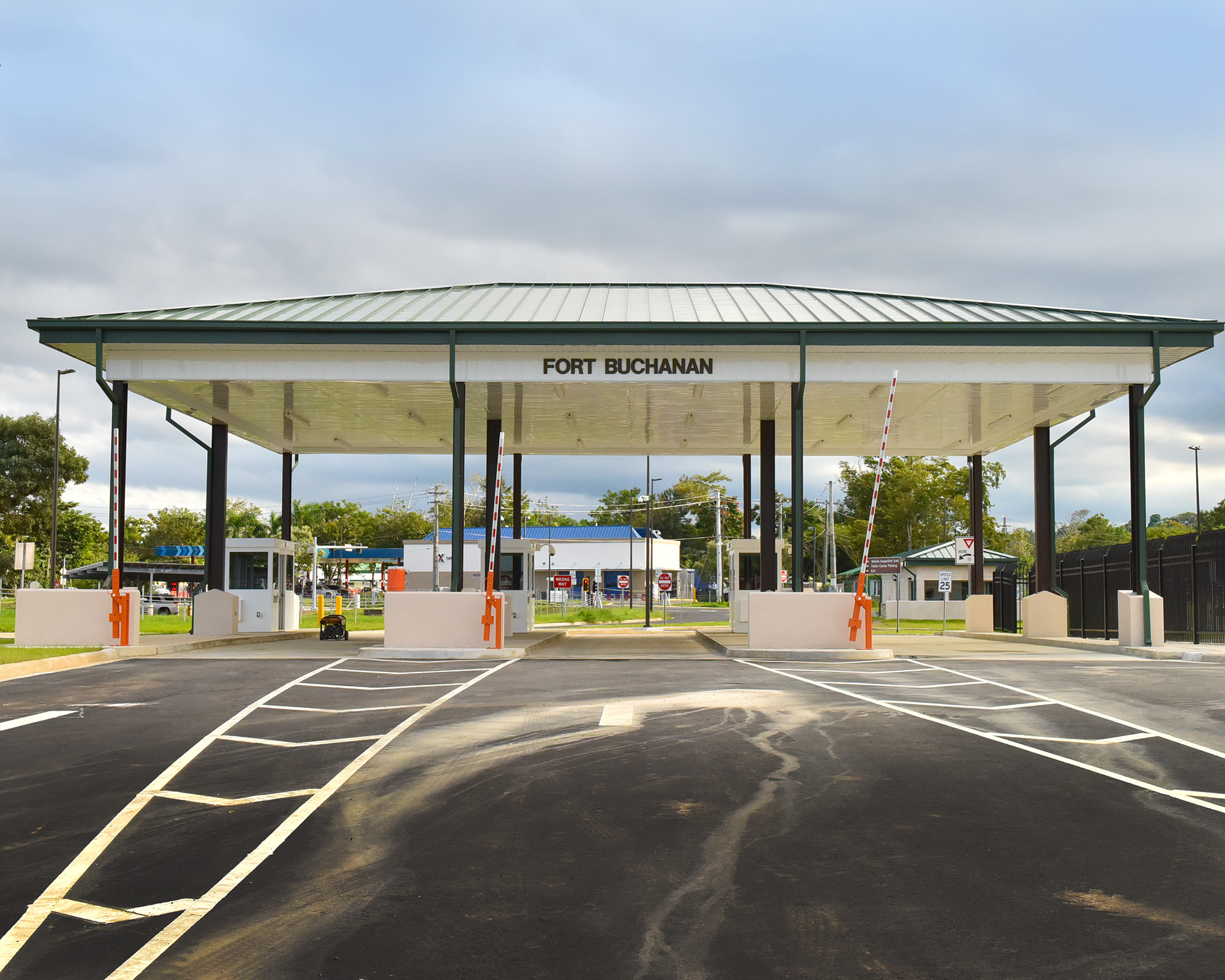
Fort Buchanan: The Army's Caribbean Hub, and a Jurisdiction All Its Own
Fort Buchanan is the only active U.S. Army installation in Puerto Rico, the logistical and administrative hub for the Army across the island and the wider Caribbean. Puerto Rico's status is its own thing: the people are U.S. citizens, but the island is neither a state nor a foreign country, and that puts a UCMJ case here somewhere between a stateside posting and an overseas one. For a Soldier facing charges, that in-between status does not create flexibility. It creates complications. Commands here operate with the caution of an overseas post while answering to the oversight of a domestic one, prosecutors have the full weight of the stateside legal apparatus behind them, and experienced civilian defense counsel on the island is in short supply.
That last part is where the prosecution gains an edge it should not have. A Soldier at Fort Buchanan in real UCMJ trouble is fighting for a career, a retirement, and sometimes freedom, and winning that fight means denying the prosecution the easy conviction it expects and making it prove every element of what it has charged.
The Borinqueneers Took the Position Everyone Said Was Lost
No story belongs to Puerto Rico the way the 65th Infantry Regiment does. The Borinqueneers, the Army's all Puerto Rican regiment, fought through Korea with a record few units can match. On one of the hardest days of that war, with the line in danger of breaking, two battalions of the 65th fixed bayonets and charged straight into the enemy positions, and the enemy broke and ran. It was the last battalion sized bayonet charge in the history of the United States Army. By the end of the war the regiment had earned ten Distinguished Service Crosses, hundreds of Silver Stars, and a Congressional Gold Medal awarded decades later. The Borinqueneers took the position everyone said could not be taken, and when the system tells you your case cannot be won, that is the spirit we bring to Fort Buchanan.
What It Actually Takes to Beat the Military Justice System
The first thing to understand at Fort Buchanan is that the fight is coming whether you want it or not. The military justice system is not a neutral body looking for the truth and letting the facts decide. It exists to maintain order and discipline, and it does that by making public examples of the people it prosecutes. Military prosecutors run a high conviction rate, and that is not an accident. It reflects a system built to produce convictions, because convictions reinforce deterrence, satisfy command accountability, and signal seriousness to outside observers. Your conviction is not a flaw in that system. It is the point.
Free JAG defense counsel work inside that same structure. Many are talented and care about their clients, but they carry heavy caseloads, limited resources, and career incentives that do not always favor the kind of no holds barred fight that actually levels the field. A serious case at Fort Buchanan is investigated by Army CID, and for sexual assault, domestic violence, and other covered offenses, the decision to refer charges to a court martial no longer belongs to your command. It goes to an independent Special Trial Counsel in the Army's Office of Special Trial Counsel. Tim Bilecki served as an Army JAG defense counsel and then a Senior Defense Counsel before going civilian, so he learned CID investigations and the SHARP machinery from the inside. Bilecki Law Group is based in Tampa, a short flight from San Juan, and Puerto Rico sits well within an area of operations that covers the globe. When prosecutors here see retained civilian counsel enter the case, the easy path to conviction they expected disappears.
UCMJ Charges We Defend at Fort Buchanan
Whatever you have been accused of under the UCMJ, we defend it. The list below just reflects the charges we see most at Fort Buchanan.
Sexual Assault and Sex Offenses (UCMJ Article 120 / Article 134). The Army runs its Sexual Harassment/Assault Response and Prevention program at Fort Buchanan under the same pressures that drive these prosecutions everywhere: commands under political pressure to show accountability, allegations treated as established before the investigation is finished, and administrative action pursued even when the evidence will not support a charge. Soldiers have also learned that a SHARP complaint can redirect attention away from the accuser's own conduct, retaliate against a former partner, or buy leverage in a dispute, and a command focused on demonstrating compliance is not positioned to weigh those motivations. Even where there is not enough to prefer charges, commands pursue administrative separation, and the career consequences can rival a conviction, so both tracks have to be defended. These cases demand counsel willing to investigate independently and fight for every element.
Fraud and Larceny (UCMJ Article 121). BAH fraud is among the most common financial charges we handle, and these cases frequently begin not with a crime but with an administrative error: a miscalculated entitlement, an unreported change in dependent status, a misunderstood documentation rule that an investigator decides to treat as intent to defraud. Intent is a required element and must be proven beyond a reasonable doubt, not inferred from the existence of an overpayment, and many Article 121 cases do not survive once the defense forces the government to actually establish it. We handle conspiracy to defraud, larceny, wrongful appropriation, and extortion as well.
Domestic Violence and Assault (UCMJ Articles 128b and 128). Domestic violence under Article 128b has become a leading part of our work, weighed by an independent Special Trial Counsel like any covered offense. It applies to a spouse, an intimate partner, or a family member, and makes strangulation or suffocation a separate, serious charge regardless of visible injury. The consequence many Soldiers never see coming is the federal Lautenberg firearms bar, which a qualifying conviction triggers and which can end a career. Plain Article 128 assault remains part of the work. Physical altercations involving Soldiers are nothing new and nothing unique to Puerto Rico. What turns a fight into an Article 128 court martial is usually a serious injury or a weapon, even one snatched up on the spot, and when that line is crossed commands respond hard. In many of these cases the Soldier was defending himself or someone else, and the full sequence of who started it and who escalated looks very different once it is reconstructed rather than told by whoever ended up injured. Self defense is a recognized defense, and we take assault, aggravated assault, manslaughter, and murder cases.
Drug Offenses (UCMJ Article 112a). Puerto Rico allows medical cannabis but has not legalized recreational marijuana, and the broader drift toward legalization breeds a dangerous assumption that what is increasingly tolerated off base carries lighter consequences in uniform. It does not. A positive urinalysis is serious but not the end of the fight, because the chain of custody has documented weak points, innocent exposure is a recognized defense for certain substances, whether any use was knowing and wrongful is for the government to prove, and the line between knowing possession and circumstantial contact is a factual question, not an assumption. These cases require counsel who understands both the science of testing and the elements the prosecution has to prove.
Military Specific Offenses (UCMJ Articles 77 to 134). Fraternization, unauthorized absence, disobeying a lawful order, conduct unbecoming, and the rest of the punitive articles have no civilian equivalent, and enforcement of them is selective. Charge stacking, filing multiple offenses to inflate the apparent severity, is a standard tool meant to make pleading to one charge look rational, even merciful. Each charge requires proof, and forced to carry the burden on every one, the prosecution frequently cannot sustain them all, and sometimes cannot sustain any.
Get a Real Assessment Before the Case Moves Further
If you are facing an investigation or court martial at Fort Buchanan, reach out for a free defense strategy session. We will listen to what happened, tell you directly what you are facing, identify where the prosecution's case is vulnerable, and explain how we would defend it. We fly to Puerto Rico, and geography does not determine the quality of your defense. Your decision to fight does. Even if you made a mistake, you still deserve the best outcome the facts allow, and no one in that system is going to pursue it for you. What is at stake is your career, your retirement, your good name, and your freedom, because a conviction is a federal criminal conviction. Under the sentencing rules now in force, it can carry confinement a judge has little discretion to avoid, a punitive discharge, and on a sex offense a place on a registry, whatever your rank.
FAQ
I'm a U.S. citizen, but Puerto Rico isn't a state. Does the island's status change how my court martial works?
Not on the military side. The UCMJ applies to you at Fort Buchanan exactly as it would at any stateside post, with the same articles, the same procedures, and the same rights, including your Article 31b right to remain silent. Puerto Rico's territorial status mostly affects civilian and federal jurisdiction questions, not the court martial itself. Where it does matter is the practical environment around your case, because the island has the caution of an overseas command and a thin bench of experienced military defense counsel, and that combination is exactly why bringing in outside counsel early changes the dynamic.
Army CID wants to interview me at Fort Buchanan. Do I have to talk to them?
No, and not without counsel. A CID interview is evidence collection no matter how routine it is made to sound, and Article 31b of the UCMJ gives you the right to remain silent and to a lawyer before you answer. The highest leverage moment in these cases comes before charges are preferred, when a prepared defense can pull a weak investigation apart and argue the command, or the independent Special Trial Counsel who decides covered offenses, against charging at all. Decline the interview, ask for counsel, and call a lawyer before you say anything.
I'm in the Puerto Rico National Guard or the Reserve. Does the UCMJ even reach me?
It depends entirely on your duty status, and that is the first thing we pin down. On federal active duty orders under Title 10 you are squarely under the UCMJ, the same as any active component Soldier at Fort Buchanan. On Title 32 or state active duty status, the Puerto Rico National Guard answers to Puerto Rico's own military code and the Governor's chain, not the federal UCMJ. Guardsmen and reservists move between those statuses, and the status you were in when the alleged conduct happened can decide who has jurisdiction, what court hears it, and what punishment is even available. Getting that analysis right early can change the entire case, which is exactly why you do not want to sort it out alone.