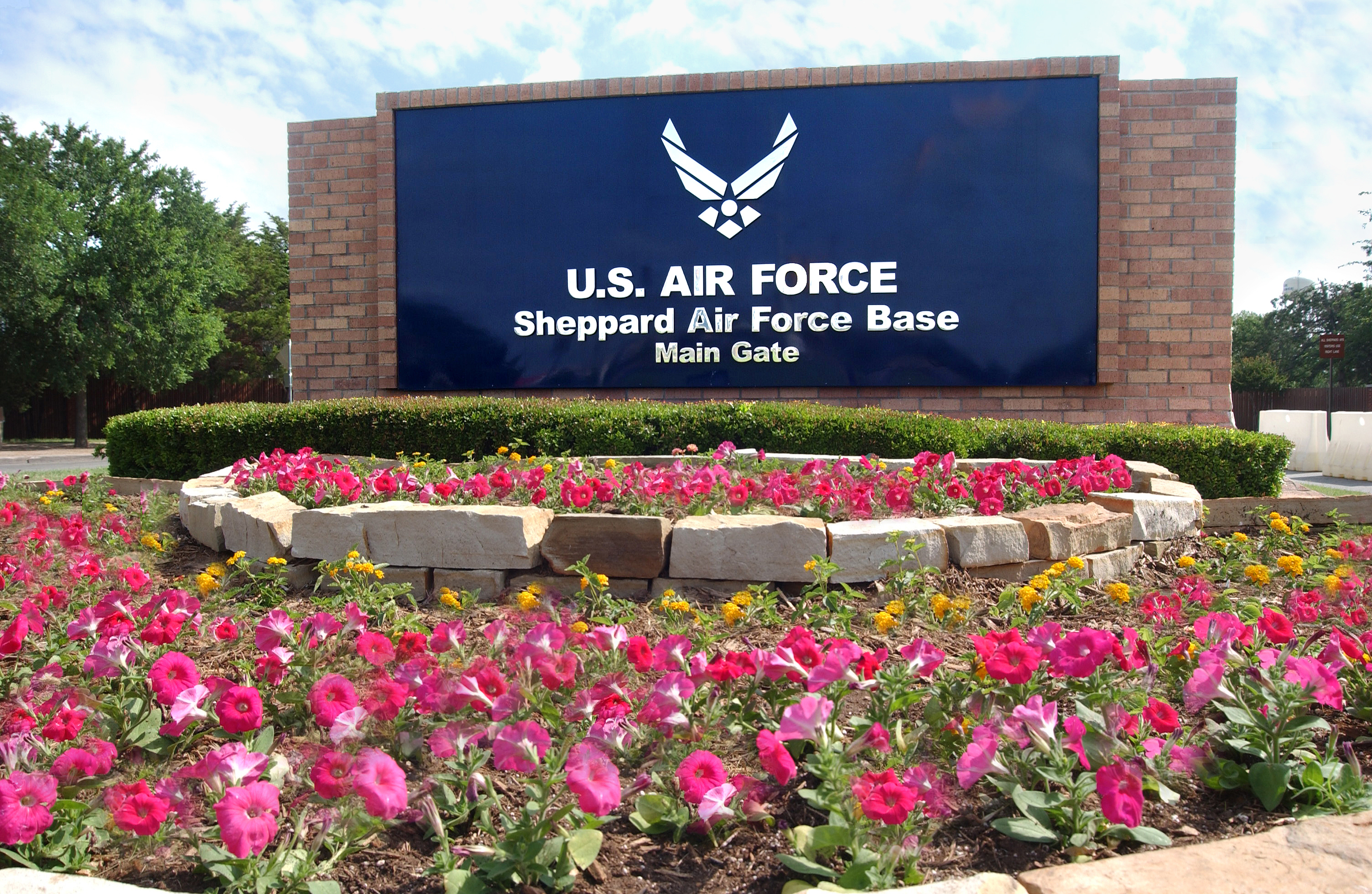
Sheppard Air Force Base: Two Schoolhouses in North Texas
On the plains of North Texas at Wichita Falls, Sheppard Air Force Base runs two of the Air Force's biggest training missions at once. The 82nd Training Wing is one of the largest technical training wings in the Air Force, producing maintainers and specialists for dozens of career fields and every branch, and the 80th Flying Training Wing runs the Euro-NATO Joint Jet Pilot Training program, the only one of its kind, which trains student fighter pilots from the United States and thirteen partner nations in the T-6 and the T-38 and produces a large share of the Air Force's fighter pilots. The base is full of young Airmen in technical school, student pilots flying the pattern, the instructors who train them, and the maintainers who keep the jets flying, in a hot, flat North Texas city where the base is the heart of the economy. A base built on training will protect that mission and move hard against an Airman or a student who steps wrong.
Military defense is all Bilecki Law Group does, and Airmen fly us in from our office in Tampa because a contested court martial is decided by trial experience, and we bring it wherever the case is.
The Hometown Ace Who Took On the Whole Formation
The standard for the pilots trained here was set by a Wichita Falls native, Colonel Neel E. Kearby, the first Army Air Forces fighter pilot to receive the Medal of Honor. Over New Guinea on October 11, 1943, after his reconnaissance mission was complete and he could have turned for home, Kearby led his flight against a far larger enemy formation, shooting down six aircraft in a matter of minutes, several of them to save a fellow pilot under attack. He went looking for the fight when he could have left it. A hometown Airman who took on the longest odds to protect the man next to him is the standard we bring to a case at Sheppard.
Why Airmen at Sheppard Bring Us In
We win court martial cases. Military defense is all we do, and Airmen fly us in from all over the country because of our trial record. The military justice system is not built to find the truth; it exists to preserve good order and discipline, and a base built around two training pipelines will make an example of an Airman or a student to protect its standards. For a student pilot in the ENJJPT program there is a second front, because an allegation can bring an elimination from training or a Flying Evaluation Board that ends the path to wings on a standard far below a conviction, so the criminal case and the flying career are two fights at once. A serious case is investigated by the Office of Special Investigations, and for sexual assault and other covered offenses the decision to refer charges to a court martial no longer belongs to your command but goes to an independent Special Trial Counsel. The Area Defense Counsel may be capable but carries a heavy caseload inside the same system, which is why Airmen serious about winning bring in their own counsel.
UCMJ Charges We Defend at Sheppard Air Force Base
These are the most common cases at Sheppard. They are examples, not limits, and we defend service members against the full range of UCMJ offenses.
Sexual Assault and Sex Offenses (UCMJ Article 120 / Article 134). These allegations route to an independent Special Trial Counsel now, and the command treats a report as established before the investigation is finished, all the more so in a training environment where word of an allegation travels fast. These cases demand counsel who will run an independent investigation and contest the case rather than let the allegation stand in for proof, because a conviction can mean confinement and a federal record, with registration required for a covered sex offense under the applicable federal and state law.
Domestic Violence and Assault (UCMJ Articles 128b and 128). Domestic violence under Article 128b is charged as aggressively as any offense in the UCMJ since the Office of Special Trial Counsel took these cases over. It covers a spouse, an intimate partner, or a family member, and it treats strangulation or suffocation as its own charge that the government can bring even with no visible injury. A qualifying conviction also triggers the federal Lautenberg firearms bar, which can end an Air Force career because an Airman has to be able to carry a weapon. We also defend assault under Article 128, the usual charge when a night out in Wichita Falls ends in a fight, where self defense is a recognized defense.
Drunken or Reckless Operation, the Military DUI (UCMJ Article 113). A young base in a town where everyone drives means a steady stream of Article 113 cases, the military's drunken or reckless operation charge, and for a student pilot a single DUI can end the path to wings on its own. The military can prosecute a drunk driving offense even when the civilian side does not, and the two can run at the same time. But these cases are far from automatic, because the stop, the field tests, the breath or blood result, and the chain of custody all have to hold up, and they often do not.
Drugs and Off Duty Conduct (UCMJ Articles 112a and 134). Drug cases often turn on the chain of custody and the government's burden to prove any use was knowing and wrongful. Marijuana is fully illegal in Texas, so a positive test can support an Article 112a allegation, and the underlying conduct can also create state-law exposure if the evidence establishes the applicable state offense, and for a student or a young Airman it can end a career before it begins. A positive test is evidence the government may use to argue knowing, wrongful use, not an automatic finding of guilt, so the collection, the chain of custody, and whether any use was knowing all remain the government's to prove.
A Career and a Reputation Worth Defending
We do not pretend that every Airman who calls us from Sheppard is innocent. What matters is how serious the case is, not your rank. If a matter is genuinely minor, the Area Defense Counsel can handle it, and we will tell you so honestly. But when the case is serious, everything is on the line at once: your career, your wings if you fly, your good name, and your freedom. A court martial conviction is a federal criminal conviction, and the applicable sentencing parameters tie a confinement range to the offense, two and a half to ten years for sexual assault and ten to twenty for rape, that a judge can depart from only by stating specific facts in writing, on top of any required or adjudged punitive discharge and, on a covered sex offense, sex offender registration. That is why you fight. The court’s jurisdiction and the convicted offense determine which sentencing rules apply; some offenses use separate sentencing criteria rather than these ranges.
If you are facing an investigation or court martial at Sheppard Air Force Base, reach out for a free, confidential strategy session. We will tell you exactly what you are facing and how we would defend it. The government is already building its case. The only question is whether anyone is building yours.
FAQ
OSI wants to interview me at Sheppard. Do I have to talk to them?
No. Under Article 31b of the UCMJ you have the right to remain silent and to a lawyer, and you can invoke both before the interview begins. OSI is gathering evidence, not offering a chance to explain, and for a student a single statement can drive both the criminal case and an elimination from training. Decline, ask for the Area Defense Counsel or your own lawyer, and say nothing until you have one.
I'm a student pilot in ENJJPT. Can one allegation cost me my slot even if I'm not convicted?
Yes. A student pilot facing an allegation risks not only the criminal case but an elimination from training and a Flying Evaluation Board, both of which run on a far lower standard than a conviction, so the path to wings can close even if the criminal case does not stick. That is why the underlying allegation has to be defended on every front from the start, and we handle the criminal charge, the board, and the training action together.
My DUI was off base in Wichita Falls. Can the Air Force still court martial me?
Yes. The civilian system and the military are separate sovereigns, so the same incident can move forward in the county court and as an Article 113 or command action at the same time, and a civilian dismissal does not end the UCMJ exposure. A statement to one can be used by the other, so do not talk to the police or OSI until you have a defense lawyer, and for aircrew remember a DUI can also threaten flying status.