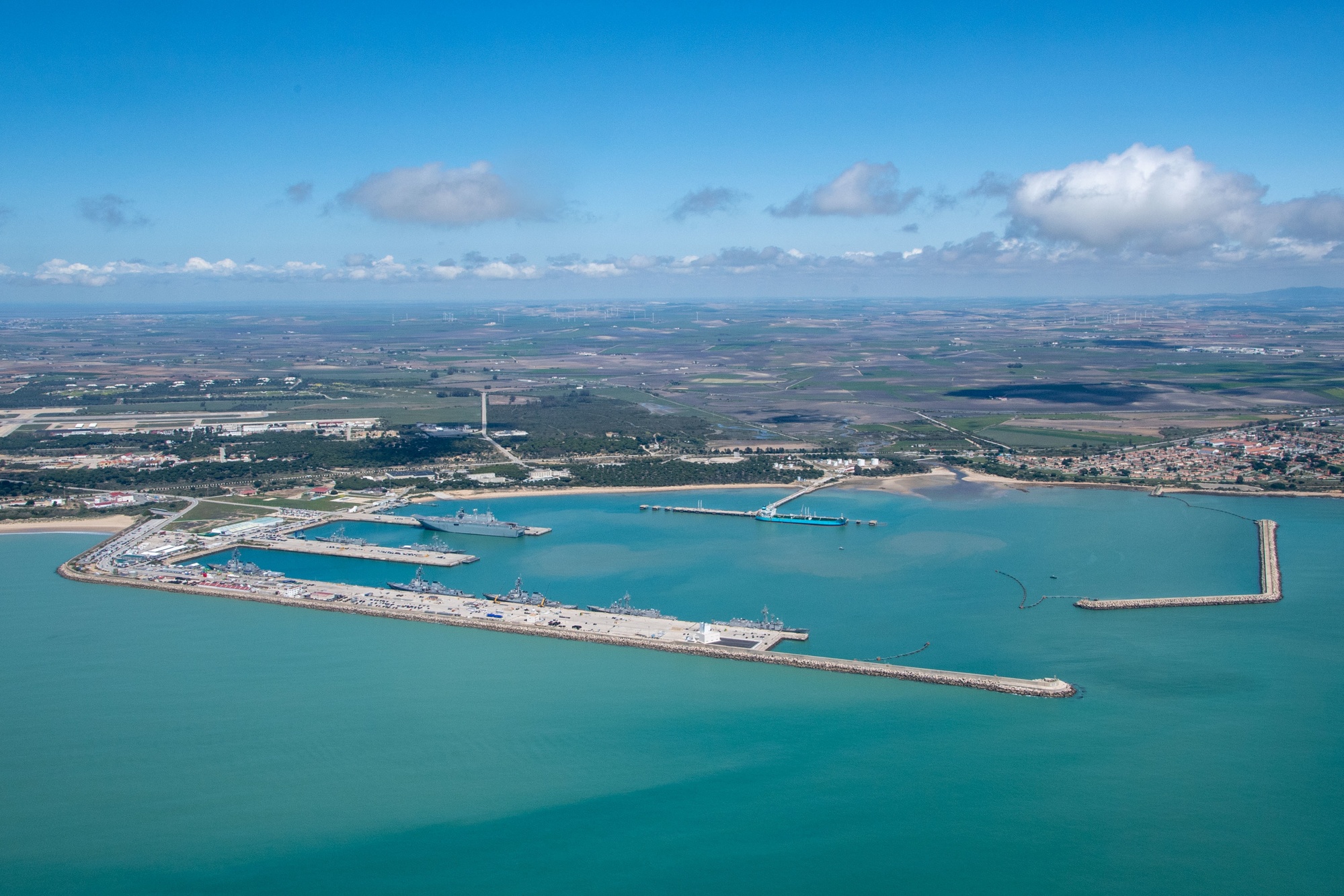
Naval Station Rota: The Navy's Gateway to the Mediterranean
On the Bay of Cádiz in Andalusia, where the Atlantic meets the Strait of Gibraltar, Naval Station Rota is the U.S. Navy's gateway to the Mediterranean, even though it sits on the Atlantic itself. It is a Spanish base, flying the Spanish flag and commanded by a Spanish admiral, where the United States is a guest, and it is the home port of forward deployed Arleigh Burke destroyers standing NATO's ballistic missile defense watch, a major air terminal supporting American movements into the theater, and a Marine security force. Thousands of American Sailors and their families are here, most living out in El Puerto de Santa María and the white towns of the sherry country, on one of the most sought after tours in the Navy.
A serious charge on a foreign base, an ocean from home and a step from a Spanish courtroom, is no place to settle for the nearest available lawyer. Court martial defense is the whole of what Bilecki Law Group does, and the firm has carried its cases across Europe from its office in Tampa. We fly in and try the case, because for a contested matter what decides it is the lawyer's record in the courtroom, not how close the office is to the gate.
The Sailor Who Kept the Ship Moving
Rota's destroyers exist to be ready, and the standard the Navy brings to that was set in the engineering spaces of a battleship at Pearl Harbor. On the morning of December 7, 1941, Machinist Donald K. Ross was in the forward dynamo room of the USS Nevada when it filled with smoke, steam, and heat past the point a man could survive. He ordered his men out and did the work himself, kept the power up until he was blinded and knocked unconscious, was dragged clear and revived, and went back in, twice over, so the Nevada could get underway, the only battleship to move that morning. He would not leave the plant while the ship still needed it, and his actions earned the Medal of Honor. That refusal to quit while the ship needs you is the standard we bring to a case at Rota.
Why Sailors at Rota Bring Us In
We win court martial cases. Military defense is all we do, and Sailors fly us in from all over the world because of our trial record. The military justice system is not built to find the truth; it exists to preserve good order and discipline, and a forward deployed command on the NATO missile defense watch will make an example of a Sailor to keep the rest in line. A serious case is investigated by NCIS, and for sexual assault and other covered offenses the decision to refer charges to a court martial no longer belongs to your command but goes to an independent Special Trial Counsel. Your detailed counsel from the Defense Service Office may be capable but carries a heavy caseload inside the same system, which is why Sailors serious about winning bring in their own counsel.
UCMJ Charges We Defend at Naval Station Rota
These are the most common cases at Naval Station Rota. They are examples, not limits, and we defend service members against the full range of UCMJ offenses.
Sexual Assault and Sex Offenses (UCMJ Article 120 / Article 134). These allegations route to an independent Special Trial Counsel now, and the command treats a report as established before the investigation is finished, all the more so on a forward base where word travels fast and the command wants to look decisive. These cases demand counsel who will run an independent investigation and contest the case rather than let the allegation stand in for proof, because a conviction means confinement, a federal record, and a place on a sex offender registry.
Domestic Violence and Assault (UCMJ Articles 128b and 128). Domestic violence under Article 128b is charged as aggressively as any offense in the UCMJ since the Office of Special Trial Counsel took these cases over. It covers a spouse, an intimate partner, or a family member, and it treats strangulation or suffocation as its own charge that the government can bring even with no visible injury. A qualifying conviction also triggers the federal Lautenberg firearms bar, which can end a Navy career because a Sailor has to be able to carry a weapon. We also defend assault under Article 128, where self defense is a recognized defense.
Larceny and Allowance Fraud (UCMJ Articles 121, 124, and 107). With Sailors living off base out in El Puerto and the towns around the bay, the overseas housing allowance that pays for it becomes a target. A lease the government decides was inflated, a side arrangement with a Spanish landlord, a dependent or an address it claims was misreported, and a routine entitlement turns into larceny stacked with a fraud and false official statement allegation. These cases are built from paperwork, but a disputed allowance is not theft, and a lease, an approval, or a rule can look one way to the government and very different once the rest of the record is on the table.
Drugs and Off Duty Conduct (UCMJ Articles 112a and 134). Drug cases often turn on the chain of custody and the government's burden to prove any use was knowing and wrongful. A Sailor is subject to the UCMJ off duty, so a night out in El Puerto or down in Cádiz that ends badly comes back to the command. Spain also sets a lower legal blood alcohol limit than most American states, and a serious off base matter can be taken up by the Spanish police and prosecuted in a Spanish court, on a separate track from your command, so get counsel involved before you talk to anyone.
A Career and a Reputation Worth Defending
We do not pretend that every Sailor who calls us from Spain is innocent. What matters is how serious the case is, not your rank. If a matter is genuinely minor, your detailed defense counsel can handle it, and we will tell you so honestly. But when the case is serious, everything is on the line at once: your career, your retirement, your good name, and your freedom. A court martial conviction is a federal criminal conviction, and where the sentencing parameters apply the confinement range is set by the offense, two and a half to ten years for sexual assault and ten to twenty for rape, with a departure requiring specific facts in writing, on top of a possible punitive discharge and, for a covered sex offense, sex offender registration. That is why you fight. The court’s jurisdiction and the convicted offense determine which sentencing rules apply; some offenses use separate sentencing criteria rather than these ranges.
If you are facing an investigation or court martial at Rota, reach out for a free defense strategy session. We will tell you exactly what you are facing and how we would defend it. The government is already building its case. The only question is whether anyone is building yours.
FAQ
NCIS wants to interview me at Rota. Do I have to talk to them?
No. You are not required to sit for an NCIS interview or answer their questions. Under Article 31b of the UCMJ you have the right to remain silent and to a lawyer, and you can invoke both at any point, including before the interview begins. NCIS is collecting evidence, not giving you a chance to explain, and it takes very little to be titled as a subject, a label that follows you for years. Decline, ask for counsel, and call a defense lawyer before you give any statement.
The government says I defrauded the housing allowance. How is a case like that defended?
By forcing the government to prove you intended to defraud, which is where most of these cases come apart. Fraud is not a wrong number or a form filled in badly; the government has to prove you deliberately lied to draw money you were not entitled to. We go get the documents that tell the real story, the actual lease and what the landlord charged, the housing office and command approvals, and the overseas housing allowance rules in force at the time. An honest mistake, or a rent figure the housing office itself approved, is not a crime, and once that record is in front of the government, many of these allegations do not hold up.
Something happened off base in El Puerto or Cádiz. Could the Spanish authorities get involved too?
They can. Under the agreement that governs U.S. forces in Spain, the Spanish authorities can claim jurisdiction over off base conduct, so a serious matter can be investigated by the Spanish police and prosecuted in a Spanish court on a separate track from the UCMJ case your command is pursuing. Investigations in the two systems may overlap, and what you say to one can affect the other, so do not give a statement to anyone until you have talked to a defense lawyer. The SOFA allocates primary jurisdiction and limits a second trial for the same offense; overlapping investigations do not mean that both countries may freely try the same charge.