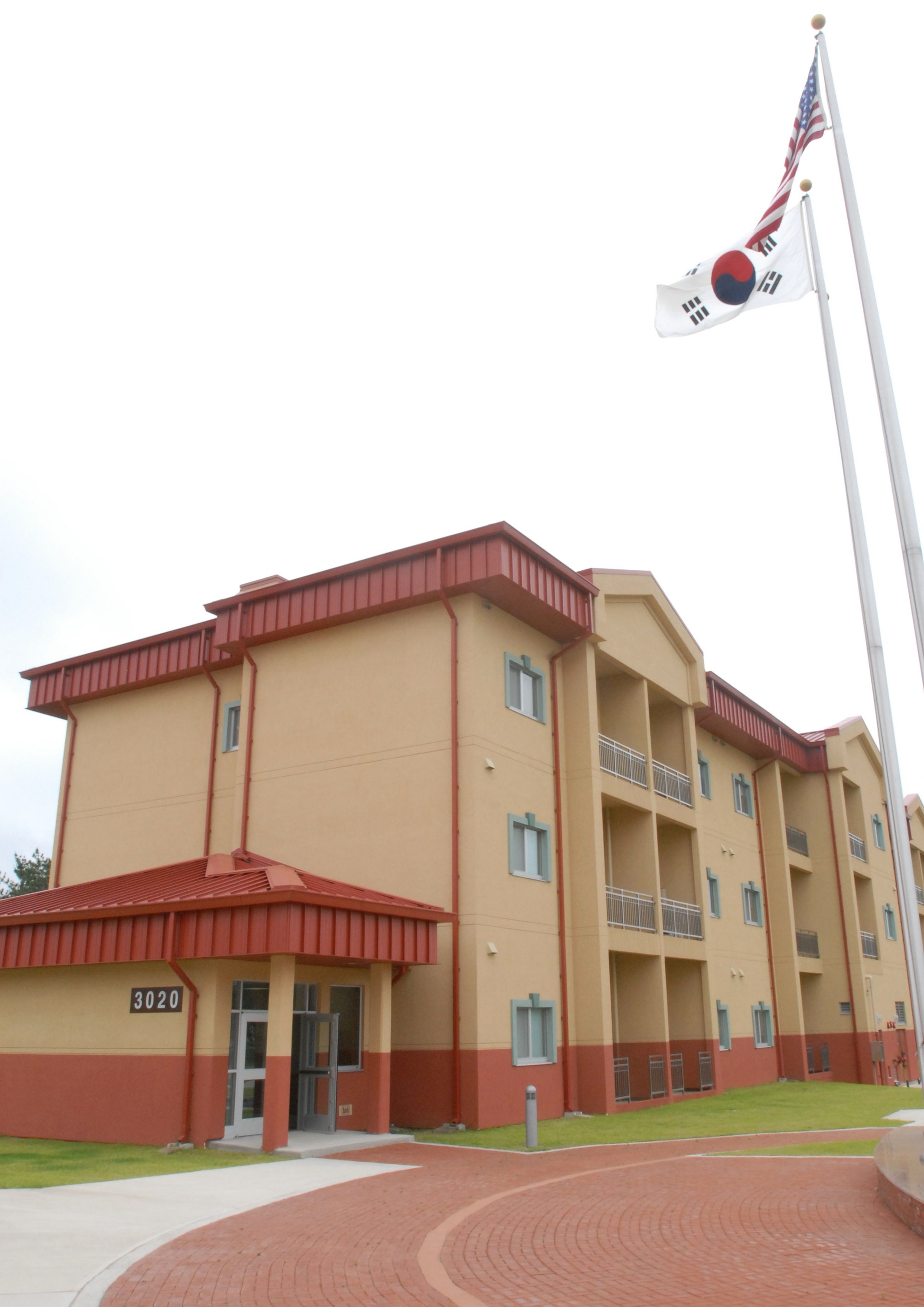
Camp Mujuk: Small Camp, Big Mission
Outside Pohang on Korea's southeast coast, Camp Mujuk is the only Marine Corps installation in Korea. It is a small, forward platform, but thousands of Marines pass through it every year for amphibious exercises and training alongside the Republic of Korea Marines, so on any given rotation the camp is full of Marines who are far from their home command and focused on the field. That transient, high tempo footing is exactly what makes a case here complicated, because when something goes wrong, the question of whose command owns it and where it gets handled is rarely simple.
The Marine Who Held Fox Hill Alone
Camp Mujuk's tie to the Corps runs through the hardest fighting of the Korean War, and few held harder than Private Hector Cafferata of Fox Company, 2nd Battalion, 7th Marines. At the Chosin Reservoir on November 28, 1950, his fire team was overrun in a night attack, and Cafferata fought on almost alone in the snow, holding off a far larger enemy force, killing attackers at close range, and at one point grabbing a live grenade that landed among the wounded and hurling it away, losing part of his hand to save the Marines beside him. He held the line until help came. That willingness to stand between the enemy and the people next to you is the standard we bring to a case at Camp Mujuk.
Why Marines at Camp Mujuk Bring Us In
We win court martial cases. Military defense is all we do, Marines fly us in from all over the world for it, and Korea is ground we know, because Tim Bilecki ran the Army's Trial Defense Service across this peninsula. The military justice system is not built to find the truth; it exists to preserve good order and discipline. A serious case is investigated by NCIS, and for sexual assault and other covered offenses the decision to refer charges to a court martial no longer belongs to the command but goes to an independent Special Trial Counsel. Your detailed defense counsel may be capable but carries a heavy caseload inside the same system, which is why Marines serious about winning bring in their own counsel.
UCMJ Charges We Defend at Camp Mujuk
What follows are the charges we most often defend at Camp Mujuk. They are not the only ones, and if yours is not here we still want to hear from you.
Sexual Assault and Sex Offenses (UCMJ Article 120 / Article 134). These allegations route to an independent Special Trial Counsel now, and the command treats a report as established before the investigation is finished. These cases demand counsel who will run an independent investigation and contest the case rather than let the allegation stand in for proof, because a conviction means confinement, a federal record, and a place on a sex offender registry.
Domestic Violence and Assault (UCMJ Articles 128b and 128). Domestic violence under Article 128b is charged as aggressively as any offense in the UCMJ since the Office of Special Trial Counsel took these cases over. It covers a spouse, an intimate partner, or a family member, and it treats strangulation or suffocation as its own charge that the government can bring even with no visible injury. A qualifying conviction also triggers the federal Lautenberg firearms bar, which can end a Marine's career because a Marine has to be able to carry a weapon. We also defend assault under Article 128, where self defense is a recognized defense.
Larceny, Drugs, and Off Duty Conduct (UCMJ Articles 121, 112a, and 134). Property cases turn on the intent the government has to prove rather than assume, and drug cases turn on the chain of custody and the government's burden to prove any use was knowing and wrongful. A Marine is subject to the UCMJ off base, so a night out in Pohang that goes wrong comes back to the command, and an incident involving a Korean national draws the Korean police. Under the Status of Forces Agreement, Korean authorities can claim jurisdiction over serious off base offenses against Korean nationals, so a bad night can mean attention from both U.S. military and Korean authorities. Get counsel involved before you talk to anyone. The SOFA allocates primary jurisdiction and limits a second trial for the same offense; overlapping investigations do not mean that both countries may freely try the same charge.
A Career and a Reputation Worth Defending
Not every Marine who calls us from Camp Mujuk is innocent, and we do not pretend otherwise. What matters is how serious the case is, not your rank. If a matter is genuinely minor, your detailed defense counsel can handle it, and we will tell you so honestly. But when the case is serious, everything is on the line at once: your career, your retirement, your good name, and your freedom. A court martial conviction is a federal criminal conviction, and the applicable sentencing parameters tie a confinement range to the offense, two and a half to ten years for sexual assault and ten to twenty for rape, that a judge can depart from only by stating specific facts in writing, on top of any required or adjudged punitive discharge and, for a covered sex offense, sex offender registration. That is why you fight. The court’s jurisdiction and the convicted offense determine which sentencing rules apply; some offenses use separate sentencing criteria rather than these ranges.
If you are facing an investigation or court martial at Camp Mujuk, reach out for a free defense strategy session. We will tell you exactly what you are facing and how we would defend it. The government is already building its case. The only question is whether anyone is building yours.
FAQ
I'm only at Camp Mujuk for an exercise and based somewhere else. If something happens, whose command handles my case?
Generally your home command keeps UCMJ authority over you, but it is not always that clean, because the command running the exercise can be involved too, and where the alleged conduct happened affects who decides and tries the case. The case often follows you back to your home unit even though the incident happened in Korea, which scatters witnesses and evidence across two places. Those jurisdictional seams are easy to get wrong and worth having counsel sort out early.
NCIS wants to interview me at Camp Mujuk. Do I have to talk to them?
No. You are not required to sit for an NCIS interview or answer their questions. Under Article 31b of the UCMJ you have the right to remain silent and to a lawyer, and you can invoke both at any point, including before the interview begins. NCIS is collecting evidence, not giving you a chance to explain. Decline, ask for counsel, and call a defense lawyer before you give any statement.
Why hire Bilecki Law Group for a Korea case instead of a local attorney?
We win court martial cases, and Korea is ground we know firsthand. Military defense is all we do, and Tim Bilecki ran the Army's Trial Defense Service across this peninsula. That is experience on this exact ground, not an attorney flying in cold.