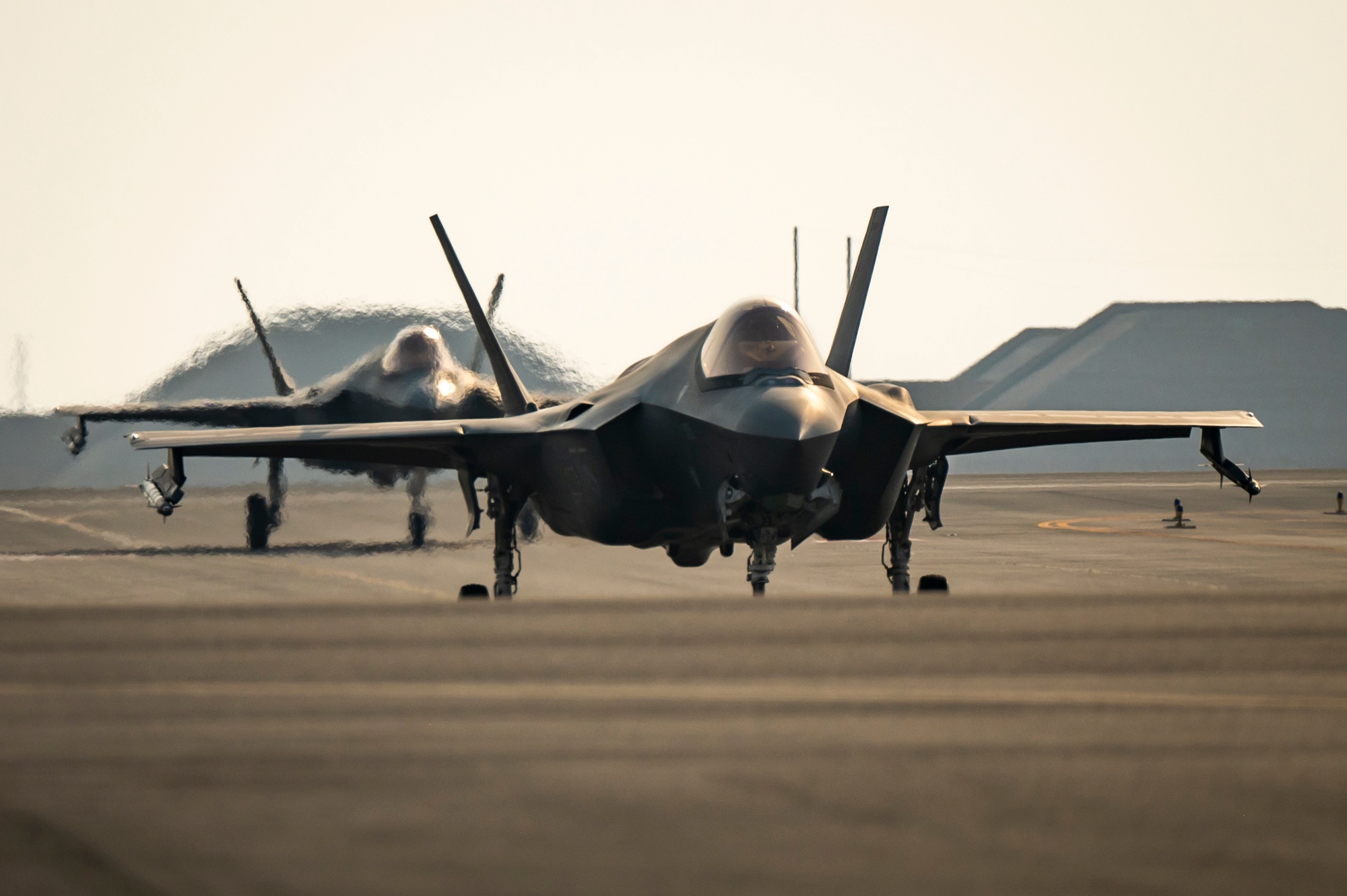
Al Udeid Air Base: The Largest U.S. Base in the Middle East, and the Pressure That Comes With It
When you are stationed at Al Udeid Air Base and facing a court martial or a criminal investigation under the UCMJ, the situation is more complicated than it would be stateside, and stateside is complicated enough. Al Udeid is the largest U.S. military installation in the Middle East and a critical hub for operations across the region. It runs with a density of senior leadership that shapes everything about how the UCMJ gets enforced.
Commands at a base this visible are acutely sensitive to anything that could create an international incident, draw congressional attention, or embarrass the branch in a politically charged environment. That pressure does not make them more careful about who they prosecute. It makes them more aggressive. You are thousands of miles from home, the prosecution knows exactly how isolated you are, and that isolation is not an accident. It is leverage, and they use it.
He Went Back Up the Mountain
On March 4, 2002, Air Force Combat Controller Master Sergeant John Chapman was attached to a SEAL team high in the mountains of Afghanistan when their helicopter was ambushed and a teammate fell out into a nest of enemy fighters below. Chapman and the team did not leave him. They flew back onto that snow covered peak, into the heart of a known enemy stronghold, to get one man back. Chapman assaulted and cleared the first bunker himself, then moved into the open, twelve meters from the enemy, to take out a machine gun firing on his team. He was hit, and he kept fighting, holding the enemy off until his last breath. He became the first Airman awarded the Medal of Honor since Vietnam. Chapman went back up that mountain when every reason said not to, and that is the kind of fight you need against the military justice system. Go back up the mountain. We will be on it with you.
Why Service Members at Al Udeid Fly Us In
A serious case at Al Udeid is investigated by military criminal investigators, AFOSI, NCIS, or CID depending on your branch, on a joint installation that hosts every service. For sexual assault, domestic violence, and other covered offenses, the decision to refer charges to a court martial no longer belongs to your command. It goes to an independent Special Trial Counsel in your service's Office of Special Trial Counsel. For everything else, the command and its legal office still drive the case, and Qatar's strict laws raise the diplomatic stakes on every allegation.
Free counsel through JAG channels is not the problem here, because many JAG defense attorneys are skilled and committed. The problem is structural. They do not have the resources, the independence, or the investigative support the prosecution has. Before he ever defended a service member as a civilian, Tim Bilecki served as an Army JAG defense counsel and then as a Senior Defense Counsel. His cross examination work is taught in a national trial guide, and over two decades he has tried cases from the United States to the far side of the world. When the prosecution sees retained civilian counsel step off the tarmac at Al Udeid, the easy win they were counting on gets much harder to come by.
Do Not Accept the First Offer
Military prosecutors count on one thing above all: they know you want to go home. They know your family is stateside, and that every week this drags on is another week you are not with them. They will use that, and they will make a plea deal sound like mercy. It is not mercy. It is a conviction with a bow on it, one that will follow you long after you have left Qatar. The military justice system is not built to find the truth. It is built to preserve order and discipline by making a public example out of someone, and an innocent service member convicted serves that purpose just as well as a guilty one. You have options, and the first one is retaining counsel who actually knows how to fight.
UCMJ Charges We Defend at Al Udeid Air Base
The charges below are the ones we see most often at Al Udeid Air Base, not the only ones we defend. If you are facing a different UCMJ allegation, we handle that too.
Sexual Assault and Sex Offenses (UCMJ Article 120 / Article 134). The military's SAPR program was meant to address a genuine problem. What it has produced in practice is an environment where allegations are treated as established fact long before any investigation is complete, where command action often precedes due process, and where an accusation alone can end a career. Service members have also learned to weaponize it, because a fabricated allegation can be a ticket out of a hard deployment or a way to derail an investigation into the accuser. If you are facing these charges at Al Udeid, the truth alone will not save you. You need counsel who knows how to surface exculpatory evidence, challenge credibility, and dismantle a case built on accusation rather than fact.
Fraud and Larceny (UCMJ Article 121). Housing fraud is less common here because the military arranges and funds housing directly, but wrongful appropriation, reimbursement disputes, and administrative payment errors come up regularly and get treated as crimes. Most begin with a paperwork mistake that an investigator who already assumes guilt decides to call a scheme. Intent is a required element, and it is the government's burden to prove, not yours to disprove.
Domestic Violence and Assault (UCMJ Articles 128b and 128). Domestic violence is now one of the offenses we defend most, prosecuted downrange and at home with the force of a sexual assault since the Office of Special Trial Counsel took it over. Article 128b reaches a spouse, an intimate partner, or a family member, and treats strangulation or suffocation as a standalone serious offense even when nothing is visible. A qualifying conviction triggers the federal Lautenberg firearms bar, and an Airman who cannot carry a weapon faces serious career consequences. We also handle assault under Article 128. The same traits that make a service member effective do not switch off in garrison, and confrontations happen. When an improvised weapon is involved or someone is seriously hurt, a fight becomes an Article 128 case, and the service member who was defending themselves is often the one charged. We make sure your account gets heard and that the evidence supports it. We defend assault, aggravated assault, manslaughter, and murder charges, including self defense.
Drug Offenses (UCMJ Article 112a). Qatar has among the strictest drug laws in the world. A U.S. service member is processed through the military system rather than the Qatari one, but that host nation environment hardens the command's posture and accelerates prosecution. A positive urinalysis is not automatic proof of anything. The chain of custody can be compromised, innocent exposure is a recognized defense, and the government must still prove the use was knowing and wrongful. A positive test is the beginning of a fight you can win.
Military Specific Offenses (UCMJ Articles 77 to 134). Fraternization, unauthorized absence, disobeying a lawful order, and conduct unbecoming get used aggressively overseas, and they stack quickly when a command decides to make an example. Offenses that would draw a reprimand stateside can become career ending at Al Udeid. We fight every charge and make the prosecution prove each one.
If You Have Already Made Mistakes, That Is Not the End
Even if you made a poor decision, even if the facts are complicated, you still have the right to the best possible defense and outcome. A conviction is not the only result available, but understand what one carries: not just your career and your retirement but your good name and your freedom, because a court martial conviction is a federal criminal conviction. Under the sentencing rules now in force, a judge sentences within set confinement parameters, with mandatory minimum punishments for the most serious offenses, so the confinement, the discharge characterization, and on a sex offense a place on a registry are all real, at any rank, and all things skilled counsel can fight. The default the system offers is designed to be convenient for the prosecution, not for you.
If you are facing a court martial, investigation, or administrative action at Al Udeid Air Base, reach out for a free defense strategy session. No vague reassurances, just a real assessment from attorneys who have been inside this system and know how to take it apart. The prosecution is already building its case. Yours should be too.
Cases Connected to Al Udeid Air Base
These cases include trials, hearings, investigations, and administrative matters. A connection to this location does not necessarily mean that the trial occurred here.
- Case connected to this location: Bilecki Walks Article 134 CSAM and Article 92 GCM Off Charge Sheet for Air Force Major at Wright-Patterson; Resignation in Lieu of Court-Martial Approved, No SORNA, No Federal Felony
FAQ
I'm deployed to Al Udeid on a rotation, not permanently stationed here. If I'm charged, will I be held in Qatar or sent back?
It can go either way, and the uncertainty is part of the stress. Jurisdiction generally follows your chain of command, but a serious allegation can keep you in Qatar while your unit rotates home, or send you back to your home station with the case following you. The harder problem is practical: in a deployed, high turnover environment, witnesses scatter fast as units rotate out, and the window to lock down the people who can help your case closes quickly. That alone is a reason to get counsel engaged early rather than waiting to see how it plays out.
Qatar has strict drug laws. If I test positive or get caught with something, do I face Qatari prosecution too?
For most cases involving U.S. personnel on the installation, you are handled through the U.S. military system rather than the Qatari courts, which is a meaningful protection given how severe Qatari drug penalties are. That does not make the UCMJ exposure any softer. If anything, the command's fear of a diplomatic problem makes it prosecute Article 112a cases harder and faster. The defense is the same as anywhere, built on the collection process, the chain of custody, the lab work, and whether any use was knowing and wrongful, but the host nation pressure makes getting experienced counsel in early even more important.
OSI wants to interview me at Al Udeid. Do I have to talk to them?
No, though downrange that is harder to remember, because cooperating can feel like the fastest way home. It is not: an OSI interview is evidence collection, and Article 31b lets you stay silent and ask for a lawyer before you say a word. For covered offenses like sexual assault, the charging decision belongs to an independent Special Trial Counsel, not your deployed commander, and your free Area Defense Counsel can advise you. In a high-turnover deployed environment the first interview matters even more, because witnesses rotate out fast and the record made now is the one that follows the case. Decline, ask for counsel, and call a lawyer before you say anything.