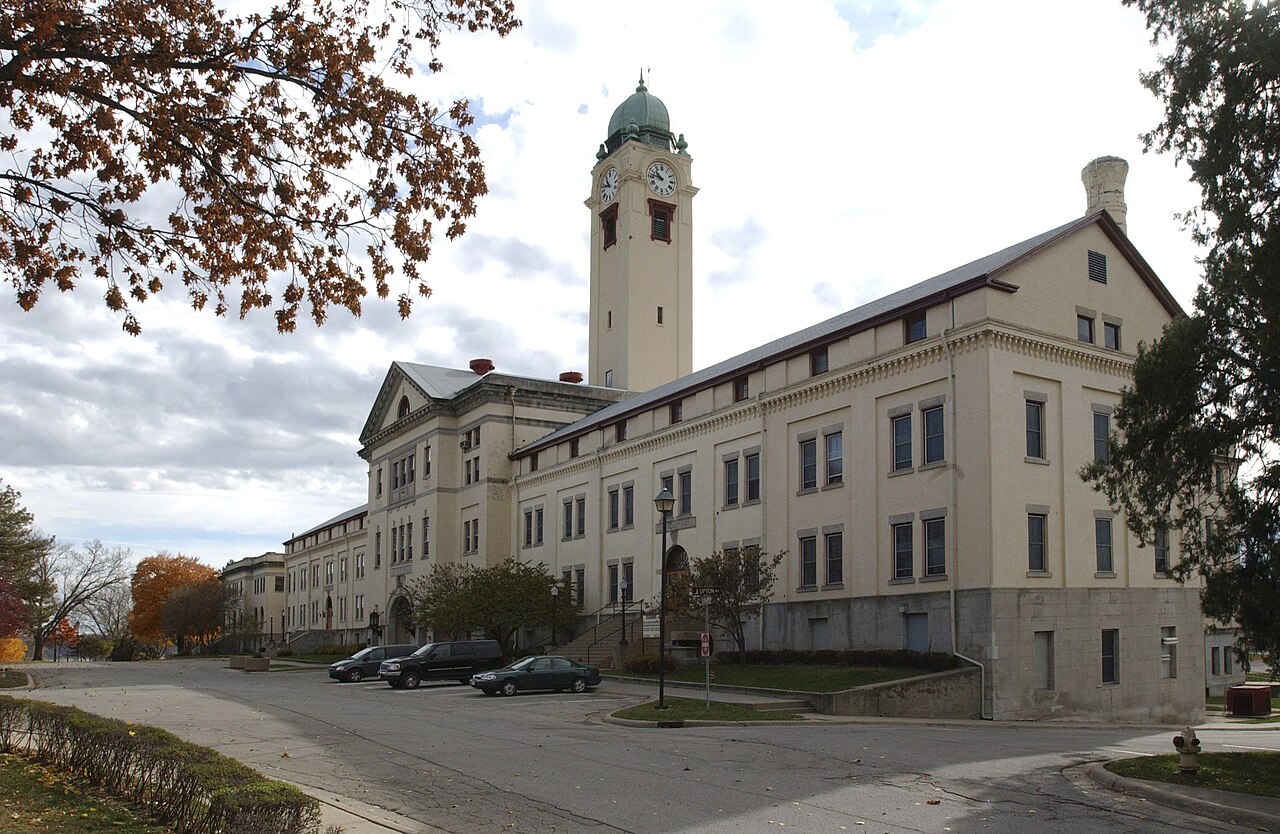
Fort Leavenworth: The Oldest Active Army Post West of the Mississippi and Its Hardest Consequence
On the bluffs above the Missouri River, Fort Leavenworth is the oldest active Army post west of the Mississippi and the intellectual center of the Army. It is the home of the Command and General Staff College, where mid-career officers from every service and dozens of allied nations come for professional military education, and the Combined Arms Center that shapes how the Army fights. It is also the home of the United States Disciplinary Barracks, the Defense Department's only maximum security prison, the place the military sends those it convicts of its most serious offenses. So Fort Leavenworth holds both ends of a career at once: the school that promotes officers and the prison that ends them. Families settle in Leavenworth and across the river, with Kansas City about thirty minutes south. A post this central to the Army's identity will protect its standards and move hard against a Soldier or an officer who steps wrong.
Military defense is all Bilecki Law Group does, and service members fly us in from our office in Tampa because a contested court martial is decided by trial experience, and we bring it wherever the case is.
The Soldier Who Earned the Medal of Honor Twice
The standard of valor on this old frontier post was set by Second Lieutenant Thomas W. Custer, one of the very few men ever to receive the Medal of Honor twice. In the last days of the Civil War, at Namozine Church and again three days later at Sailor's Creek, Custer rode straight into enemy lines and seized the colors with his own hands, the second time taking a bullet through the face but refusing to leave the field until the position was carried. He went into the worst of it twice and would not be turned back. He went on to serve in the frontier Army that grew up around this post. That refusal to quit a fight is the standard we bring to a case at Fort Leavenworth.
Why People at Fort Leavenworth Bring Us In
We win court martial cases. Military defense is all we do, and service members fly us in from all over the country because of our trial record. The military justice system is not built to find the truth; it exists to preserve good order and discipline, and a post built around the Army's schools and its prison will make an example of someone to protect its standards. For an officer at the Command and General Staff College the exposure is sharper still, because a career built on reputation can be ended by an allegation that never reaches a courtroom. A serious case is investigated by Army CID, and for sexual assault and other covered offenses the decision to refer charges to a court martial no longer belongs to your command but goes to an independent Special Trial Counsel. The free Trial Defense Service may be capable but carries a heavy caseload inside the same system, which is why those serious about winning bring in their own counsel.
UCMJ Charges We Defend at Fort Leavenworth
The charges below are the ones we see most often at Fort Leavenworth, not the only ones we defend. If you are facing a different UCMJ allegation, we handle that too.
Sexual Assault and Sex Offenses (UCMJ Article 120 / Article 134). These allegations route to an independent Special Trial Counsel now, and the command treats a report as established before the investigation is finished. These cases demand counsel who will run an independent investigation and contest the case rather than let the allegation stand in for proof, because a conviction can mean confinement and a federal record, with registration required for a covered sex offense under the applicable federal and state law.
Domestic Violence and Assault (UCMJ Articles 128b and 128). Domestic violence under Article 128b is charged as aggressively as any offense in the UCMJ since the Office of Special Trial Counsel took these cases over. It covers a spouse, an intimate partner, or a family member, and it treats strangulation or suffocation as its own charge that the government can bring even with no visible injury. A qualifying conviction also triggers the federal Lautenberg firearms bar, which can end a military career because a service member has to be able to carry a weapon. We also defend assault under Article 128, where self defense is a recognized defense.
Officer Misconduct: Conduct Unbecoming and False Official Statements (UCMJ Articles 133 and 107). A post full of field grade officers sees a particular set of charges. Conduct unbecoming an officer under Article 133 is deliberately broad, reaching an improper relationship, a financial impropriety, or an off duty incident that the government says discredits the officer, and false official statement under Article 107 turns a single answer to an investigator or an entry on an official document into a federal crime. These cases are about reputation as much as proof, and the government still has to prove the words were false, official, and made with intent to deceive, not merely mistaken.
Drugs and Off Duty Conduct (UCMJ Articles 112a and 134). Drug cases often turn on the chain of custody and the government's burden to prove any use was knowing and wrongful. Marijuana is fully illegal in Kansas, so a positive test can support an Article 112a allegation, and the underlying conduct can also create state-law exposure if the evidence establishes the applicable state offense. A positive test is evidence the government may use to argue knowing, wrongful use, not an automatic finding of guilt, so the collection, the chain of custody, and whether any use was knowing all remain the government's to prove.
A Career and a Reputation Worth Defending
We do not pretend that every Soldier or officer who calls us from Fort Leavenworth is innocent. What matters is how serious the case is, not your rank. If a matter is genuinely minor, the Trial Defense Service can handle it, and we will tell you so honestly. But when the case is serious, everything is on the line at once: your career, your retirement, your good name, and your freedom. Nowhere is that clearer than here, where the United States Disciplinary Barracks on this very installation is where the military sends those it convicts of its most serious crimes. A court martial conviction is a federal criminal conviction, and the applicable sentencing parameters tie a confinement range to the offense, two and a half to ten years for sexual assault and ten to twenty for rape, that a judge can depart from only by stating specific facts in writing, on top of any required or adjudged punitive discharge and, on a covered sex offense, sex offender registration. That is why you fight. The court’s jurisdiction and the convicted offense determine which sentencing rules apply; some offenses use separate sentencing criteria rather than these ranges.
If you are facing an investigation or court martial at Fort Leavenworth, reach out for a free, confidential strategy session. We will tell you exactly what you are facing and how we would defend it. The government is already building its case. The only question is whether anyone is building yours.
FAQ
CID wants to interview me at Fort Leavenworth. Do I have to talk to them?
No. Under Article 31b of the UCMJ you have the right to remain silent and to a lawyer, and you can invoke both before the interview begins. CID is gathering evidence, not offering a chance to explain, and for an officer a single statement can drive both the criminal case and a conduct action against your commission. Decline, ask for the Trial Defense Service or your own lawyer, and say nothing until you have one.
I'm a field grade officer at CGSC. Can one allegation end my career even without a conviction?
It can. An officer's career runs on reputation and a clean record, so a conduct unbecoming or false official statement allegation can trigger a referral, a memorandum of reprimand, and a show cause board that runs on a far lower standard than a court martial, and any of those can force retirement or separation. That is why the underlying allegation has to be fought early and on every front, and we defend the criminal case and the officer elimination exposure together.
I'm under an Article 120 investigation. Will I have to register as a sex offender if I'm convicted?
A court martial conviction for a covered Article 120 offense triggers registration duties under the applicable federal and state law, with requirements and duration determined by the covered conviction and jurisdiction. The entire defense is aimed at defeating the charge or reducing it to an offense that carries no registration, and the investigation and the charging decision are where these cases are most often turned. Get your own counsel involved before you ever sit down with CID.