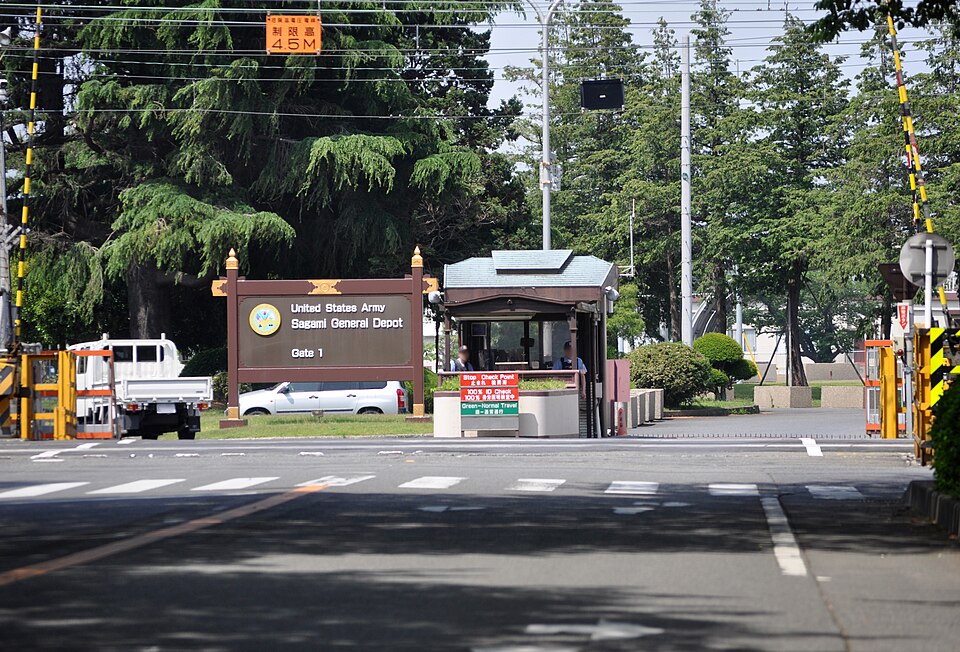
Sagami General Depot: The Army's Logistics Hub in Japan
About twenty five miles southwest of Tokyo, in Sagamihara, Sagami General Depot is the U.S. Army's logistics backbone in Japan. It is home to the 35th Combat Sustainment Support Battalion and a web of supply, distribution, and storage operations that keep American forces across Japan and the wider region fed, fueled, and equipped. The Soldiers here are sustainers, the people who move and account for the materiel everyone else depends on, and their work is measured in property, paperwork, and tonnage. That makes the cases here their own kind, and it makes the stakes just as real, because a logistics Soldier facing a court martial has a career, a clearance, and a federal record on the line like anyone else.
Mainland Japan is part of the region this firm has worked for years. Tim Bilecki served as the Senior Defense Counsel for the Army's Trial Defense Service across the Pacific Rim, responsible for the defense of service members throughout Korea, Okinawa, and mainland Japan. A Soldier at Sagami gets counsel who knows the Japan system from the inside.
Keep 'Em Rolling: The Convoy That Won the Race to the Front
An army runs on what its supply lines push forward, and no one proved it like the drivers of the Red Ball Express. After the breakout from Normandy in the summer of 1944, the Allied armies were racing across France faster than supplies could reach them, and the fight threatened to stall for want of gasoline and ammunition. The Army threw together an around the clock truck convoy on dedicated one way routes, manned overwhelmingly by African American Soldiers who were too often kept out of the recognition they earned, and they drove day and night through breakdowns, enemy fire, and exhaustion to keep the tanks moving. By the time it wound down they had hauled hundreds of thousands of tons of fuel, ammunition, food, and supplies to the front, and they kept the offensive alive. The fight is won by what gets forward, and the Soldiers who make that happen deserve a defense as relentless as their work. That is the standard we bring to a case at Sagami.
Why Soldiers at Sagami Bring Us In
We win court martial cases. Soldiers fly us in from all over the world because military defense is all we do, and our trial record proves it. Years of work across the Pacific, Korea and Japan alike, mean we know how a Japan case moves and how the commands here operate.
The military justice system is not built to find the truth. It exists to preserve good order and discipline, and a command will make an example of a Soldier to keep the rest in line. A serious case is investigated by Army CID, and for sexual assault and other covered offenses the decision to refer charges to a court martial no longer belongs to the command but goes to an independent Special Trial Counsel. Your detailed Trial Defense Service counsel may be capable but carries a heavy caseload inside the same system, which is why Soldiers serious about winning bring in their own counsel.
UCMJ Charges We Defend at Sagami General Depot
Below are the most common charges at Sagami General Depot. Treat them as a starting point, not a complete list, of the UCMJ cases we defend.
Larceny, Government Property, and Fraud (UCMJ Articles 121, 108, and 107). A depot is built around accountability for property, supplies, fuel, and equipment, which makes property the signature case here. The government treats missing materiel, an item that cannot be reconciled, a fuel or inventory discrepancy, or property that went out the gate as larceny under Article 121 or the wrongful disposition of military property under Article 108, and when paperwork is involved it adds a false official statement under Article 107. But a shortfall in a high volume distribution operation is not the same as theft. Reconciliation errors, shared custody, materiel consumed or transferred without clean paperwork, and the simple scale of the operation are all live issues, and the government has to prove the state of mind required by the charged offense: intent for larceny or fraud, or negligence where Article 108 permits it, not just that the numbers do not match.
Sexual Assault and Sex Offenses (UCMJ Article 120 / Article 134). These allegations route to an independent Special Trial Counsel now, and the command treats a report as established before the investigation is finished. CID and NCIS also run online enticement stings across Japan, in which an agent poses online as an adult and only later claims to be underage before luring the target to a meeting and an arrest. Because there is no real child, the charge is almost always an attempt under Article 80 that turns on intent, and the defenses are a mistake of fact as to age and entrapment. We also examine compliance with Internet Crimes Against Children protocols for weaknesses in the investigation and the agents’ credibility. A protocol violation alone is not a legal defense; its significance depends on the charged offense, the evidence, and the applicable defense.
Domestic Violence and Assault (UCMJ Articles 128b and 128). Domestic violence under Article 128b is charged as aggressively as any offense in the UCMJ since the Office of Special Trial Counsel took these cases over. It covers a spouse, an intimate partner, or a family member, and it treats strangulation or suffocation as its own charge that the government can bring even with no visible injury. A qualifying conviction also triggers the federal Lautenberg firearms bar, which can end an Army career because a Soldier has to be able to carry a weapon. We also defend assault under Article 128, where self defense is a recognized defense.
Drugs and Off Duty Conduct (UCMJ Articles 112a and 134). Drug cases often turn on the chain of custody and the government's burden to prove any use was knowing and wrongful, and on a depot near Tokyo the command worries about substances ordered online and brought in. A Soldier is subject to the UCMJ off base, and a night out in Tokyo, where Roppongi and the nightlife districts draw service members and are often placed off limits, comes back to the command. Under the Status of Forces Agreement, Japanese authorities hold the primary right to prosecute serious off base offenses against Japanese nationals, and their system can hold a suspect for up to roughly twenty three days before any charge, so a serious off base incident can mean attention from both U.S. military and Japanese authorities. Army cases in this area are tried through U.S. Army Japan at Camp Zama. The SOFA allocates primary jurisdiction and limits a second trial for the same offense; overlapping investigations do not mean that both countries may freely try the same charge.
A Career and a Reputation Worth Defending
Not every Soldier who calls us from Sagami is innocent, and we do not pretend otherwise. Some made a mistake and know it. That does not mean accepting the worst the system can hand out. What matters is how serious the case is, not your rank. If a matter is genuinely minor, your Trial Defense Service counsel can handle it, and we will tell you so honestly.
When the case is serious, everything is on the line at once: your career, your retirement, your good name, and your freedom. A court martial conviction is a federal criminal conviction, and where the sentencing parameters apply the judge sentences within confinement ranges fixed by the offense, two and a half to ten years for sexual assault and ten to twenty for rape, with specific facts in writing required to support a departure, on top of any required or adjudged punitive discharge and, on a covered sex offense, sex offender registration. That is why you fight. The court’s jurisdiction and the convicted offense determine which sentencing rules apply; some offenses use separate sentencing criteria rather than these ranges.
If you are facing an investigation or court martial at Sagami General Depot, reach out for a free defense strategy session. We know the Japan system and how these cases move, and we will tell you exactly what you are facing and how we would defend it. The government is already building its case. The only question is whether anyone is building yours.
FAQ
I work logistics and I'm accused of stealing or losing government property at Sagami. How serious is that?
Serious enough to fight from the start, because the government can charge it as larceny under Article 121 or wrongful disposition of military property under Article 108, both of which carry a federal conviction, and it often adds a false official statement under Article 107 over the paperwork. But a discrepancy in a high volume depot is not proof of theft. Reconciliation errors, shared custody, materiel consumed or transferred without clean records, and the sheer scale of the operation all cut against the government's theory, and it still has to prove the state of mind required by the charged offense: intent for larceny or fraud, or negligence where Article 108 permits it rather than that the numbers simply do not reconcile.
CID wants to interview me at Sagami. Do I have to talk to them?
No. You are not required to sit for a CID interview or answer their questions. Under Article 31b of the UCMJ you have the right to remain silent, and you can invoke it and ask for a lawyer at any point, including before the interview begins. CID is collecting evidence, not giving you a chance to explain, and an account about a busy warehouse can be turned into an admission. Decline, ask for counsel, and call a defense lawyer before you give any statement.
Why hire Bilecki Law Group for a Japan case instead of a local attorney?
We win court martial cases, and the Pacific is where we do much of our work. Military defense is all we do, and the firm has defended Soldiers across Korea and Japan for years. That is experience in this exact system, not an attorney flying in cold.