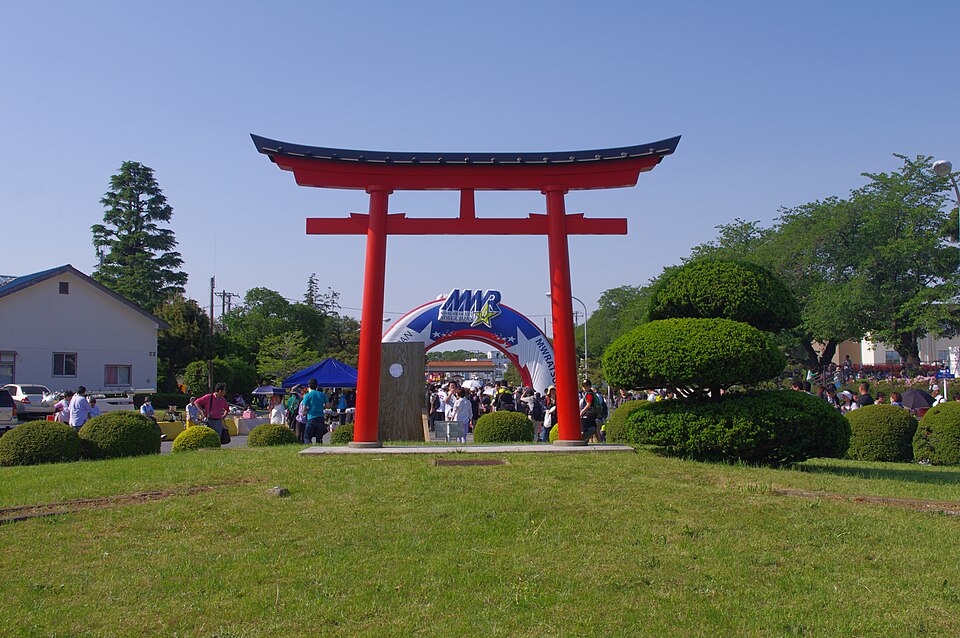
NAF Atsugi: Thousands of Miles from Home, and a Command That Fears Headlines
Life on an overseas installation is not always easy, and being thousands of miles from friends and family wears on anyone. The country needs its service members in Japan all the same, and Naval Air Facility Atsugi, near Tokyo, remains an important link in the U.S. presence in the Pacific. The risk service members face there in peacetime, though, can be just as devastating to a career as anything else, because overseas commands enforce the UCMJ with a capriciousness you rarely see stateside. They will bring charges in Japan that never would have surfaced back home.
That is the reality at NAF Atsugi, and it is exactly why we fly hard hitting counsel in from the United States: to give service members overseas a real chance against the heavy hand of the military justice system.
Why Service Members at NAF Atsugi Fly Us In
A serious case at Atsugi is investigated by NCIS and prosecuted through Region Legal Service Office Japan. For sexual assault, domestic violence, and other covered offenses, the charging decision belongs to an independent Special Trial Counsel in the Navy's Office of Special Trial Counsel, not the command. For other charges, the command and its legal office still drive the case. There is also a host nation layer, because under the Status of Forces Agreement with Japan, Japanese authorities can have an interest in off base conduct, and Japan's criminal system is very different from ours.
The first thing to understand is that the military justice system does not exist to pursue justice. It exists to preserve military order and discipline, and for that to work it has to make public examples out of people to scare everyone else into compliance. It is worse overseas, where commands so fear an international incident that they will try to end your career over a single fight with a civilian. It is not a fair fight from the start, and your only real option is to fight back. Tim Bilecki spent years inside the system as a JAG defense counsel and Senior Defense Counsel before going civilian. His closing arguments were published in the 2018 book Kick-Ass Closings, and over two decades he has tried the cases other attorneys would not touch. Japan is not unfamiliar ground for this firm. The Pacific is where Bilecki Law Group does much of its work, and we are in mainland Japan, Okinawa, and Korea constantly, which means we come into a case here already knowing the commands, the legal offices, and how these matters actually move.
He Walked Off the Plane Unarmed
There is no better place to talk about facing down long odds than Atsugi itself. On August 30, 1945, with the surrender not yet signed and the airfield still full of recently defeated, heavily armed Japanese troops and kamikaze pilots, General Douglas MacArthur landed at Atsugi carrying no weapon at all. He came down the stairs in his field cap with a corncob pipe in his teeth, as if he owned the place, and that sheer nerve did more to set the tone of the occupation than any show of force could have. Observers at the time called it one of the great acts of personal nerve of the war. How you carry yourself into this fight changes it. Walk in ready, and bring counsel who will not blink.
They Count on Your Isolation
Overseas, prosecutors take advantage of how far you are from the people who would steady you. They will make you believe that taking the first weak deal is your only way home, and they do not want you to know that the charges were piled on to scare you, or that a fight is the last thing they want, or that you can win. We fight from the start of the investigation, through the Article 32 hearing, and to the end if need be. Many cases turn at the Article 32, where signaling that we are there for a fight changes how the prosecution treats the whole matter.
UCMJ Charges We Defend at NAF Atsugi
The charges below are common at NAF Atsugi, but our practice is not confined to them. We defend service members against any UCMJ offense.
Sexual Assault and Sex Offenses (UCMJ Article 120 / Article 134). The military's SAPR campaign, noble in intent, has been a disaster in execution. A mere allegation is enough to ruin a career, and commands and the Office of Special Trial Counsel are under such pressure to show they take it seriously that they pursue cases without compelling evidence, reaching for administrative separation when they cannot prefer charges. Service members have also learned to weaponize the system, because a false allegation can stop their own investigation or buy a ticket out of Atsugi and back home. If you are facing these charges, the system is built to presume your guilt, and you cannot rely on the truth alone to surface.
Fraud and Larceny (UCMJ Article 121 / Article 107). We defend property and financial charges, from BAH and OHA fraud to larceny, wrongful appropriation, extortion under Article 127, and conspiracy under Article 81 to defraud. Housing fraud is common overseas because the Tokyo area allowance is tied to a lease, a landlord, and rules most Sailors never fully see, and when the certified rent or a listed dependent does not match what an auditor turns up, the shortfall that accrued over months gets recast as theft. Since the housing form is what authorizes the payment, the government stacks larceny under Article 121 and a false official statement under Article 107. Intent is the whole question, and a finance office mistake, bad guidance, or a family that actually moved is not fraud. A paperwork error should not cost a Sailor a career.
Domestic Violence and Assault (UCMJ Articles 128b and 128). Domestic violence under Article 128b is among the busiest parts of our caseload, charged by an independent Special Trial Counsel like any covered offense. It applies to a spouse, an intimate partner, or a family member, and makes strangulation or suffocation a distinct, serious charge regardless of visible injury. The consequence many Sailors never see coming is the federal Lautenberg firearms bar, which a qualifying conviction triggers and which can end a career. Plain Article 128 assault is part of the work too. We defend murder, manslaughter, aggravated assault, assault, and self defense cases. Wherever there are service members and alcohol, fights happen, and a fight becomes a major problem overseas when it involves a local civilian or a makeshift weapon. When the other party is a local, the command will often try to make an example of our service member to appease the host community.
Drug Offenses (UCMJ Article 112a). We defend possession, distribution, importation, manufacturing, trafficking, and positive urinalysis cases. Drug laws in Japan are strict, and these cases call for counsel who understands the overlapping military and Japanese jurisdictions. Often a local civilian introduced the substance, but it is the service member who ends up holding the bag. These cases can be fought and won, including ones that began with a positive test.
Military Specific Offenses (UCMJ Articles 77 to 134). Aggressive commands use the punitive articles to pile on charges and raise the maximum punishment. Some of these charges are garbage, and you fight them on principle.
Get Us Into the Atsugi Fight
Military court martial defense overseas is a perilous affair, and the deck is stacked against the defense from the start. The prosecution has a near limitless budget while a JAG defense counsel has to beg for an expert, and the people that counsel is fighting may one day shape their career. Now that Bilecki is on the other side of the uniform, he does not have to play by those rules. If you are facing an investigation or court martial at NAF Atsugi, reach out. We will give you a free strategy session and tell you exactly what you are facing. What is on the line is your career, your retirement, your good name, and your freedom, because a conviction is a federal criminal conviction. Under the sentencing rules now in force, it can carry confinement a judge has little room to avoid, a punitive discharge, and on a sex offense a place on a registry, at any rank, and overseas the host nation can add a layer on top. You have to fight back, even if you made a mistake, and you can still secure the best possible outcome, but only if you fight. Reach out and get us into that fight.
Cases Connected to NAF Atsugi
These cases include trials, hearings, investigations, and administrative matters. A connection to this location does not necessarily mean that the trial occurred here.
- Case connected to this location: Sailor Charged with Assault After Accused of Cheating Gets Out of Trouble
FAQ
NCIS wants to interview me at Atsugi. Do I have to talk to them?
No, and not without counsel. The interview is not your opening to set the record straight; it is evidence-gathering, and Article 31b of the UCMJ lets you decline and demand a lawyer. For covered offenses like sexual assault, an independent Special Trial Counsel in the Navy's Office of Special Trial Counsel, not your command, makes the charging call. An off base incident involving a Japanese national can also draw Japanese authorities under the Status of Forces Agreement, and Japan's process differs sharply from ours, so a statement to either system carries weight in the other. Decline the interview, ask for counsel, and call a lawyer before you say anything.
My OHA at Atsugi got flagged. With Japan's housing costs, is an honest allowance mistake a crime?
Not unless the government can prove you knew the claim was false. Tokyo area housing is expensive and the OHA rules are dense, rent caps, move-in and utility reimbursements, yen exchange swings, and command sponsorship requirements, so honest Sailors end up with wrong numbers all the time. A wrong number is a debt to repay, not a theft, and Article 121 demands proof you intended to defraud, not just that the math came out in your favor. The defense holds the prosecution to that intent, which an honest paperwork error will not support.
If I am confined or separated overseas, what happens to my family stationed here with me?
This is one of the hardest parts of an overseas case, and it is a real consequence to plan for. Confinement or an adverse separation can affect your family's command sponsorship, housing, and return travel, and handling it well means getting ahead of those issues rather than reacting to them. It is also one more reason the outcome of the criminal case matters so much, because the characterization of a discharge and the sentence reach far beyond you. We factor your family's situation into the strategy from the beginning, not as an afterthought.