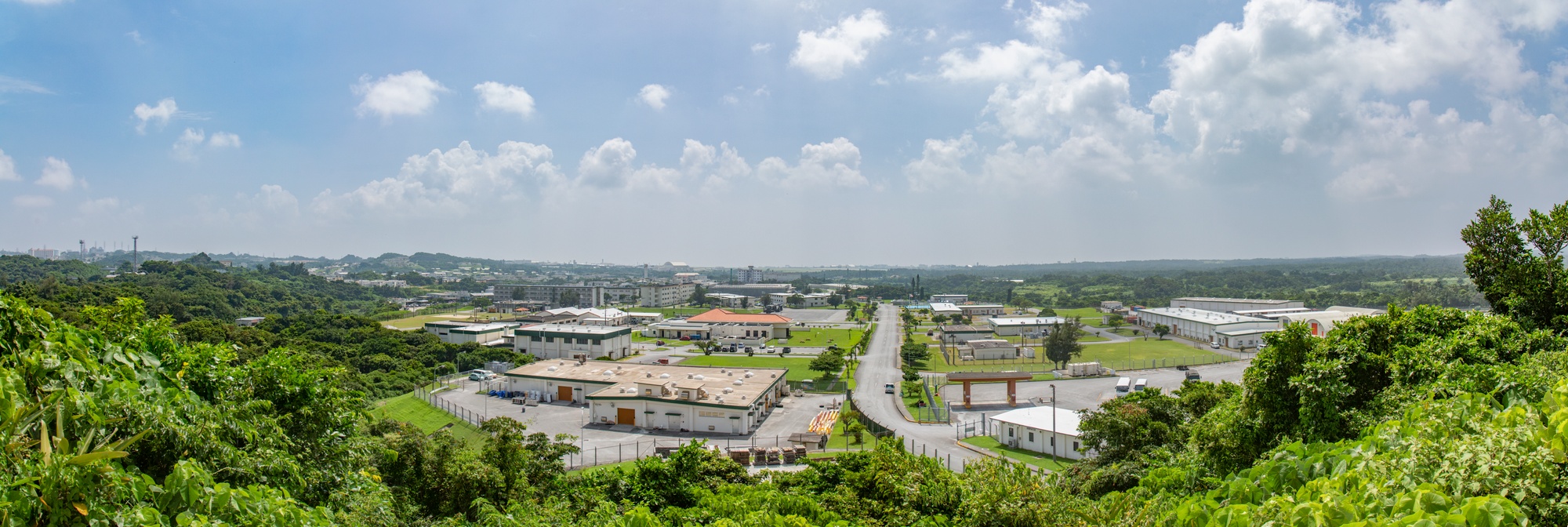
Camp Shields: Home of the Seabees on Okinawa
Near Kadena in central Okinawa, Camp Shields is the home of the Navy's Seabees on the island, the Naval Mobile Construction Battalions that build the bases, runways, and infrastructure the rest of the force depends on and deploy across the Pacific to do it. Seabee work is hands on and high tempo, the battalions rotate in and out on relief in place, and the culture runs on getting hard things built fast. None of that puts a Seabee outside the reach of military justice, and when one is accused, the case goes through the Navy system on Okinawa like any other.
Okinawa is where this firm does much of its work. Tim Bilecki served as the Senior Defense Counsel for the Army's Trial Defense Service across the Pacific Rim, responsible for service members throughout Korea, Okinawa, and mainland Japan, and the firm has defended Sailors and Marines across this island for years. A Seabee at Camp Shields gets counsel who already knows how an Okinawa case moves.
The Only Seabee to Earn the Medal of Honor
Camp Shields carries the name of the one Seabee ever to receive the Medal of Honor, Construction Mechanic Third Class Marvin G. Shields. On June 10, 1965, at Dong Xoai in Vietnam, his Seabee team and the Army troops with them were overrun by a far larger enemy force. Shields, already a builder and not a rifleman, moved back and forth across open ground under heavy fire to carry ammunition to the defenders and to help the wounded, and he was hit twice doing it. Wounded as he was, he then volunteered to go with an officer to knock out an enemy machine gun that was tearing the defense apart, got close enough to destroy it with a rocket launcher, and was mortally wounded on the way back. A Seabee is taught to build, and Shields fought and died like an infantryman when the moment demanded it. That willingness to do whatever the fight requires is the standard we bring to a case at Camp Shields.
Why Seabees at Camp Shields Bring Us In
We win court martial cases. Sailors fly us in from all over the world because military defense is all we do, and our trial record proves it. Years of work on Okinawa mean we know how these cases move on the island and how the commands here operate.
The military justice system is not built to find the truth. It exists to preserve good order and discipline, and a command will make an example of a Sailor to keep the rest of the battalion in line. A serious case is investigated by NCIS, and for sexual assault and other covered offenses the decision to refer charges to a court martial no longer belongs to the command but goes to an independent Special Trial Counsel. Your detailed defense counsel may be capable but carries a heavy caseload inside the same system, which is why Seabees serious about winning bring in their own counsel.
UCMJ Charges We Defend at Camp Shields
The charges below are common at Camp Shields, but our practice is not confined to them. We defend service members against any UCMJ offense.
Larceny and Government Property (UCMJ Articles 121 and 108). A construction battalion is surrounded by tools, materials, equipment, and fuel, and that makes property the most common case here. The government treats missing materials, a tool that walked off a site, a generator or vehicle part that cannot be accounted for, or a fuel discrepancy as larceny under Article 121 or the wrongful disposition of military property under Article 108. But a property shortfall on a busy job site is not the same as theft. Sloppy accountability, shared custody of a tool room, materials consumed or lost on a project, and the simple chaos of a deploying unit are all live issues, and the government has to prove the state of mind required by the charged offense: intent for larceny or fraud, or negligence where Article 108 permits it, not just that something is missing.
Sexual Assault and Sex Offenses (UCMJ Article 120 / Article 134). These allegations route to an independent Special Trial Counsel now, and the command treats a report as established before the investigation is finished. A distinctive part of our Okinawa work is the NCIS online sting cases, the "To Catch a Predator" operations that have arrested service members across the island. An agent poses online as an adult woman, then later claims to be fourteen or fifteen before steering toward a meeting and an arrest, so the charge is almost always an attempt under Article 80 that the government has to prove with intent. The defenses are a mistake of fact as to age and entrapment. We won the first NCIS sting case ever tried on Okinawa, an outright acquittal, and have defended many more here since. We also examine compliance with Internet Crimes Against Children protocols for weaknesses in the investigation and the agents’ credibility. A protocol violation alone is not a legal defense; its significance depends on the charged offense, the evidence, and the applicable defense.
Domestic Violence and Assault (UCMJ Articles 128b and 128). Domestic violence under Article 128b is charged as aggressively as any offense in the UCMJ since the Office of Special Trial Counsel took these cases over. It covers a spouse, an intimate partner, or a family member, and it treats strangulation or suffocation as its own charge that the government can bring even with no visible injury. A qualifying conviction also triggers the federal Lautenberg firearms bar, which can end a Navy career because a Sailor has to be able to carry a weapon. We also defend assault under Article 128, where self defense is a recognized defense.
Drugs and Off Duty Conduct (UCMJ Articles 112a, 134, and 92). The drug cases that worry the command on Okinawa are less about a stray positive than about synthetic substances brought onto the island, where Japan's strict drug laws raise the stakes, and a positive urinalysis is serious but not the end of the fight, because the chain of custody can be challenged and the government still has to prove any use was knowing and wrongful. A Sailor is subject to the UCMJ off base, so a night out that goes wrong comes back to the command, and the Navy Shore Patrol working the bar districts can apprehend a Sailor, making resisting it an Article 87a charge. Under the Status of Forces Agreement, Japanese authorities hold the primary right to prosecute serious off base offenses against Japanese nationals, and their system can hold a suspect for up to roughly twenty three days before any charge, so a serious off base incident can mean attention from both U.S. military and Japanese authorities. The SOFA allocates primary jurisdiction and limits a second trial for the same offense; overlapping investigations do not mean that both countries may freely try the same charge.
A Career and a Reputation Worth Defending
Not every Seabee who calls us from Camp Shields is innocent, and we do not pretend otherwise. Some made a mistake and know it. That does not mean accepting the worst the system can hand out. What matters is how serious the case is, not your rank. If a matter is genuinely minor, your detailed defense counsel can handle it, and we will tell you so honestly.
When the case is serious, everything is on the line at once: your career, your retirement, your good name, and your freedom. A court martial conviction is a federal criminal conviction, and where the sentencing parameters apply the confinement range is set by the offense, two and a half to ten years for sexual assault and ten to twenty for rape, with a departure requiring specific facts in writing, on top of a possible punitive discharge and, for a covered sex offense, sex offender registration. That is why you fight. The court’s jurisdiction and the convicted offense determine which sentencing rules apply; some offenses use separate sentencing criteria rather than these ranges.
If you are facing an investigation or court martial at Camp Shields, reach out for a free defense strategy session. We know this island and how these cases move here, and we will tell you exactly what you are facing and how we would defend it. The government is already building its case. The only question is whether anyone is building yours.
FAQ
I'm a Seabee accused of stealing government materials or equipment. How serious is that?
Serious enough to fight from the start, because the government can charge it as larceny under Article 121 or wrongful disposition of military property under Article 108, both of which carry a federal conviction. But a shortfall on a job site is not proof of theft. Loose accountability, a shared tool room, materials used up or lost on a project, and the churn of a deploying battalion all cut against the government's theory, and it still has to prove the state of mind required by the charged offense: intent for larceny or fraud, or negligence where Article 108 permits it rather than that something simply went missing.
NCIS wants to interview me at Camp Shields. Do I have to talk to them?
No. You are not required to sit for an NCIS interview or answer their questions. Under Article 31b of the UCMJ you have the right to remain silent and to a lawyer, and you can invoke both at any point, including before the interview begins. NCIS is collecting evidence, not giving you a chance to explain. Decline, ask for counsel, and call a defense lawyer before you give any statement.
Why hire Bilecki Law Group for an Okinawa case instead of a local attorney?
We win court martial cases, and Okinawa is where we do much of our work. Military defense is all we do, and the firm has defended Sailors and Marines across this island for years. That is experience on this exact ground, not an attorney flying in cold.