Camp Gonsalves: Okinawa Plays by Different Rules
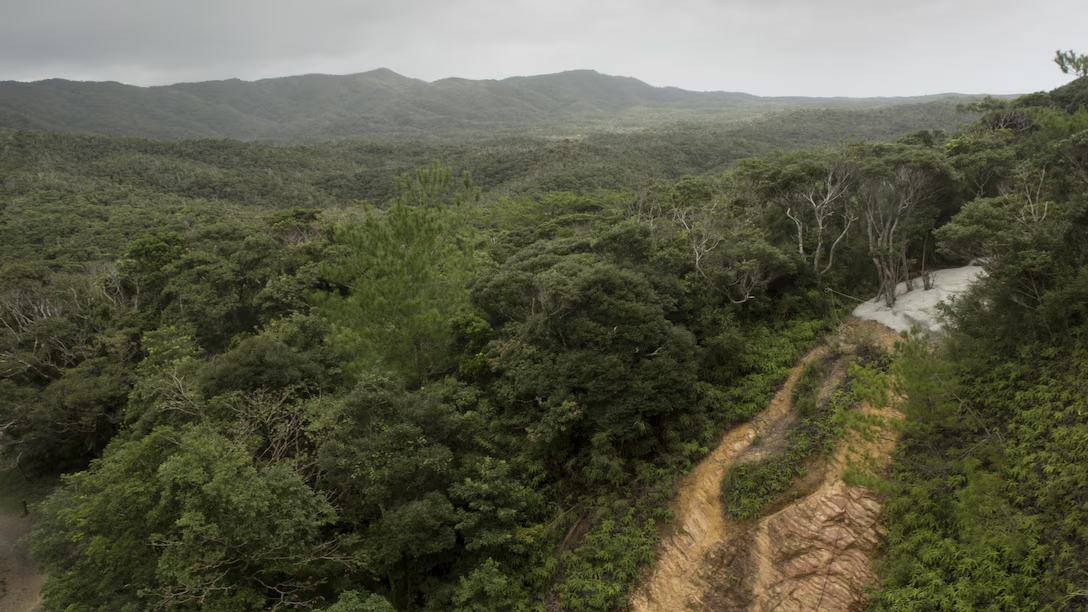
Okinawa operates by a different set of rules than any other place a Marine will be stationed. The local population has lived alongside a heavy American military presence for eighty years, and the relationship is complicated in ways that have direct consequences for any service member who lands on the wrong side of a UCMJ investigation here. Camp Gonsalves sits in the Northern Training Area, a dense jungle where Marines cycle through some of the most demanding training the Corps offers at the Jungle Warfare Training Center. The heat is punishing, the terrain is unforgiving, and the training is built to be both.
What Marines do not always anticipate is how fast one off base incident, one night that goes sideways, can put a career on the line in a place with zero tolerance for American misconduct and a command that cannot afford to look lenient. If you are facing an investigation or court martial connected to your time in Okinawa, you need to understand what you are actually up against before you say a word to anyone.
The Marine Camp Gonsalves Is Named For
Camp Gonsalves carries the name of a Marine who gave everything, and his story is the standard this place was built to honor. Private First Class Harold Gonsalves was an acting scout sergeant with the 6th Marine Division during the Battle of Okinawa. On April 15, 1945, moving forward under heavy fire to call in artillery, he was with two other Marines when an enemy grenade landed among them. Without hesitating, Gonsalves threw himself on it and absorbed the blast, giving his life so the two beside him would live. He was nineteen years old. He received the Medal of Honor for that act, and in 1958 the Marine Corps named this camp for him. The least we can do is give everything we have for the Marines who train on the ground that carries his name.
The Unique Pressure of Facing Charges in Okinawa
The political environment in Okinawa shapes how UCMJ enforcement works in ways that have nothing to do with the merits of any individual case. Local sentiment about the American presence has been a sensitive diplomatic issue for decades, and when an incident involves an Okinawan civilian, the pressure on command to respond aggressively is immediate. That response is not calibrated to the evidence. It is calibrated to the optics.
The pressure runs downhill. Commanders managing relationships with local officials, navigating sensitivities at the prefectural and national level, and aware that congressional attention follows any high profile incident do not approach these cases the way a neutral fact finder would. They charge first, examine the facts second, and expect the system to produce the conviction that quiets the noise. A Marine who was genuinely defending himself in an altercation with a local national, or who had a consensual encounter a partner later described differently, can find himself prosecuted not because of the evidence but because of the institutional need for a result.
A serious case in Okinawa is investigated by the Naval Criminal Investigative Service, which handles felony level matters for the Marine Corps. For sexual assault, domestic violence, and other covered offenses, the decision to refer charges to a court martial no longer belongs to your command. It goes to an independent Special Trial Counsel in the Department of the Navy Office of Special Trial Counsel. This is where the choice of counsel matters most, because Okinawa is not a place we fly to once for your case and try to learn on the way in. It is one of the places we work most. Tim Bilecki has worked Okinawa for the better part of two decades, defending service members across the island, at Camp Foster, Camp Hansen, Camp Schwab, Camp Kinser, and MCAS Futenma. We know the commands here, we know how cases move on this island, and we know the ground. When the prosecution sees that kind of counsel on the other side of the table, the easy conviction it had planned for is gone.
UCMJ Charges We Defend at Camp Gonsalves
This is not the whole list of what we do at Camp Gonsalves. We take every kind of court martial, and these are simply the charges that come up most.
Sexual Assault and Sex Offenses (UCMJ Article 120 / Article 134). Sex offense charges in Okinawa carry a weight beyond the standard intensity of these prosecutions, because when the alleged victim is an Okinawan civilian the case acquires political dimensions that have nothing to do with the facts. Command is not approaching it as a neutral party trying to determine what happened. It is managing an international incident and it needs a result that satisfies the local government. The Marine Corps Sexual Assault Prevention and Response program adds its own pressure, creating a climate where allegations are treated as established before the investigation is done and where a complaint can be a tactical move within someone's own UCMJ situation. False and exaggerated allegations occur, and they require experienced counsel to surface and dismantle. Even where the evidence will not support a charge, commands pursue administrative action whose career consequences can rival a conviction, and both tracks require a defense.
The island's NCIS online sting operations are one more reason a Marine on Okinawa, even one only here to train, needs to watch his step and needs good counsel. In these stings an agent works an adults only site as a young woman, reveals a supposedly underage age only after the conversation turns sexual, and arrests the target at a meeting where there was never an actual child, which leaves an attempt charge under Article 80 decided on intent alone. The defenses are entrapment, a mistake of fact as to age, and the agents' disregard of the Internet Crimes Against Children protocols that govern these operations. The first sting ever tried on Okinawa ended in a full acquittal we won, and we have defended many more since with the results to prove it.
Fraud and Larceny (UCMJ Article 121). BAH and overseas housing allowance fraud cases are among the more common financial charges at Okinawa installations, because the allowance structure for service members stationed overseas is genuinely complex and honest errors are easy to make. Investigators tasked with finding wrongdoing do not always distinguish an honest mistake from criminal intent, and sometimes choose not to. The government has to prove intent to defraud, and administrative errors and misunderstandings of entitlement rules do not meet that standard. These cases are winnable when the defense makes that argument rigorously and with documentation. We handle conspiracy to defraud, larceny, extortion, and wrongful appropriation as well.
Domestic Violence and Assault (UCMJ Articles 128b and 128). Domestic violence is one of the heaviest parts of what we handle, and the Office of Special Trial Counsel prosecutes it as aggressively as a sexual assault. Article 128b applies to a spouse, an intimate partner, or a family member, and makes strangulation or suffocation a separate, serious count even with little or no injury. Behind a qualifying conviction sits the federal Lautenberg firearms ban, potentially career ending for a Marine who must be able to carry a weapon. We also take the plain Article 128 assault cases. The off base environment in Okinawa, particularly the entertainment districts near the installations, has been a friction point for decades, and liberty, alcohol, and unfamiliar surroundings produce the occasional altercation with a local national. What has changed is how aggressively those incidents are prosecuted in the current climate. A Marine who steps in to defend himself or another can find, once the dust settles, that the narrative was shaped without his input, and that there is real institutional pressure to ensure the local national is not the one held responsible regardless of who started it. That is not justice, it is politics dressed up as UCMJ enforcement, and fighting it requires counsel prepared to investigate independently, find the witnesses who were never interviewed, and present the full record. We take self defense, aggravated assault, manslaughter, and murder cases.
Drug Offenses (UCMJ Article 112a). Japan has some of the strictest drug laws among developed nations, and that posture extends into the host nation relationship with American installations, where even small amounts of a controlled substance carry severe consequences and shape how commands respond to any drug allegation in Okinawa. There is no state legalization angle here to create false comfort. A positive urinalysis is the beginning of a fight, not the end of it, because the chain of custody is open to challenge, innocent exposure is recognized, the government must prove any use was knowing and wrongful, and the line between knowing possession and circumstantial contact is a factual question. Counsel who understands both the military justice dimensions and the host nation jurisdiction issues can make a real difference in these outcomes.
Military Specific Offenses (UCMJ Articles 77 to 134). Overseas commands use the punitive articles as instruments of control, and in Okinawa that use is amplified by the pressure to avoid incidents that draw local or diplomatic attention. Charges that would never be preferred stateside get filed here because the command wants to show it takes discipline seriously and because charge stacking inflates the apparent severity and pressures a plea. Multiple charges do not mean the evidence supports multiple charges. A defense that addresses every one on its merits forces the government to prove each one, and it often cannot.
What It Actually Takes to Win
Tim Bilecki spent years inside the military justice system as a defense counsel and Senior Defense Counsel before building this firm, and that experience shaped a clear understanding of how military prosecutors build cases and how those cases fall apart when they are actually challenged. Investigators approach a case with a theory, not a question. They are not trying to determine what happened, they are building a file that supports what they have already decided happened, and evidence that complicates the theory gets overlooked while witnesses who might contradict it never get interviewed. By the time the defense sees the case, the prosecution's story is already built, and it was built without meaningful adversarial scrutiny.
Our job is to provide that scrutiny. That means reading the investigative record for what it omits, identifying the witnesses who were never called and the forensic conclusions that rest on untested assumptions, and going into every hearing prepared to fight for every element and give the prosecution nothing it has not earned. The system runs on a high conviction rate because most service members do not fight. They take the first deal, believe the case is unwinnable, and hand the prosecution the easy result it was always looking for. We deny it that.
A Free Strategy Session, and a Straight Answer About What You Are Facing
If you are under investigation or facing a court martial at Camp Gonsalves or anywhere in Okinawa, reach out for a free defense strategy session. You will get a direct, honest assessment of the charges, what the prosecution likely has, where the case is vulnerable, and what a real defense would require. We fly to Okinawa, and geography is not a factor in whether you get the defense you deserve. What is on the line is your career, your retirement, your good name, and your freedom, because a conviction is a federal criminal conviction. Under the sentencing rules now in force, it carries confinement set by parameters the judge cannot simply ignore, a punitive discharge, and on a sex offense a place on a registry, whatever your rank. If you do not fight back, the outcome is already decided.
FAQ
I got into an incident off base in Okinawa involving a local national. Given the politics here, am I already presumed guilty?
No, but the pressure is real. The politics here push commands to respond fast and hard when an Okinawan civilian is involved, so the institutional weight is against you from the start. Pressure is not proof, though. The command still has to prove its case, and the version that reaches investigators first, usually from the other side, very often does not survive an independent reconstruction of who started it and who escalated. That is exactly why you need counsel who will investigate the incident rather than accept the convenient narrative.
I'm only at Camp Gonsalves for jungle training and I'm based somewhere else. Which command handles my case if something happens?
Generally the command that holds you, but it depends on your orders and where the alleged misconduct occurred, and on a training rotation those lines can get complicated. Being temporarily attached does not put you outside the UCMJ, and an incident in Okinawa can be handled by the local command, your parent command, or some coordination between them, each with consequences for where your case is heard and who decides it. Those details shape your options in ways that are easy to get wrong, which is why you want experienced counsel sorting them out early rather than after the case has momentum.
NCIS wants to interview me about an incident during jungle training at Gonsalves. Do I have to talk to them?
No. An NCIS interview is evidence-gathering, full stop, and Article 31b of the UCMJ lets you decline it and ask for a lawyer before you answer. Attached to Gonsalves for jungle training and far from your home command, the urge is to handle it fast and get back to your unit, which is exactly how a survivable case turns into a court martial. For covered offenses like sexual assault, an independent Special Trial Counsel in the Department of the Navy, not your command, decides whether to refer charges to a court martial, and the highest value defense work happens before that decision. Decline, ask for counsel, and get a lawyer engaged before the file is built.