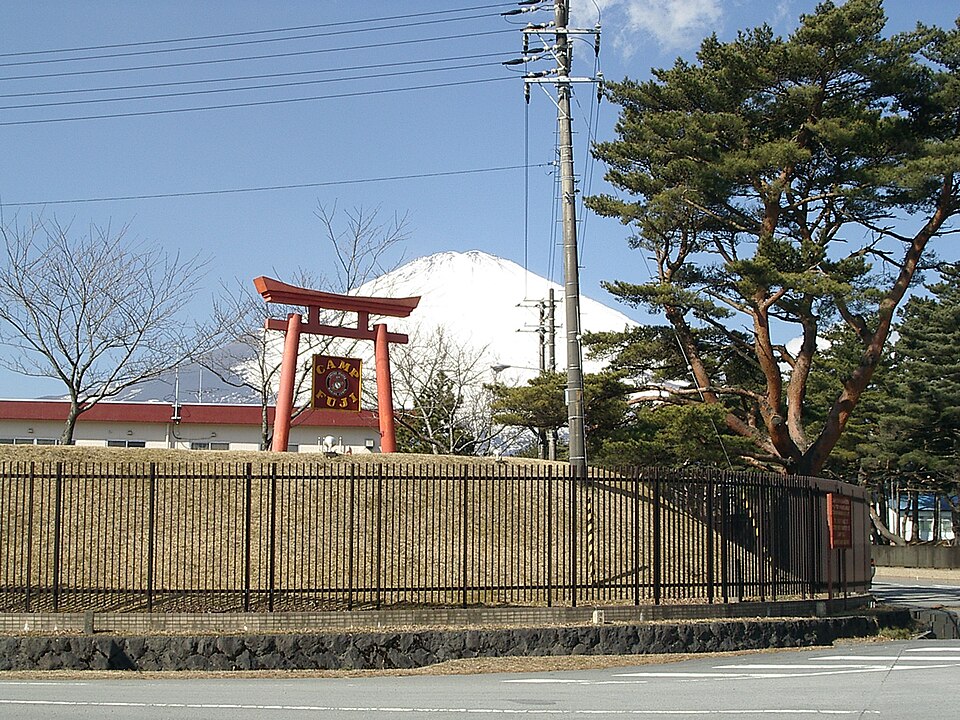
CATC Camp Fuji: Where Pacific Marines Come to Train
At the foot of Mount Fuji in Shizuoka Prefecture, the Combined Arms Training Center at Camp Fuji is where the Marine Corps sharpens its Pacific force. Units rotate through from Okinawa and across the theater to run live fire and maneuver training on the ranges here, so on any given week the camp is full of Marines who are far from their home command and focused on the field. That transient, high tempo training environment is exactly what makes a case here different, because when something goes wrong, the question of whose command owns it and where it gets handled is rarely simple.
Mainland Japan is part of the region this firm has worked for years. Tim Bilecki served as the Senior Defense Counsel for the Army's Trial Defense Service across the Pacific Rim, responsible for service members throughout Korea, Okinawa, and mainland Japan. A Marine at Camp Fuji gets counsel who knows the Japan system, not an attorney seeing it for the first time.
The Marine Who Held the Ridge and Then Taught the Rest
A training base exists to turn Marines into the kind who can hold when everything goes wrong, and few did it like Platoon Sergeant Mitchell Paige. On Guadalcanal in October 1942, his machine gun section held a key ridge against a massive Japanese night assault, and as the attack wore on his Marines were killed or wounded around him until he was working the guns alone, moving from one position to the next to keep firing so the line would not break. When reinforcements arrived at dawn he led a bayonet charge that cleared the ridge. He held. Commissioned after the battle, he spent much of the rest of his career doing what Camp Fuji exists to do, training the Marines who came after him. That standard, master the basics so well that you hold when it counts, is the one we bring to a fight at Camp Fuji.
Why Marines at Camp Fuji Bring Us In
We win court martial cases. Marines fly us in from all over the world because military defense is all we do, and our trial record proves it. Years of work across the Pacific, Okinawa and mainland Japan alike, mean we know how a Japan case moves and how the commands here operate.
The military justice system is not built to find the truth. It exists to preserve good order and discipline, and a training command will make an example of a Marine to keep standards visible. A serious case is investigated by NCIS, and for sexual assault and other covered offenses the decision to refer charges to a court martial no longer belongs to the command but goes to an independent Special Trial Counsel. Your detailed defense counsel may be sharp but carries a heavy caseload inside the same system, which is why Marines serious about winning bring in their own counsel.
UCMJ Charges We Defend at CATC Camp Fuji
This is not the whole list of what we do at CATC Camp Fuji. We take every kind of court martial, and these are simply the charges that come up most.
Training Accidents, Negligent Discharge, and Range Mishaps (UCMJ Articles 134, 119, and 92). The danger unique to a live fire training center is that an accident on the range can become a criminal case. A negligent discharge, an injury during maneuver, or a mishap with a weapon or vehicle can draw a charge of negligent homicide under Article 134 if someone is killed, dereliction of duty under Article 92 for a missed safety standard, or a general disorder under Article 134. Hard training carries inherent risk, and the line between a genuine accident and criminal negligence is exactly where these cases are won. We work the investigation, the range records, and qualified experts to show the difference, because hindsight after a tragedy is not the standard the law requires.
Sexual Assault and Sex Offenses (UCMJ Article 120 / Article 134). These allegations route to an independent Special Trial Counsel now, and the command treats a report as established before the investigation is finished. NCIS also runs online enticement stings, the "To Catch a Predator" operations, across Japan, in which an agent poses online as an adult and only later claims to be underage before luring the target to a meeting and an arrest. Because there is no real child, the charge is almost always an attempt under Article 80 that turns on intent, and the defenses are a mistake of fact as to age and entrapment. We have defended many of these and won them. We also examine compliance with Internet Crimes Against Children protocols for weaknesses in the investigation and the agents’ credibility. A protocol violation alone is not a legal defense; its significance depends on the charged offense, the evidence, and the applicable defense.
Domestic Violence, Drugs, and Off Duty Conduct (UCMJ Articles 128b, 112a, and 134). Domestic violence under Article 128b is charged as aggressively as any offense in the UCMJ and triggers the federal Lautenberg firearms bar on a qualifying conviction, which can end a career because a Marine has to be able to carry a weapon. Drug cases often turn on the chain of custody and the government's burden to prove any use was knowing and wrongful. And a Marine is subject to the UCMJ off base, so an incident in Gotemba or on liberty in the area comes back to the command. Under the Status of Forces Agreement, Japanese authorities hold the primary right to prosecute serious off base offenses against Japanese nationals, and their system can hold a suspect for up to roughly twenty three days before any charge, so a serious off base incident can mean attention from both U.S. military and Japanese authorities. Get counsel involved before you talk to anyone. The SOFA allocates primary jurisdiction and limits a second trial for the same offense; overlapping investigations do not mean that both countries may freely try the same charge.
A Career and a Reputation Worth Defending
Not every Marine who calls us from Camp Fuji is innocent, and we do not pretend otherwise. Some made a mistake and know it. That does not mean accepting the worst the system can hand out. What matters is how serious the case is, not your rank. If a matter is genuinely minor, your detailed defense counsel can handle it, and we will tell you so honestly.
When the case is serious, everything is on the line at once: your career, your retirement, your good name, and your freedom. A court martial conviction is a federal criminal conviction, and where the sentencing parameters apply, a judge sentences within a set confinement range, two and a half to ten years for sexual assault and ten to twenty for rape, and must state specific facts in writing to support a departure, along with any required or adjudged punitive discharge and, on a covered sex offense, sex offender registration. That is why you fight. The court’s jurisdiction and the convicted offense determine which sentencing rules apply; some offenses use separate sentencing criteria rather than these ranges.
If you are facing an investigation or court martial at CATC Camp Fuji, reach out for a free defense strategy session. We know the Japan system and how these cases move, and we will tell you exactly what you are facing and how we would defend it. The government is already building its case. The only question is whether anyone is building yours.
Cases Connected to CATC Camp Fuji
These cases include trials, hearings, investigations, and administrative matters. A connection to this location does not necessarily mean that the trial occurred here.
- Case connected to this location: Female Marine Gets with a Married NCO, Alleges Rape, Bilecki Secures Acquittal
FAQ
I'm only at Camp Fuji for a training rotation and based somewhere else. If something happens, whose command handles my case?
Generally your home command keeps UCMJ authority over you, but it is not always that clean, because the training command and the installation can be involved too, and where the alleged conduct happened affects who decides and tries the case. The case often follows you back to your home unit even though the incident happened in the field at Fuji, which scatters witnesses and evidence across two places at once. Those jurisdictional seams are easy to get wrong and worth having counsel sort out early.
A negligent discharge or a training accident happened on the range. Am I looking at a court martial or administrative action?
It depends on the harm and on whether the government thinks anyone was criminally negligent, which is exactly why an early, honest read matters. Hard training carries real risk, and a genuine accident is not a crime, but if someone was hurt or killed the command may push toward charges like dereliction under Article 92 or negligent homicide under Article 134. Getting counsel and an independent look at the range records and the investigation early is what keeps an accident from being treated as a crime.
Why hire Bilecki Law Group for a Japan case instead of a local attorney?
We win court martial cases, and the Pacific is where we do much of our work. Military defense is all we do, and the firm has defended Marines and Sailors across Okinawa and mainland Japan for years. That is experience in this exact system, not an attorney flying in cold.