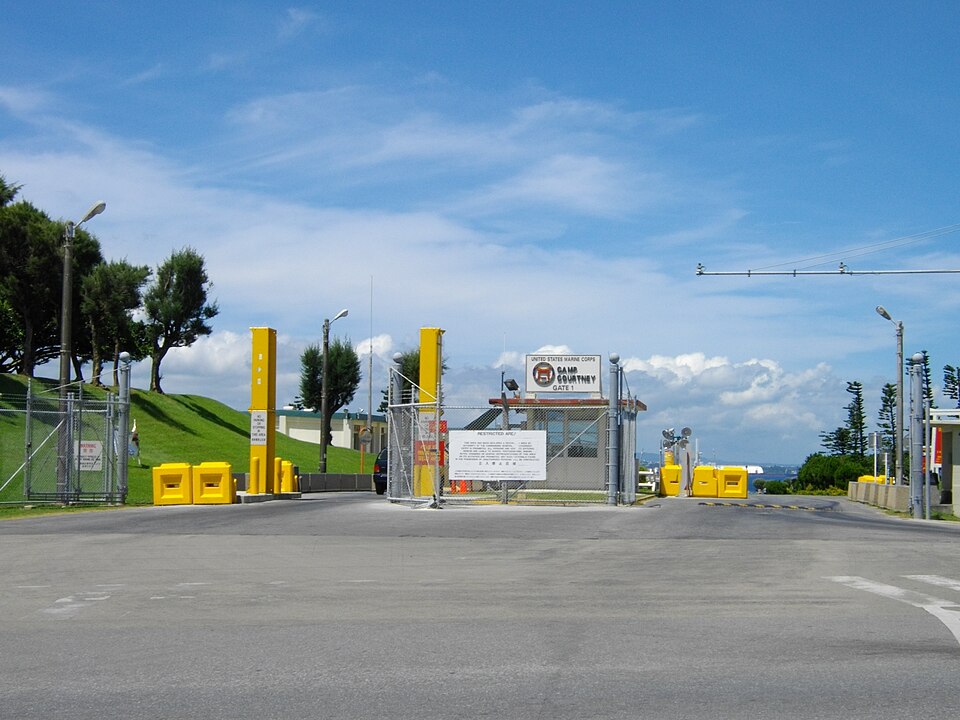
Camp Courtney: The Command Center of the Marines in the Pacific
On Tengan Bay in Uruma City, central Okinawa, Camp Courtney is the headquarters of the III Marine Expeditionary Force and the 3rd Marine Division, the operating heart of the Marine Corps in the Pacific. The Marines who fill its barracks and staff sections are the force the nation reaches for first in this theater, and the command here runs at the tempo to match. It is also a command with a great deal on the line in how it handles its own, and when a Marine at Courtney is accused, the institution moves fast.
Okinawa is where this firm does much of its work. Tim Bilecki served as the Senior Defense Counsel for the Army's Trial Defense Service across the Pacific Rim, responsible for the defense of service members throughout Korea, Okinawa, and mainland Japan, and he has spent years on this island trying and winning cases. A Marine at Camp Courtney is not calling an attorney who has to find the island on a map.
The Marine Who Would Not Stop Short of Sugar Loaf
Camp Courtney carries the name of Major Henry A. Courtney Jr., and the hill he died taking is the reason. In May 1945, Courtney was the executive officer of a Marine battalion fighting for Sugar Loaf Hill, the worst ground of the Okinawa campaign, where the assault had stalled under murderous fire. Rather than dig in and wait to be cut apart, Courtney gathered volunteers, loaded up with grenades, and led a night charge up the hill, throwing grenades into the enemy positions at the crest and holding the ground he took. He was killed by a mortar burst at the top, but the position his men seized could not be held through the following day; the fight for Sugar Loaf continued. He earned the Medal of Honor posthumously. The instinct to move forward when standing still means losing is the standard we bring to a fight at Camp Courtney.
Why Marines at Camp Courtney Bring Us In
We win court martial cases. Marines and Sailors fly us in from all over the world because military defense is all we do, and our trial record proves it. Decades of work on this island mean we know how Okinawa cases move, who investigates them, and how the commands here operate when one of their own is in trouble.
The military justice system is not built to find the truth. It exists to preserve good order and discipline, and a high profile command like III MEF has every reason to make a public example of a Marine. A serious case is investigated by NCIS, and for sexual assault and other covered offenses the decision to refer charges to a court martial no longer belongs to the command but goes to an independent Special Trial Counsel. Your detailed defense counsel may be sharp but carries a heavy caseload inside the same system, which is why Marines serious about winning bring in their own counsel.
UCMJ Charges We Defend at Camp Courtney
The cases below are the most common at Camp Courtney. If yours is not here, call anyway, because we defend the full spectrum of military charges.
Sexual Assault and Sex Offenses (UCMJ Article 120 / Article 134). These allegations route to an independent Special Trial Counsel now, and the command treats a report as established before the investigation is finished. A serious and distinctive part of our Okinawa work is defending the NCIS online sting cases, the "To Catch a Predator" operations that have arrested service members across the island. An agent posts on an adults only platform using photos of an adult woman, chats as an adult, and only later claims to be fourteen or fifteen before steering toward a meeting and an arrest, so the charge is almost always an attempt under Article 80 that the government has to prove with intent. The defenses are a mistake of fact as to age and entrapment. We won the first NCIS sting case ever tried on Okinawa, an outright acquittal, and have defended many more here since. We also examine compliance with Internet Crimes Against Children protocols for weaknesses in the investigation and the agents’ credibility. A protocol violation alone is not a legal defense; its significance depends on the charged offense, the evidence, and the applicable defense.
Domestic Violence and Assault (UCMJ Articles 128b and 128). Domestic violence under Article 128b is charged as aggressively as any offense in the UCMJ since the Office of Special Trial Counsel took these cases over. It covers a spouse, an intimate partner, or a family member, and it treats strangulation or suffocation as its own charge that the government can bring even with no visible injury. A qualifying conviction also triggers the federal Lautenberg firearms bar, which can end a Marine's career because a Marine has to be able to carry a weapon. We also defend assault under Article 128, including the off base confrontations that become a host nation matter when an Okinawan local is involved, where self defense is a recognized defense.
Larceny and Fraud (UCMJ Articles 121 and 107). Most money and property cases here are straightforward theft allegations under Article 121: gear missing from an armory or a workspace, a government card charge the command calls theft, or a dispute over who owned what. When a signed document like a travel voucher is involved, the government adds a false official statement under Article 107 and treats an honest error as a deliberate scheme. The government still has to prove intent, and a mistake is not a crime.
Drug Offenses (UCMJ Article 112a). The drug cases that worry the command on Okinawa are less about a stray positive than about synthetic substances and drugs ordered online and brought onto the island, where Japan's strict drug laws raise the stakes on every side. A positive urinalysis is serious but not the end of the fight, because the chain of custody can be challenged, innocent ingestion is a recognized defense, and the government still has to prove any use was knowing and wrongful.
Off Duty and Military Specific Offenses (UCMJ Articles 134, 87a, and 92). A Marine is subject to the UCMJ off base, and a night out in Okinawa City or American Village that goes wrong comes back to the command. The Marine Corps Shore Patrol works the bar districts and, because it is designated to perform police duties, it can apprehend a Marine, so resisting or fleeing it can be charged as resisting apprehension under Article 87a and disobeying its lawful order as a violation of Article 92. A curfew or off limits violation under a USFJ general order, a drunk and disorderly under Article 134, and conduct unbecoming for an officer all get stacked to inflate the punishment. Every specification still has to be proven beyond a reasonable doubt on its own, and the weak ones on an inflated charge sheet are the first to fall.
There is a second danger most Marines do not think about until it lands on them. Under the Status of Forces Agreement, Japanese authorities hold the primary right to prosecute most serious off base offenses against Japanese nationals, and their system can hold and interrogate a suspect for up to roughly twenty three days before any charge, often without a lawyer in the room. A serious off base incident can mean attention from both U.S. military and Japanese criminal authorities, so get experienced counsel involved before you talk to anyone. The SOFA allocates primary jurisdiction and limits a second trial for the same offense; overlapping investigations do not mean that both countries may freely try the same charge.
A Career and a Reputation Worth Defending
Not every Marine who calls us from Courtney is innocent, and we do not pretend otherwise. Some made a mistake and know it. That does not mean accepting the worst the system can hand out, prosecuted by a command eager to make an example. What matters is how serious the case is, not your rank. If a matter is genuinely minor, your detailed defense counsel can handle it, and we will tell you so honestly.
When the case is serious, everything is on the line at once: your career, your retirement, your good name, and your freedom. A court martial conviction is a federal criminal conviction, and the parameters that now govern sentencing place each offense in a confinement range, two and a half to ten years for sexual assault and ten to twenty for rape, binding the judge unless specific facts justify going lower, plus a punitive discharge and, on a covered sex offense, sex offender registration. That is why you fight.
If you are facing an investigation or court martial at Camp Courtney, reach out for a free defense strategy session. We know this island and how these cases move here, and we will tell you exactly what you are facing and how we would defend it. The government is already building its case. The only question is whether anyone is building yours.
FAQ
NCIS wants to interview me at Camp Courtney. Do I have to talk to them?
No. You are not required to sit for an NCIS interview or answer their questions. Under Article 31b of the UCMJ you have the right to remain silent and to a lawyer, and you can invoke both at any point, including before the interview begins. NCIS is collecting evidence, not giving you a chance to explain, and at a headquarters like III MEF the case can move quickly once you talk. Decline, ask for counsel, and call a defense lawyer before you give any statement.
I was arrested in an NCIS online sting on Okinawa. Is there a defense when I showed up to the meeting?
Yes, because these cases turn on intent, fought over in the messages, not on the fact that someone showed up. There is no real child in a sting, so the charge is usually an attempt under Article 80, and the government has to prove what you actually intended. The defenses we use are a mistake of fact as to age and entrapment where the government planted the idea in someone not predisposed to it. Do not give a statement or write an apology letter, and if you already have, one taken under that pressure can still be challenged. We also examine compliance with Internet Crimes Against Children protocols for weaknesses in the investigation and the agents’ credibility. A protocol violation alone is not a legal defense; its significance depends on the charged offense, the evidence, and the applicable defense.
Why hire Bilecki Law Group for an Okinawa case instead of a local attorney?
We win court martial cases, and Okinawa is where we do much of our work. Military defense is all we do, Tim Bilecki has tried cases on this island for years, and the firm has defended Marines and Sailors across Okinawa for years. That is experience on this exact ground, not an attorney flying in cold to a system they do not know.