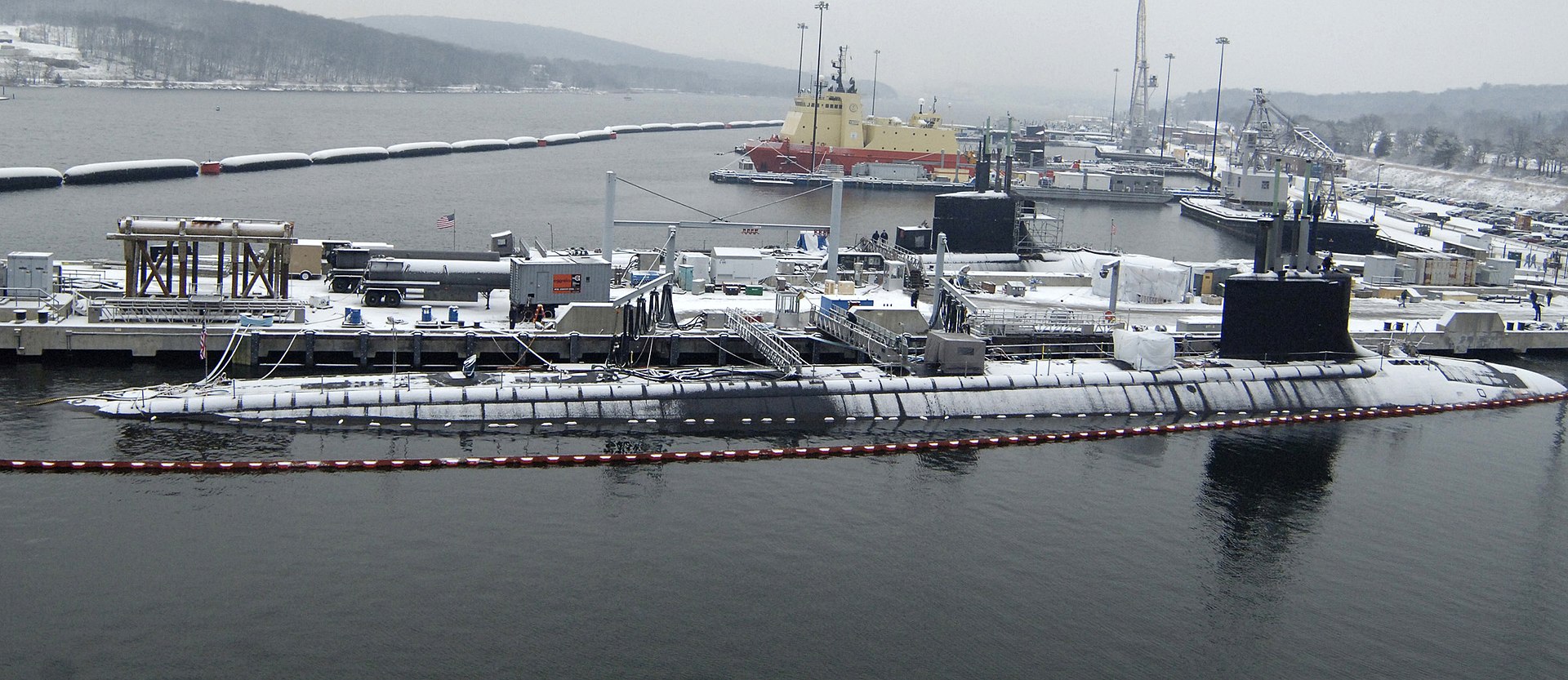
NSB New London: The Home of the Submarine Force
Across the Thames River from New London, Connecticut, Naval Submarine Base New London at Groton is the Home of the Submarine Force, the Navy's oldest submarine base and the East Coast home of the fast-attack fleet, roughly sixteen boats strong. The Naval Submarine School is here, and every submariner in the Navy passes through Groton to qualify, so the base runs on a constant flow of students alongside the crews of the attack boats. Next door is the Electric Boat yard that builds the submarines, Mystic and its seaport are ten minutes up the coast, and the New England shoreline and the casinos at Foxwoods and Mohegan Sun are close by. A force this demanding, training the people who run the most unforgiving ships in the Navy, will make an example of a Sailor who falls short.
Military defense is all Bilecki Law Group does, and Sailors fly us in from our office in Tampa because a contested court martial is decided by trial experience, and we bring it wherever the case is.
The Submariner Who Took the Fight to the Convoy
The aggressive spirit of the submarine force was set by Commander Lawson "Red" Ramage aboard the USS Parche in 1944. Caught in the middle of a Japanese convoy in the dark, Ramage took his boat to the surface and fought a running, point-blank gun and torpedo battle through the enemy ships, weaving among them, dodging fire and a ship that tried to ram him, until he had sunk and shattered much of the convoy. He was the first living submariner to receive the Medal of Honor in more than twenty years. He went straight at a stronger enemy when caution said run. That instinct to attack rather than retreat is the standard we bring to a case at Groton.
Why Sailors at Groton Bring Us In
We win court martial cases. Military defense is all we do, and Sailors fly us in from all over the country because of our trial record. The military justice system is not built to find the truth; it exists to preserve good order and discipline, and a command training the entire submarine force will make an example of a Sailor to keep the standard sharp. A serious case is investigated by NCIS, and for sexual assault and other covered offenses the decision to refer charges to a court martial no longer belongs to your command but goes to an independent Special Trial Counsel. Your detailed counsel from the Defense Service Office may be capable but carries a heavy caseload inside the same system, which is why Sailors serious about winning bring in their own counsel.
UCMJ Charges We Defend at NSB New London
These are the allegations we see most at NSB New London. The full range of UCMJ charges is within what we defend, listed here or not.
Sexual Assault and Sex Offenses (UCMJ Article 120 / Article 134). These allegations route to an independent Special Trial Counsel now, and the command treats a report as established before the investigation is finished, all the more so in a tight submarine community where word of an allegation travels fast and the command wants to look decisive. These cases demand counsel who will run an independent investigation and contest the case rather than let the allegation stand in for proof, because a conviction can mean confinement and a federal record, with registration required for a covered sex offense under the applicable federal and state law.
Domestic Violence and Assault (UCMJ Articles 128b and 128). Domestic violence under Article 128b is charged as aggressively as any offense in the UCMJ since the Office of Special Trial Counsel took these cases over. It covers a spouse, an intimate partner, or a family member, and it treats strangulation or suffocation as its own charge that the government can bring even with no visible injury. A qualifying conviction also triggers the federal Lautenberg firearms bar, which can end a Navy career because a Sailor has to be able to carry a weapon. We also defend assault under Article 128, the usual charge when a night out off base ends in a fight, where self defense is a recognized defense.
Larceny and Government Property (UCMJ Articles 121 and 108). A submarine base and school are full of sensitive, high-value equipment, parts, and controlled material, and accountability is unforgiving. The government treats missing gear, an item that cannot be reconciled, or property that walked off as larceny under Article 121 or wrongful disposition of military property under Article 108, but a shortage on an inventory is not the same as theft, and the government still has to prove the state of mind required by the charged offense: intent for larceny or fraud, or negligence where Article 108 permits it, not just that something cannot be found.
Drugs and Off Duty Conduct (UCMJ Articles 112a and 134). Drug cases often turn on the chain of custody and the government's burden to prove any use was knowing and wrongful. Marijuana is one to be careful with: it is legal in Connecticut, but it is still a federal controlled substance and a court martial offense under Article 112a, and on a submarine base a positive test or a security concern can trigger review of your submarine duty or nuclear propulsion qualifications and pull you off the boat before anything is proven. A positive test is evidence the government may use to argue knowing, wrongful use, not an automatic finding of guilt, so the collection, the chain of custody, and whether any use was knowing all remain the government's to prove. Nuclear propulsion screening is separate from the nuclear weapons Personnel Reliability Program, which applies to designated duties involving nuclear weapons.
A Career and a Reputation Worth Defending
We do not pretend that every Sailor who calls us from Groton is innocent. What matters is how serious the case is, not your rank. If a matter is genuinely minor, your detailed defense counsel can handle it, and we will tell you so honestly. But when the case is serious, everything is on the line at once: your career, your clearance, your retirement, your good name, and your freedom. A court martial conviction is a federal criminal conviction, and the applicable sentencing parameters place a covered offense in a confinement range, two and a half to ten years for sexual assault and ten to twenty for rape, that a judge may depart from only by stating specific facts in writing, alongside any required or adjudged punitive discharge and, on a covered sex offense, sex offender registration. That is why you fight. The court’s jurisdiction and the convicted offense determine which sentencing rules apply; some offenses use separate sentencing criteria rather than these ranges.
If you are facing an investigation or court martial at NSB New London, reach out for a free defense strategy session. We will tell you exactly what you are facing and how we would defend it. The government is already building its case. The only question is whether anyone is building yours.
FAQ
NCIS wants to interview me at Groton. Do I have to talk to them?
No. You are not required to sit for an NCIS interview or answer their questions. Under Article 31b of the UCMJ you have the right to remain silent and to a lawyer, and you can invoke both at any point, including before the interview begins. NCIS is collecting evidence, not giving you a chance to explain, and it takes very little to be titled as a subject, a label that follows you for years. Decline, ask for counsel, and call a defense lawyer before you give any statement.
I'm a student at Sub School and an allegation has come up. What happens to my pipeline?
A serious allegation can stall or end your training and follow you to the fleet, because the school and the command can act administratively, pulling you from the pipeline, on a far lower standard than a court martial requires. The criminal case and your training status run on separate tracks, but the administrative side usually follows what the investigation finds, so the most valuable thing you can do is get your own counsel involved while the record is still being built and force the case to prove what it actually has.
I'm under an Article 120 investigation. Can it be stopped before charges are preferred?
Yes. For a covered Article 120 offense an independent Special Trial Counsel, not your commander, decides whether charges are referred to a court martial, so the investigation and that decision are where the case can still be stopped. The work is to attack the evidence before that decision is made, because a covered conviction can trigger registration duties under the applicable federal and state law. Get your own counsel involved before you ever sit down with NCIS.