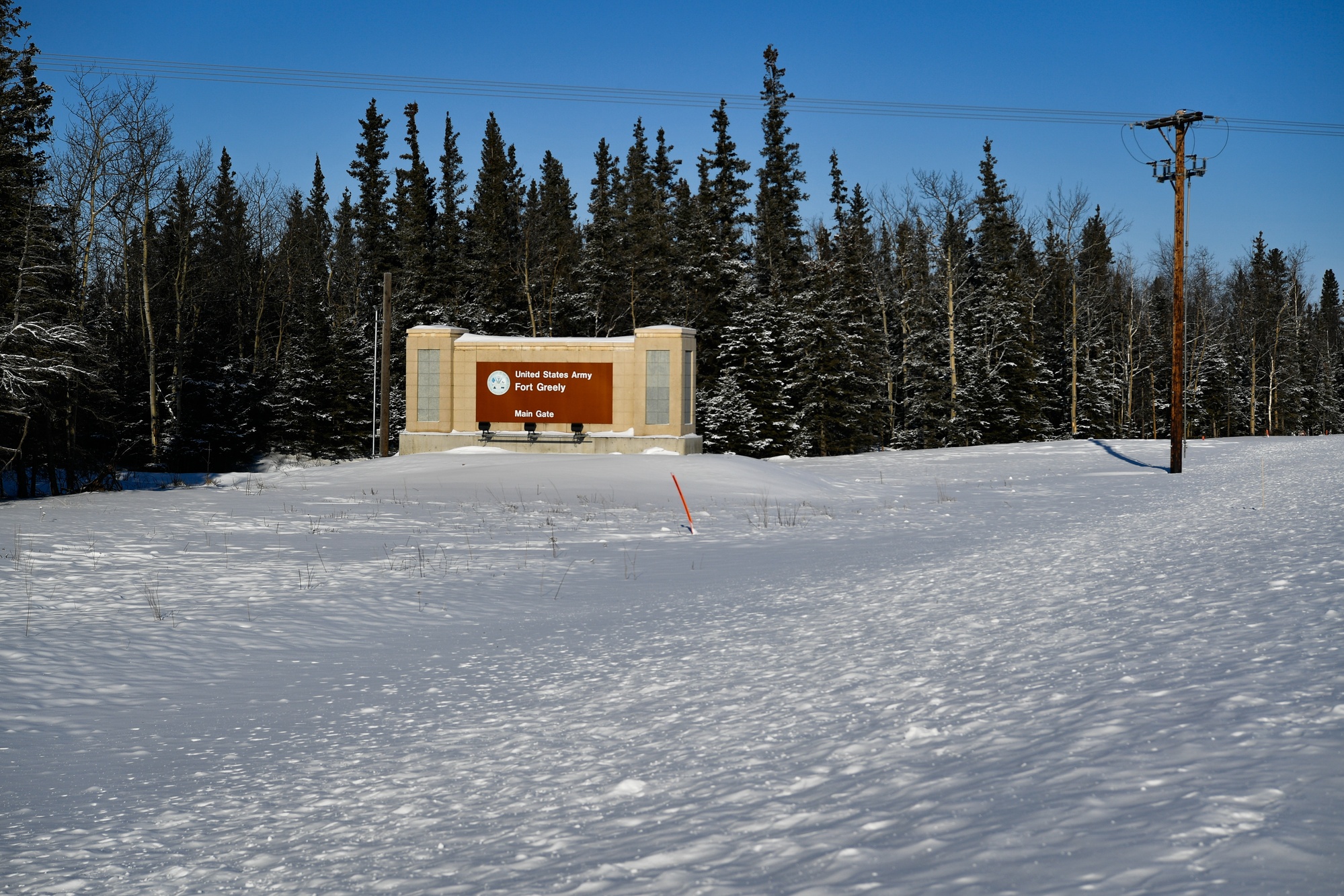
Fort Greely: The Homeland's Watch in the Deep Cold
In the Alaskan interior near Delta Junction, about a hundred miles southeast of Fairbanks, Fort Greely is one of the most remote and demanding posts in the Army, and one of the most important. It is the home of the 49th Missile Defense Battalion, the Alaska Army National Guard unit that operates the Ground-based Midcourse Defense, the silo-launched interceptors that stand ready to defend the United States from a long-range ballistic missile attack. It is also the home of the Cold Regions Test Center, where the Army proves its equipment in some of the coldest temperatures on the continent. The population is small and the isolation is real, a tight community of missile defenders, testers, and signal Soldiers in a place where forty and fifty below is an ordinary winter. A post trusted with a no-fail mission will protect its standards and move hard against a Soldier who steps wrong.
Military defense is all Bilecki Law Group does, and Soldiers fly us in from our office in Tampa because a contested court martial is decided by trial experience, and we bring it wherever the case is.
The Quiet Soldier Who Did the Hard Duty
The standard for a place like this was set by Private William J. Crawford, an infantryman with the 36th Division near Altavilla, Italy, on September 13, 1943. With his company pinned down, Crawford moved out alone and on his own initiative, crawling under fire to destroy one machine gun nest after another with grenades and his rifle so his platoon could advance. He was reported killed and the medal was given to his father, but Crawford had been taken prisoner and survived, and he lived the rest of his life quietly, for years working as a janitor at the Air Force Academy before the nation finally recognized him in person. He did the hardest duty without asking for anything in return. That quiet, unbroken sense of duty is the standard we bring to a case at Fort Greely.
Why Soldiers at Fort Greely Bring Us In
We win court martial cases. Military defense is all we do, and Soldiers fly us in from all over the country because of our trial record. The military justice system is not built to find the truth; it exists to preserve good order and discipline, and a post entrusted with the homeland's defense will make an example of a Soldier to keep its standards beyond question. On a base this small and remote, an allegation draws immediate attention and a command eager to show it acted. A serious case is investigated by Army CID, and for sexual assault and other covered offenses the decision to refer charges to a court martial no longer belongs to your command but goes to an independent Special Trial Counsel. The free Trial Defense Service may be capable but carries a heavy caseload inside the same system, which is why Soldiers serious about winning bring in their own counsel.
UCMJ Charges We Defend at Fort Greely
These are the most common cases at Fort Greely. They are examples, not limits, and we defend service members against the full range of UCMJ offenses.
Sexual Assault and Sex Offenses (UCMJ Article 120 / Article 134). These allegations route to an independent Special Trial Counsel now, and the command treats a report as established before the investigation is finished, all the more so on a small post where word of an allegation travels fast. These cases demand counsel who will run an independent investigation and contest the case rather than let the allegation stand in for proof, because a conviction can mean confinement and a federal record, with registration required for a covered sex offense under the applicable federal and state law.
Domestic Violence and Assault (UCMJ Articles 128b and 128). Domestic violence under Article 128b is charged as aggressively as any offense in the UCMJ since the Office of Special Trial Counsel took these cases over. It covers a spouse, an intimate partner, or a family member, and it treats strangulation or suffocation as its own charge that the government can bring even with no visible injury. A qualifying conviction also triggers the federal Lautenberg firearms bar, which can end a military career because a service member has to be able to carry a weapon. The long, dark, isolated winters here put real strain on households, and we also defend assault under Article 128, where self defense is a recognized defense.
Larceny and Government Property (UCMJ Articles 121 and 108). A small post handling sensitive systems and expensive cold weather equipment takes accountability seriously. The government treats missing gear, an item that cannot be reconciled, or property that walked off as larceny under Article 121 or wrongful disposition of military property under Article 108, but a shortage on an inventory is not the same as theft, and the government still has to prove the state of mind required by the charged offense: intent for larceny or fraud, or negligence where Article 108 permits it, not just that something cannot be found.
Drugs and Off Duty Conduct (UCMJ Articles 112a and 134). Drug cases often turn on the chain of custody and the government's burden to prove any use was knowing and wrongful. Marijuana is legal under Alaska law but remains a federal controlled substance and a court martial offense under Article 112a, and on a missile defense post a drug allegation is treated with particular seriousness. A positive test is evidence the government may use to argue knowing, wrongful use, not an automatic finding of guilt, so the collection, the chain of custody, and whether any use was knowing all remain the government's to prove.
A Career and a Reputation Worth Defending
We do not pretend that every Soldier who calls us from Fort Greely is innocent. What matters is how serious the case is, not your rank. If a matter is genuinely minor, the Trial Defense Service can handle it, and we will tell you so honestly. But when the case is serious, everything is on the line at once: your career, your retirement, your good name, and your freedom. A court martial conviction is a federal criminal conviction, and the applicable sentencing parameters tie a confinement range to the offense, two and a half to ten years for sexual assault and ten to twenty for rape, that a judge can depart from only by stating specific facts in writing, on top of any required or adjudged punitive discharge and, on a covered sex offense, sex offender registration. That is why you fight. The court’s jurisdiction and the convicted offense determine which sentencing rules apply; some offenses use separate sentencing criteria rather than these ranges.
If you are facing an investigation or court martial at Fort Greely, reach out for a free, confidential strategy session. We will tell you exactly what you are facing and how we would defend it. The government is already building its case. The only question is whether anyone is building yours.
FAQ
CID wants to interview me at Fort Greely. Do I have to talk to them?
No. Under Article 31b of the UCMJ you have the right to remain silent and to a lawyer, and you can invoke both before the interview begins. CID is gathering evidence, not offering a chance to explain, and on a small post a single statement can drive the whole case. Decline, ask for the Trial Defense Service or your own lawyer, and say nothing until you have one.
I'm in the Alaska National Guard on the missile defense mission. Am I subject to the UCMJ?
When you are serving on federal active duty, including the federal missile defense mission here, you are subject to the UCMJ and can face a court martial like any active duty Soldier. The rules about status can get technical, which is exactly why you want a defense lawyer who handles military cases to look at your orders and your situation before you say anything to investigators.
The post is remote and far from any civilian defense lawyer. Can you really defend a case here?
Yes. We defend court martial cases wherever the military takes them, and distance is not an obstacle, because the work that wins is the investigation, the motions, and the cross examination, not a local office. We have tried cases across the Pacific and around the world, and a Fort Greely case is no different.